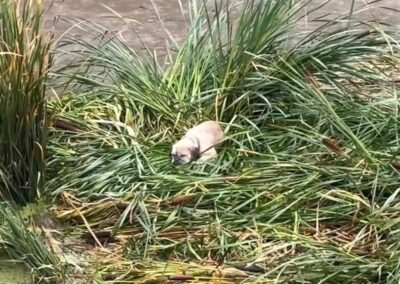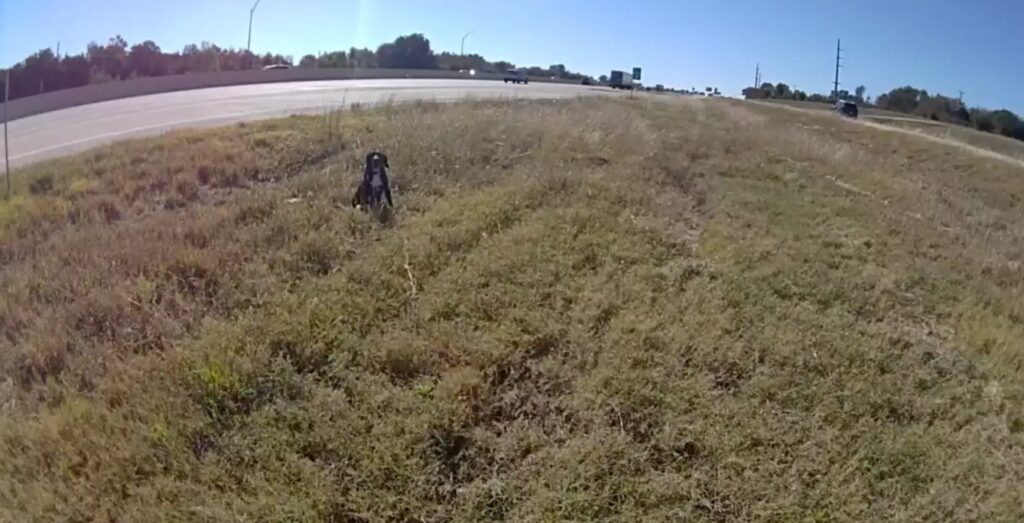
On a busy stretch of Interstate 35 just south of Waco, Texas, hundreds of cars were speeding by when a Good Samaritan pulled off the road to check on something that didn’t belong there — a dog lying motionless in the grass median beside the highway.
With traffic roaring past at high speed, the situation was dangerous for both drivers and the animal, but it also marked the start of a life-changing rescue.
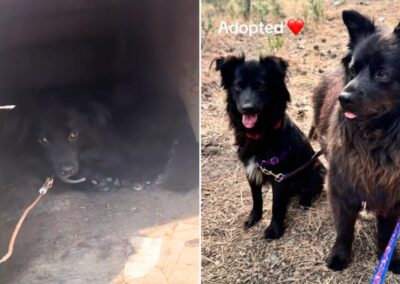
The passerby called police, and Chief Michael Dorsey of the Bruceville-Eddy Police Department arrived quickly. As he approached the distressed dog, a black Labrador-mix later identified as Lincoln, he noticed immediately that something was wrong.
Lincoln whimpered in fear and discomfort, clearly overwhelmed by the noise and the rush of vehicles, and Dorsey knew he had to act cautiously to keep the dog from darting into traffic.
At first, Lincoln couldn’t walk — and that’s when Dorsey realized the full extent of the dog’s plight. Attempts to get him on a leash revealed that Lincoln wasn’t simply scared or confused; he was injured, his body unable to support movement.
Dorsey didn’t hesitate. He moved his patrol car close to where Lincoln lay and, with the help of the Good Samaritan who first spotted him, carefully loaded the dog to take him to safety.
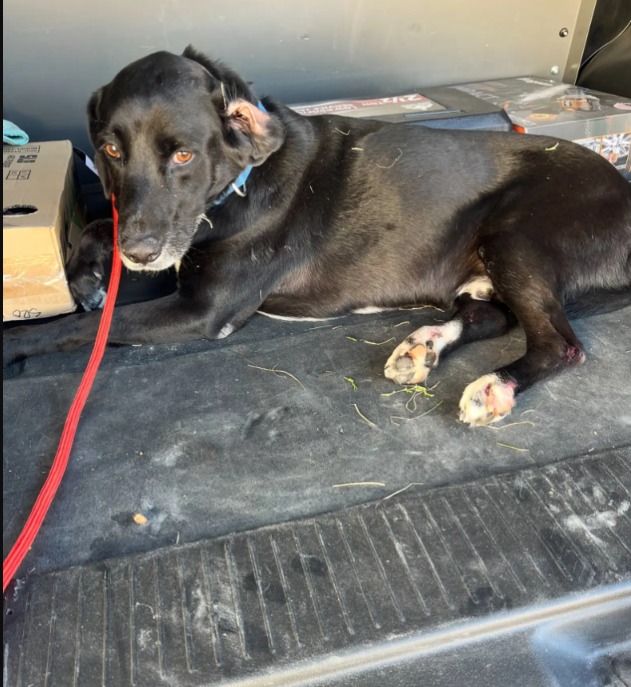
Once safe, Lincoln was offered food and water at the police station and scanned for a microchip. The scan revealed a surprising and poignant connection: Lincoln had once been adopted through Lucky Lab Rescue & Adoption, the very organization that had placed him in a home years earlier.
The rescue was shocked and horrified to learn one of their former dogs was injured and alone on the side of a highway.
Despite being hit by life’s harshest circumstances, Lincoln didn’t give up.
The rescue’s president, Katherine Martin, described the find as both difficult and motivating — difficult because of Lincoln’s condition and painful history, but motivating because it highlighted how far they were willing to go to help a dog in need.
At the veterinary clinic, the assessment revealed that Lincoln’s hips were dislocated and fractured, injuries serious enough to severely impact his mobility and quality of life.
The recommended path forward was not a simple one: Lincoln would need double hip replacement surgery to give him the best chance at a full, pain-free, active life.
Beginning with one side and soon the other, this extraordinary care plan reflects the commitment of his rescuers to provide Lincoln with every opportunity to thrive again.
To fund these life-changing procedures, Lucky Lab Rescue launched a fundraising campaign, appealing to the community and supporters who had already followed Lincoln’s journey from rescue puppy to highway survivor.
Dorsey and the rescue team also continued to investigate how Lincoln ended up injured and alone, hoping to piece together the final chapters of the story that started with adoption and led back to rescue care.
The compassion shown by the Good Samaritan driver, the rapid response and care from Chief Dorsey, and the determination of Lucky Lab Rescue to help Lincoln again demonstrate what’s possible when people refuse to look away from an animal in need.
Instead of leaving Lincoln to fend for himself in a dangerous situation, they gave him a second chance at a meaningful life — one that includes recovery, safety, and the possibility of once again running freely without injury.
Lincoln’s story is not just a rescue moment; it’s a powerful reminder that compassion — shown by strangers, law enforcement, and animal advocates alike — can change the trajectory of a life that shouldn’t have survived a highway encounter, but did because people chose to help.