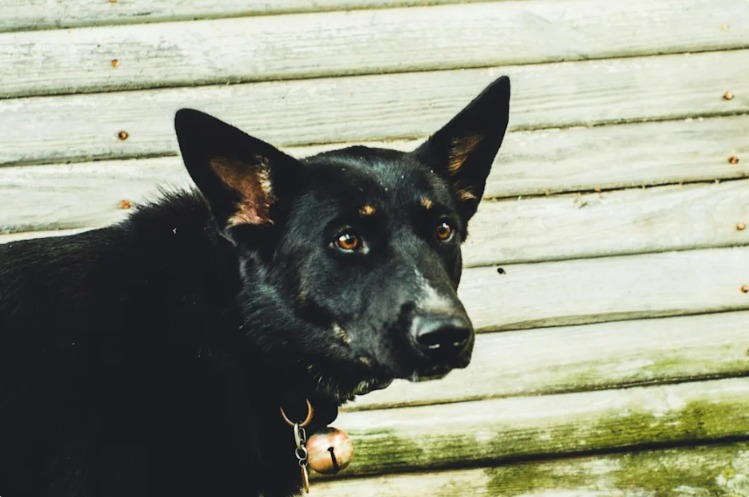
On a crowded street in Thailand, a German Shepherd mix, later named Atlas, lived a life that most of us can hardly imagine. His days were spent avoiding people, afraid of every movement and sound — a survival instinct born from fear, neglect and a lack of trust in humans.
Yet despite all he’d endured, a team of rescuers decided his life was worth saving, and that decision has already sparked a powerful transformation.
Atlas’s rescue began when animal advocate Niall Harbison, founder of the rescue group Happy Doggo, spotted him on the streets where stray dogs roam daily. Unlike a friendly companion dog wagging its tail at the sight of people, Atlas cowered, ran and fought when approached.
He was terrified — not aggressive, just fearful of human contact and instinctively defensive because of it.
What made Atlas’s situation especially urgent were the large tumors weighing him down, a visible sign of long-term neglect and medical need. Because of these masses, he moved awkwardly and appeared worn down, as though every step was a burden rather than a simple part of life.
For a dog already mistrustful of people, this kind of physical distress added another layer of complexity to getting him help.
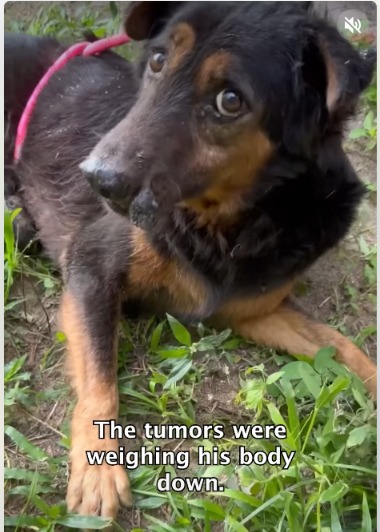
Rescuers knew they couldn’t just rush in and expect him to calm down; they had to be patient and gentle. Dogs like Atlas, who have never experienced compassion or safety, often see hands outstretched toward them as threats instead of help.
Their reactions — running, hiding, avoidant behavior — aren’t a refusal of love; they’re fear responses rooted in past hardship and lack of positive human interaction.
Despite the difficulty, Harbison and his team were able to secure Atlas eventually. Once he was on a leash and in their care, he was taken to the Happy Doggo sanctuary, where proper nutrition, warmth and daily observation began to replace the years of uncertainty he had lived through.
This transition was not an overnight fix. Dogs who have spent long periods in survival mode require time to learn what comfort feels like, and Atlas was no different.
In the sanctuary’s calm environment, Atlas began to show small signs of change. The fear didn’t vanish instantly, nor should it have — trust must be earned one reassuring moment at a time.
But step by step, with consistent gentle handling and the knowledge that no harm would come to him, Atlas started to relax ever so slightly.
Crucially, Atlas is now receiving medical support in addition to emotional care. Because his body needed strengthening before he could face surgery to remove the tumors, he’s on a careful regimen of nourishing food and observation designed to build up his resilience.
This dual approach — healing both physically and emotionally — reflects a holistic rescue philosophy that many modern animal advocates emphasize: rescue isn’t just about removal from danger; it’s about restoring wellbeing.
The story of Atlas is one of transformation and hope, reminding us that a dog’s first reaction — whether fearful, shut down, or defensive — doesn’t define who they can become.
Many dogs rescued from street life, neglect or trauma seem unreachable at first, but with patience, consistency and genuine care, they often rediscover trust in humans and learn that contact can mean kindness, not peril.
Today, Atlas is still on his journey — one that has moved him from a life of fear and discomfort to one of safety and possibility. Every day he remains in care, every gentle touch from a rescuer, and every calm interaction helps rewrite the narrative of his life.
For Atlas, the path from terror to trust is ongoing, but it’s now filled with moments of security, warmth and the promise of a future he never thought possible.