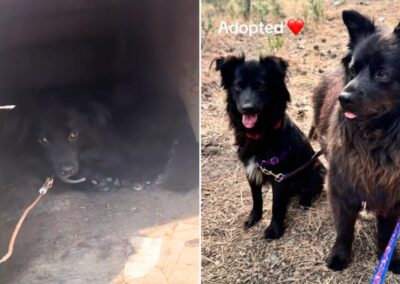
Rescue animals often carry the weight of their pasts with them—fear, distrust, confusion, and sometimes even fear of simple human touch. That was the case for one little dog who arrived in her foster home visibly skittish, unsure of her surroundings, and far from ready to be touched or comforted.
But everything changed when she received a long‑overdue, much‑needed first bath that helped set her on a road toward confidence and calm.
When this rescue dog first came into her foster family’s care, she was terrified and overwhelmed—common reactions for animals pulled from unstable or stressful environments and suddenly placed in a home filled with new sights, sounds, and smells.
She hid, shivered, and kept her distance from gentle attempts at reassurance. It was clear she had never experienced a safe, loving home before.
One of the first hurdles for many foster dogs is something as basic as grooming—a task that can feel frightening for a dog that hasn’t been touched kindly before.
For this pup, getting her first proper bath wasn’t just about cleanliness. It was a pivotal moment in her emotional healing and a literal washing away of some of the fear that clung to her.

Patience and gentle encouragement were key. Her foster caregivers approached the task calmly, allowing her to explore the area at her own pace, offering soft words and treats to help her associate positive experiences with the unfamiliar process.
They didn’t rush her; instead, they made safety and trust the priority. Slowly, she began to relax.
Once the water, shampoo, and careful hands had done their work, the transformation was already visible. Her coat was cleaner, softer, and free of dirt and grime. But more importantly, her posture changed.
She lifted her head more, her body language softened, and she even began to look curiously at her human helpers rather than cower from them.
For many rescue dogs, experiences like a first bath are therapeutic in more ways than one.
They help build trust, show the animal that human touch can be kind and comforting, and create opportunities for connection and affection that were absent in their earlier lives. It’s in small moments like this that a scared dog begins to learn that hands can help, not harm.
Stories like this one resonate widely because they highlight both the challenges and the rewards of animal rescue work.
A frightened dog may arrive reluctant to interact, wary of hands reaching toward them, or overwhelmed by basic care routines. But as micro‑victories accumulate—a gentle pat here, a quiet room there, a warm bath in a safe space—so does their confidence. Foster homes become healing spaces where a dog’s guarded exterior begins to soften.
This particular dog’s journey doesn’t end with a bath. It marks just one of the many steps toward becoming a confident, trusting companion.
But it’s a meaningful one —the first time she might have felt clean, comfortable in her own skin, and genuinely safe.
For anyone who has ever watched a rescue animal grow from fearful and skittish into friendly and confident, these kinds of milestones are deeply moving.
They remind us that resilience isn’t just about survival—it’s about learning to thrive. And for this once‑scared pup, a simple bath became a turning point toward a life filled with kindness, patience, and love.