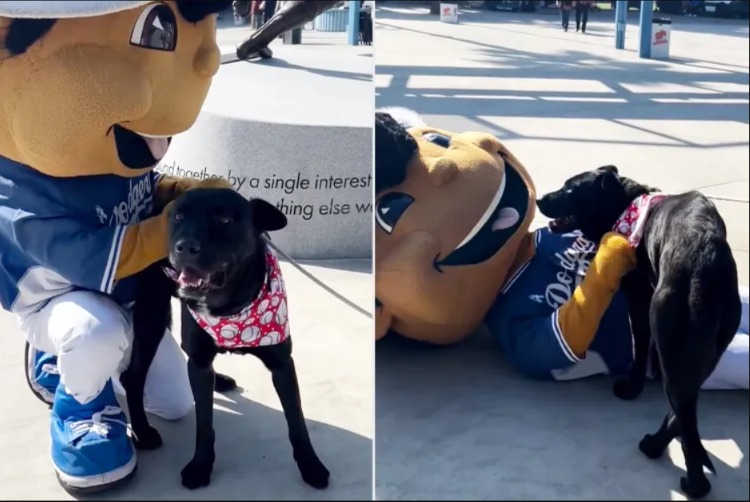
At a festive holiday adoption event in California, dozens of dogs found forever homes—but one dog named Waldomar was the only one left behind. What happened next created a moment so sweet it quickly captured attention across social media, reminding everyone that sometimes a little extra love goes a long way.
The event took place in partnership with the Los Angeles Dodgers and animal welfare organizations, aiming to find loving families for shelter dogs ahead of the holidays. Most dogs who attended were adopted by the end of the day.
However, Waldomar—a playful black Labrador retriever from the Lancaster Animal Care Center—was the lone dog who remained without a new family.
Despite the joyful atmosphere and many happy outcomes, Waldomar’s situation struck a chord with shelter staff and attendees alike.
Spending an entire day at an adoption event and seeing his kennel mates leave one by one could have left him feeling confused or overlooked. But fate intervened in a uniquely uplifting way.
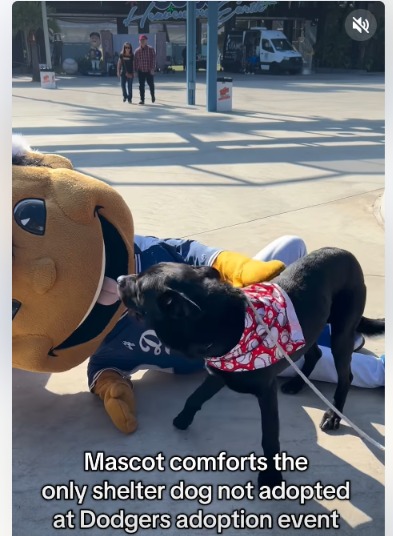
Enter the Los Angeles Dodgers mascot—a figure known for spreading fun and good spirits at games and community events. According to the shelter’s social media post, the mascot noticed Waldomar still waiting and took a moment to offer him well‑deserved attention, pets, and warm cuddles.
The shelter captioned the heart‑warming interaction by saying the mascot “stopped by to hug him and remind him he’s a good boy.”
The image of a friendly mascot leaning in to comfort a hopeful rescue dog struck a powerful emotional chord with online audiences. In a world where shelter outings can be unpredictable and sometimes disappointing for animals and volunteers alike, that simple gesture showcased the kindness and compassion that can emerge in unexpected ways.
Waldomar is described by shelter staff as a playful and affectionate dog who enjoys engaging with people and animals. Despite his friendly nature, he was overlooked during the event when potential adopters found homes for the rest of the dogs.
While this might have been disheartening in another context, Waldomar’s story took a positive turn thanks to the spotlight moment—and the extra boost of attention from the mascot.
The Dodgers’ involvement wasn’t just symbolic. They’ve hosted annual adoption events in recent years, working with local animal care centers and welfare groups to make it easier for families to bring home a pet.
In the event referenced, 42 of 44 dogs found homes, highlighting both the generous turnout and the ongoing need for adoption awareness.
Waldomar’s experience is part of a broader pattern at adoption events: most animals find homes, but some remain in shelters longer because they don’t immediately catch a prospective adopter’s eye.
Stories from other adoption drives show that when a single dog remains, communities often rally, sharing photos and descriptions online to help these overlooked animals get noticed in the days following an event.
Advocates emphasize that every dog—regardless of age, breed, or personality—deserves a chance at a loving home. Adoption events designed to remove barriers, such as waived fees or inclusive services like microchipping and vaccinations, aim to make it easier for families to consider pets they might not otherwise meet.
For Waldomar, the Dodgers mascot’s gentle moment wasn’t just a fleeting photo opportunity; it was a reminder of the warmth and connection that rescue work is all about.
His story invites us to pause and reflect on the animals who are still waiting for their forever families—each one deserving of affection, attention, and a place to call home.