Some moments in animal rescue are small on the surface but immense in meaning—and a recently shared video featuring a senior dog’s reaction to being told she’s a “good girl” is one of those moments that strikes deep.
The dog, Syndey, arrived at Animal Friends of the Valleys overwhelmed and shut down after losing her longtime owner, and her early behavior reflected profound fear and grief. Yet, over time, subtle gestures began to show that trust and healing were possible again.
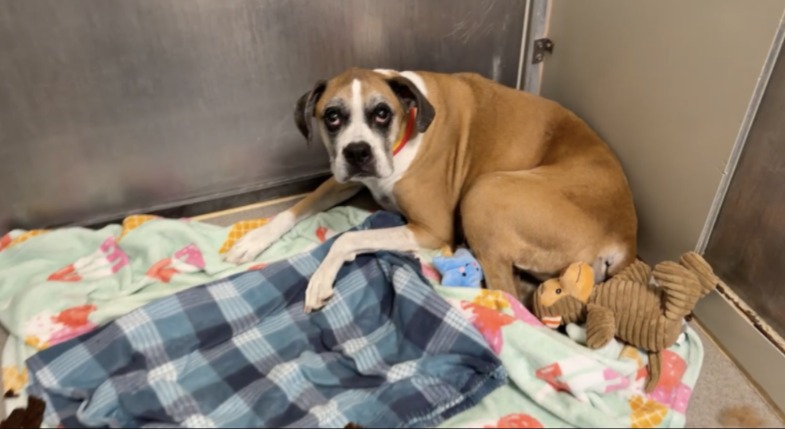
When Syndey first arrived at the shelter, she didn’t bark or pull at the gate like many dogs do. Instead, she stood frozen at the back of her kennel, body stiff and eyes wide, unsure what to make of the unfamiliar environment and the barrage of sounds around her.
For a senior dog who had clearly lived in a home, this kind of shutdown usually signals loss, confusion, and a visceral reaction to sudden change.
A look into her intake notes revealed the heartbreaking backstory. Syndey once had a loving home and a person she bonded with. That owner died of cancer, leaving her without her anchor in the world. A family member initially tried to care for her, but for reasons the shelter couldn’t fully explain, she was eventually surrendered.
There was no medical history, no details about her routine, and no insights into how she interacted with other dogs or people. All that came with her was her name—a faint echo of former belonging.
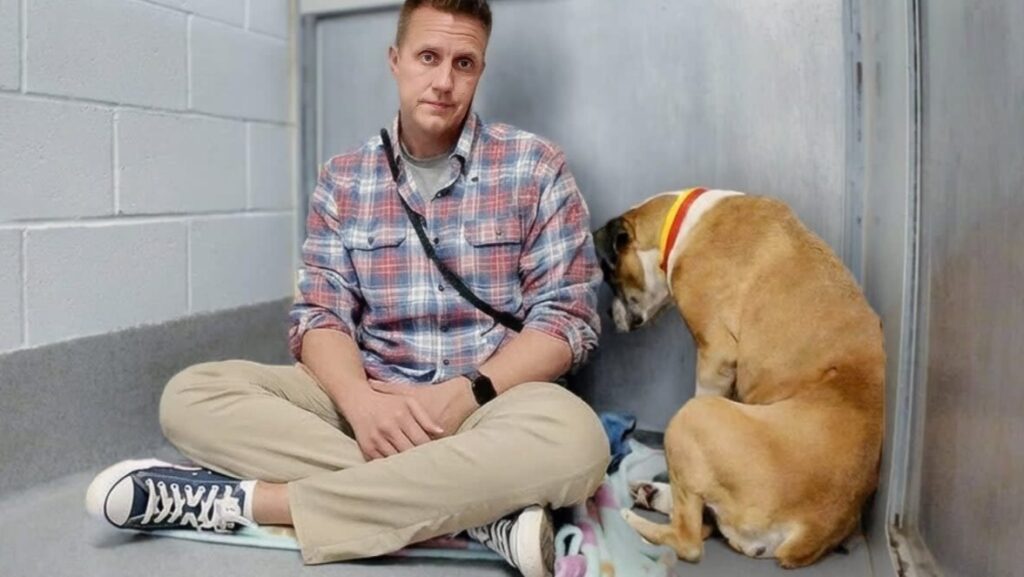
In those first moments, Syndey didn’t react to food or affection. Even when offered a treat placed nearby, she wouldn’t approach. It took patience and calm presence before she would gently take a piece from a hand held at a distance.
That tentative bite spoke volumes: this dog wasn’t aggressive. She wasn’t aloof. She was grieving and uncertain.
When her caregiver spoke her name, Syndey softened. Her head shifted, her eyes eased, and for a moment, the hard shell of fear loosened. It was a small response—almost easy to miss—but it was significant. In the language of animal behavior, a dog’s name can be an anchor of identity and recognition.
For Syndey, hearing her name spoken kindly in a predictable, calm environment started to remind her that people can be safe again.
The shelter team worked with Syndey at her pace, watching her body language and offering treats only when she was ready. They didn’t rush her or force interaction.
Instead, they created predictability in a world that had become unpredictable overnight. Even the smallest gestures, like accepting a treat or turning her head toward a familiar voice, were treated as progress.
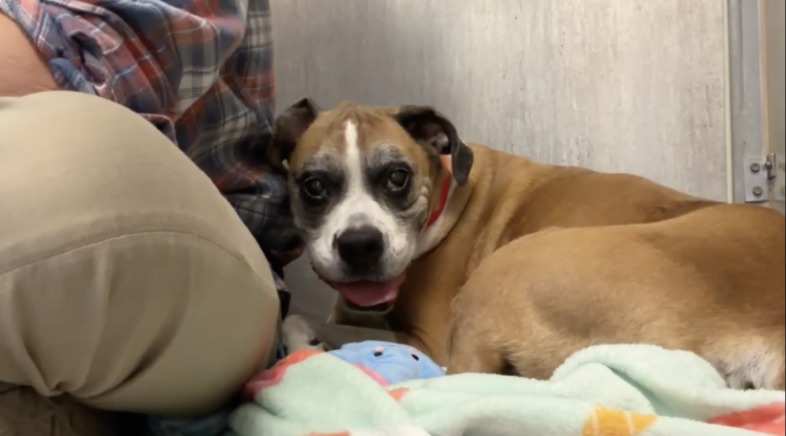
Syndey’s story highlights something many animal lovers already understand: rescue work isn’t just about moving a dog from one place to another, it’s about helping a dog feel safe again. For a senior dog who lost the person who mattered most, that process can be slow and fragile.
But when a dog begins to respond to affection—with a gentle look, a soft breath, or even the barest hint of recognition—those moments become turning points.
Now, Syndey is available for adoption—but she needs a quiet home, patience, and a family willing to meet her where she is emotionally.
She isn’t a dog who will spring into affection instantly. Instead, she requires a gentle hand, a predictable voice, and time to remember what it feels like to be loved again.
Her reaction to being called a “good girl” isn’t just a cute video clip.
It’s a reminder that healing can start with a calm word and a moment of understanding—especially for a dog who has lost her world and is learning, step by step, that warmth and connection can exist again.