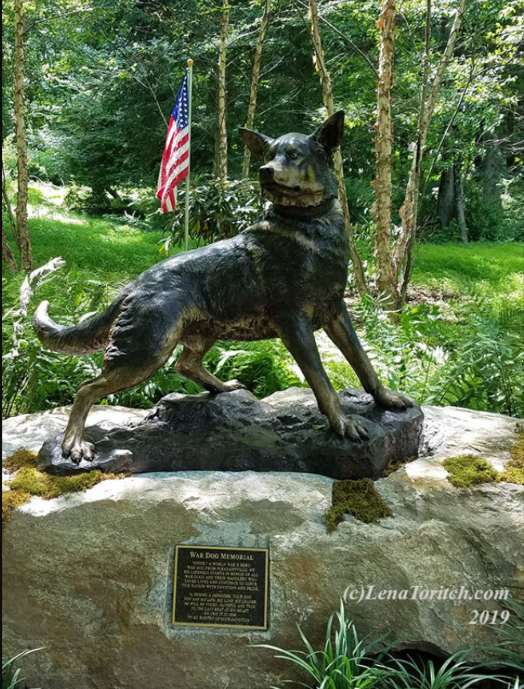
Among the countless stories of heroism that emerged from World War II, few are as remarkable and inspiring as that of Chips — a dog whose courage under fire earned him enduring legend status long after the war ended.
Chips’ journey from family pet to frontline warrior dog shows not only the versatility of animals in wartime, but also the extraordinary bond between a dog and the soldiers he served beside.
Chips was a mixed‑breed dog — part German Shepherd, part Collie, and part Siberian Husky — born in 1940 and raised in Pleasantville, New York, where he became a beloved member of the Wren family. As wars often do, World War II changed the course of his life.
When the United States entered the conflict, the Army created a program called Dogs for Defense, asking citizens to volunteer their pets for service. The Wrens responded by offering Chips for duty, believing he had the right temperament and strength for meaningful work.
After basic training at the War Dog Training Center in Front Royal, Virginia, Chips was paired with Private John P. Rowell and assigned to the 3rd Infantry Division, a unit that would see some of the fiercest fighting in the European and Mediterranean theaters.
Chips’ assignments took him across North Africa, Sicily, Italy, France, and Germany — battles and campaigns that tested even the most seasoned human soldiers.
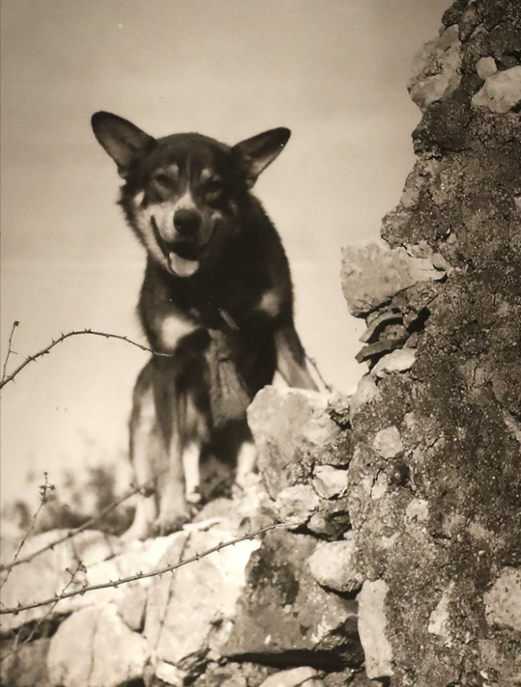
One of the defining chapters of Chips’ wartime service came during Operation Husky, the Allied invasion of Sicily in 1943. Landing with his division on the rugged Sicilian coast, Chips and Rowell found themselves pinned down on the beach under fire from a concealed Italian machine‑gun nest.
In a moment of instinct and bravery that would cement his legend, Chips broke away from his handler and charged into the enemy pillbox, forcing the armed soldiers inside to surrender. His action effectively cleared the position and saved lives by neutralizing a deadly threat.
Soldiers watching the skirmish described a chaotic scene — gunfire booming, rifles cracking, and in the middle of it all, a dedicated dog racing forward without hesitation. Privates later recounted seeing Italian troops emerging with their hands up while Chips was still at the frontline. Although he suffered burns and a minor head wound from the encounter, he continued on duty alongside his unit.
Chips’ contributions didn’t stop with that single incident. Later on guard duty, he reportedly alerted his unit to Italian soldiers attempting to infiltrate their camp, allowing U.S. forces to detain the would‑be enemy before harm could be done.
Earlier in 1943, Chips also served as a sentry during the Casablanca Conference, a high‑profile meeting where Allied leaders including President Franklin D. Roosevelt and British Prime Minister Winston Churchill solidified strategy for the war — a testament to the level of trust the Army placed in him.
For his frantic courage and effectiveness in combat, Chips was initially awarded the Distinguished Service Cross, Silver Star, and Purple Heart — honors usually reserved for human soldiers.
However, an Army policy at the time prohibited decorations from being issued to animals, so those awards were formally rescinded. His unit still unofficially recognized his service with a theater ribbon, an arrowhead for an assault landing, and battle stars corresponding to the eight major campaigns he participated in.
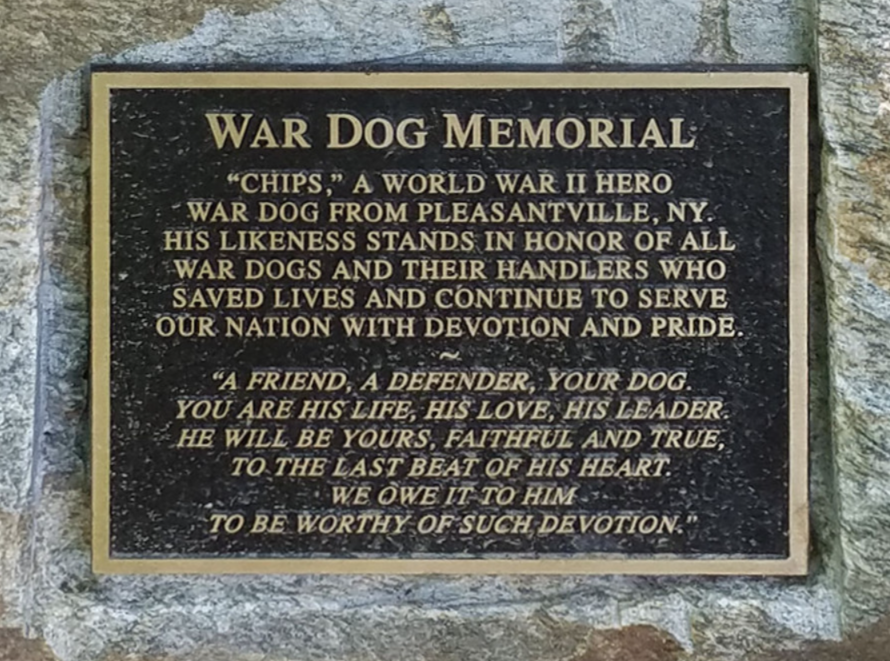
Despite the bureaucratic limitations, Chips’ heroism would not be forgotten. Decades after his wartime service, he was posthumously honored with the PDSA Dickin Medal, often described as the animal equivalent of the Victoria Cross, for bravery and devotion during wartime.
Later, an Animals in War & Peace Medal of Bravery further acknowledged his service and contribution to Allied efforts. These awards reflect the growing recognition of the vital roles animals played alongside human soldiers, often at great personal risk.
When World War II ended, Chips was discharged in December 1945 and returned home to the Wren family, where he lived out the remainder of his days before passing in 1946.
His legacy lived on not just in military history, but also in popular culture; his life was fictionalized in a 1990 television movie titled Chips, the War Dog, bringing his daring actions to new audiences and further cementing his place in wartime lore.
Today, Chips is remembered not simply as a faithful companion, but as a courageous soldier in his own right. His story illustrates how animals contributed materially and emotionally to the war effort, inspiring those around them through loyalty and fearless action.
Whether charging ahead against enemy positions or standing guard through long, tense nights, Chips exemplified the extraordinary impact a single dog can have on the lives of many.