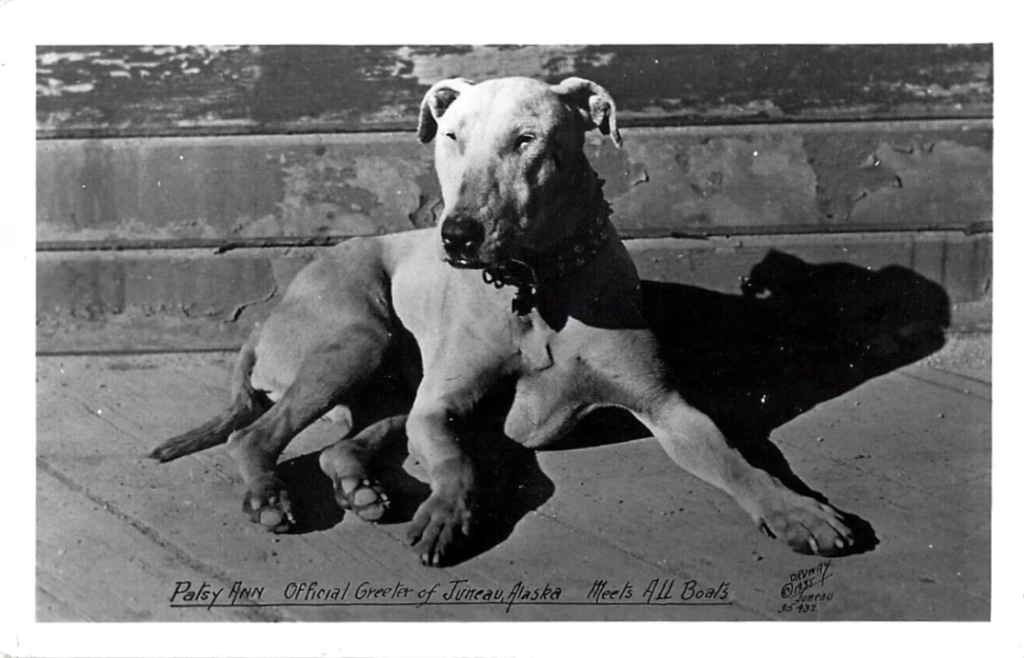
In the early 20th century, the port town of Juneau, Alaska, had a star — and it wasn’t a person. It was Patsy Ann, a white bull terrier with enough personality, independence, and charm to become a living legend.
Though entirely deaf from birth, Patsy Ann rose from an ordinary puppy to become Juneau’s iconic greeter — a fixture of city life and the heart of countless traveler memories.
Patsy Ann arrived in Juneau around 1930, likely as a young pet brought up by local residents. But being tethered to just one home wasn’t in her nature. Instead, she chose the entire town as her territory.
She wandered through businesses, curled up beside stoves in cold weather, and greeted anyone who showed her attention and affection. Everywhere she went, Juneau welcomed her back.
The Ultimate Dockside Celebrity
What truly set Patsy Ann apart was her role at the docks. Juneau was — and remains — a hub for ships arriving from around Alaska and beyond. Somehow, Patsy Ann developed an uncanny ability to know when a ship was about to arrive, long before anyone else could see it.
Despite her deafness, she would trot down to whichever dock the vessel was coming into, and wait faithfully for passengers to disembark.
Locals came to rely on her presence, and tourists made a point of finding her during their visits. Soon she became the face of Juneau for many travelers — eagerly photographed and featured on postcards that captured her regal stance on the wharf.
For a time she may have been one of the most photographed dogs in the entire western United States, a canine ambassador of goodwill and Alaskan spirit.
Her daily rituals made Patsy Ann more than a town dog — she became a cultural touchstone, a reason in and of herself to visit Juneau.
A Legal Scuffle Turned Celebration
Patsy Ann’s fame wasn’t without drama. In 1934, Juneau began enforcing dog licensing laws, which meant any pet roaming the streets needed a tag. Patsy Ann didn’t have one — and she belonged to no single owner — so at first the city dogcatcher was ordered to enforce the ordinance.
But the community quickly rallied. News coverage sparked a groundswell of support; locals raised enough money to buy her a collar and tag, and the city backed down.
Instead of confiscation, what followed was another celebration. The mayor declared Patsy Ann the “Official Greeter of Juneau, Alaska,” giving her both a symbol of dignity and an exemption from the rules that tied other dogs down.
She accepted her title with the swagger of a true local legend — and promptly went back to doing what she did best: greeting ships and greeting people.
Life at the Heart of a Community
Patsy Ann wasn’t just a one‑trick celebrity. She was a true part of daily life in Juneau.
She wandered into theaters during performances, likely in search of treats or pats; she visited bars and cafes where bartenders happily fed her scraps; and she made rounds like a social fixture in her own right.
Local union halls became cozy hangouts where she was welcome to curl up by the fire and rest after a long day of greeter duties.
Her story was so beloved that local businesses sold pictures and postcards of her, spreading her image far beyond Juneau’s tiny population.
She was more than a dog — she was Juneau’s canine character, a four‑legged personality whose antics and loyalty made people smile.
The End of an Era — and a New Beginning
Patsy Ann’s final years saw her slow down like all of us do with age, but she never lost her dedication to her job. She greeted her last ship on March 30, 1942, and peacefully passed away at her favorite local union hall that very night.
The next day, residents gathered — not for a quiet farewell, but for a proper send‑off. Patsy Ann was placed in a small coffin and lowered into Gastineau Channel, resting in the waters right beside the dock she had watched over for so many years.
But that wasn’t the end of her story.
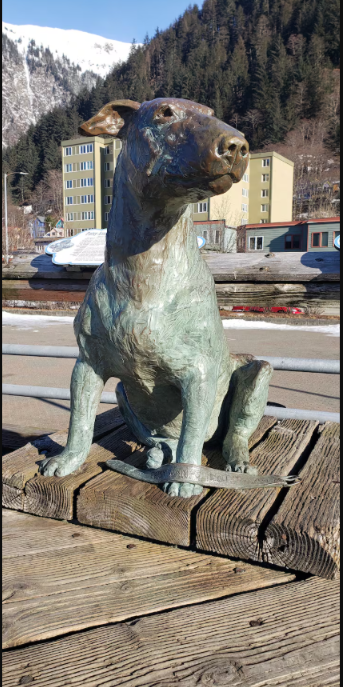
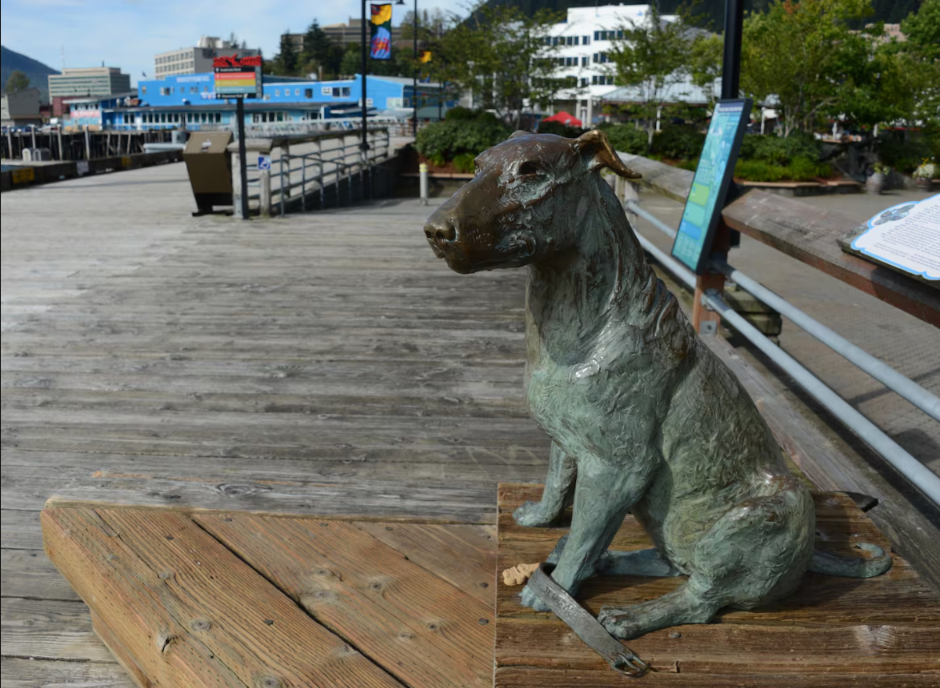
Fifty years later, residents and admirers commissioned a bronze statue of Patsy Ann at the very spot she stood so often. Created by artist Anna Burke Harris, the sculpture immortalizes her vigilant stance — gazing out across the channel as though the next ship is just about to arrive.
Today, visitors to Juneau still pause at the statue, touch her polished head for good luck, and carry forward her legacy of welcoming strangers with warmth and curiosity.
Why Patsy Ann Still Matters
Patsy Ann’s story isn’t just a quirky piece of local history; it’s a reminder of the powerful role animals can play in community life. She wasn’t owned by a single family — she belonged to the whole town.
Her loyalty wasn’t measured in commands followed or tricks performed, but in presence, consistency, and an intuitive rhythm with her environment.
For countless travelers who set foot in Juneau, meeting Patsy Ann — or paying their respects at her statue — is a ritual that connects them to a simpler, warmer era of hospitality.
And for the residents who watched her trot down the dock day after day, she was a constant, comforting reminder that friendship takes many forms — even four‑legged ones.