It was supposed to be a simple vacation.
New place. New food. A few quiet days away from routine.
But in a small moment that lasted only seconds, everything changed.
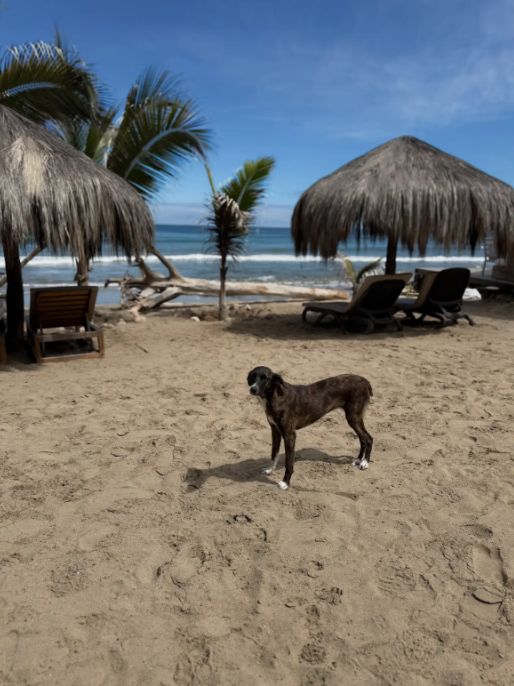
While sitting and eating at a hotel restaurant in Tumbes, Peru, Luciana and her partner, Nils, noticed a stray dog watching them from a distance.
She wasn’t barking.
She wasn’t approaching.
She was just… staring.
Still. Quiet. Focused.
And something about that gaze made the moment feel different from everything else around them.
Luciana later described it as a look that immediately pulled at her emotionally — the kind that doesn’t feel random, but intentional.
A connection formed without words, just presence.
The dog was thin and clearly surviving on her own, navigating the edge of the hotel grounds while the world around her continued normally.
But from that moment on, she started appearing regularly around the couple.
Day after day, she stayed close.
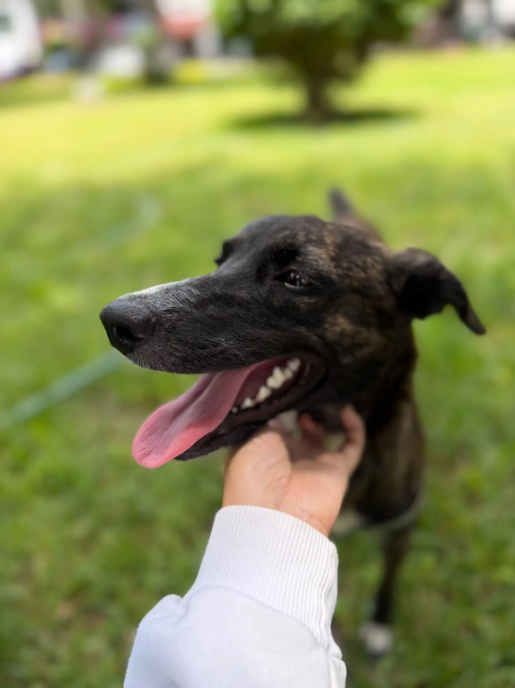
They began feeding her. Sitting with her. Letting her slowly get used to human touch again.
Trust didn’t come instantly, but it came steadily — built through repetition, patience, and small moments of safety.
Before long, she wasn’t just a stray they saw.
She was part of their routine.
And that’s where things shifted internally for them.
Because vacation logic is simple at the start: you leave things behind when you go home.
But emotional logic doesn’t always cooperate.
As the days passed, the idea of leaving her behind started to feel impossible.
The dog had already begun following them in small ways — staying near the hotel, waiting for them to return, watching for familiar movement.
It wasn’t dramatic attachment. It was quiet consistency.
And that kind of connection is often what breaks people the most.
Because it doesn’t feel like a rescue story yet.
It feels like responsibility forming in real time.
By the end of the trip, Luciana and Nils made a decision that changed the entire direction of their journey: they would bring her home.
That decision wasn’t simple.
Logistics, travel arrangements, uncertainty — none of it is easy when adopting a stray abroad.
But what stood out most was not hesitation. It was commitment.
They had already crossed the emotional line.
The rest was just execution.
At one point during the transition, the dog even disappeared briefly, causing panic.
But she returned the next morning, waiting for them again as if reaffirming the bond that had formed.
From there, everything moved quickly.
Plans were rearranged. Transport was organized.
And instead of leaving her behind, they adjusted their entire return journey to make sure she could travel safely with them.
It wasn’t the original itinerary.
But it became the only one that made sense.
The dog, later named Marea, was eventually brought to safety and relocated to a stable home environment, where she began adjusting to a life completely different from the one she had known on the streets.
And that contrast is what makes the story land so deeply.
From surviving alone near a hotel…
To sitting safely beside the people who chose not to walk away.
No grand declarations.
No dramatic rescue moment.
Just a quiet decision made in a moment that didn’t feel like a choice anymore.
Because sometimes, the most permanent changes in life don’t start with planning.
They start with eye contact across a table.
And the feeling that leaving would cost more than staying ever could.