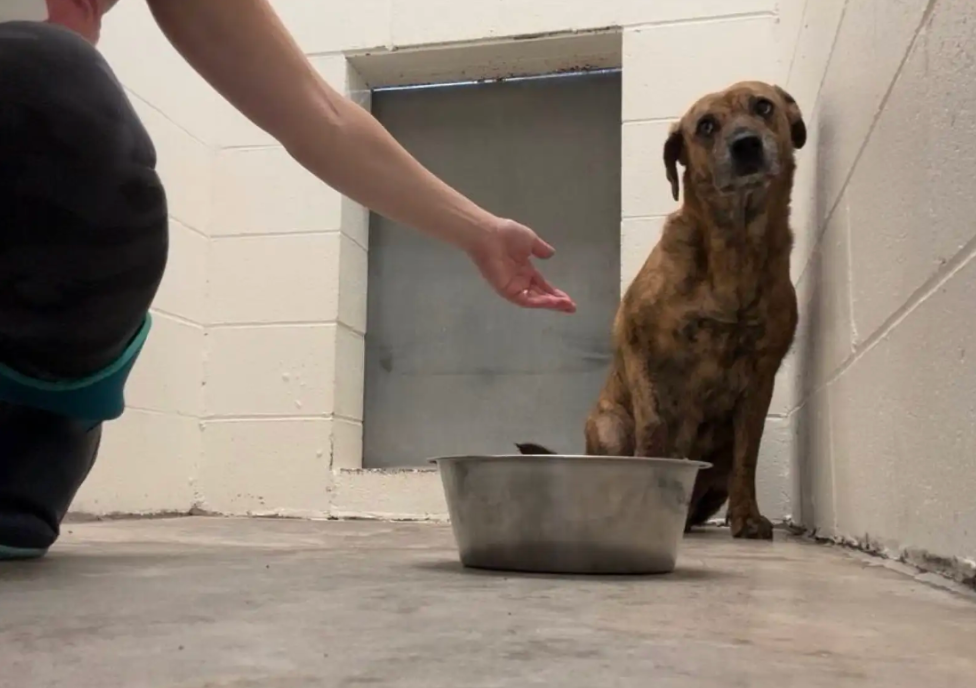
When Tuna first arrived at the shelter, she didn’t explore her kennel like other dogs.
She didn’t approach people.
She didn’t react to voices or movement.
She simply stayed in the corner — pressed tightly against the wall — as if trying to make herself disappear from a world that had already been too harsh.
Staff quickly realized this wasn’t ordinary fear.
This was shutdown behavior — the kind that develops after long-term neglect or trauma, where a dog stops engaging with everything around them just to cope.
For a long time, nothing worked.
Treats didn’t help.
Gentle voices didn’t help.
Even sitting nearby didn’t change much.
Tuna remained frozen in her small space, avoiding eye contact, avoiding interaction, avoiding anything that might pull her out of that protective stillness.
She became known among staff as one of the most shut-down dogs they had ever seen.
And yet, even in that condition, people didn’t stop trying.
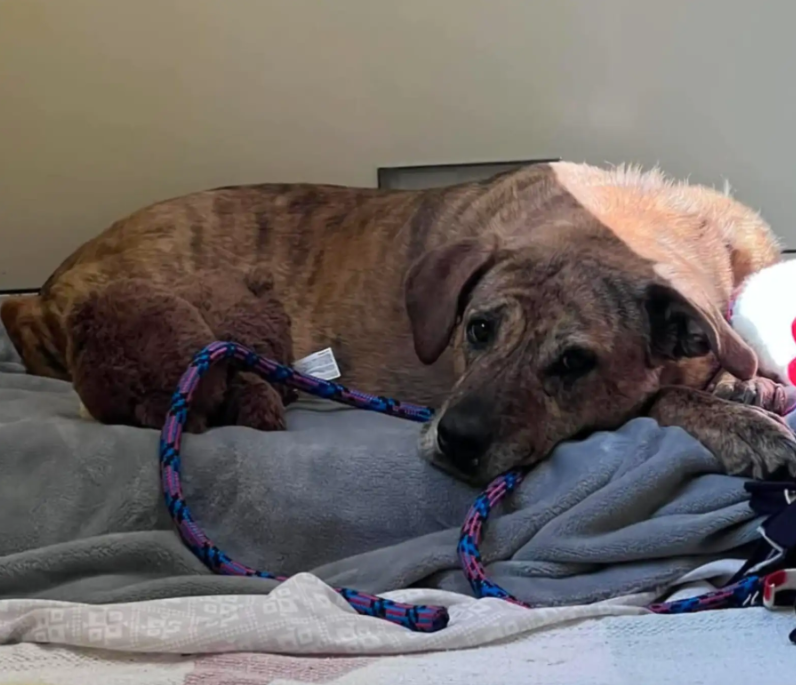
They began sitting with her more often. Short visits at first. Quiet presence instead of pressure.
The goal wasn’t immediate change — it was simply showing her that humans could exist nearby without harm.
Progress, when it came, was almost imperceptible.
A shift in posture.
A brief glance instead of a full avoidance.
A moment where she didn’t press quite as tightly into the wall.
But real change often doesn’t announce itself.
It accumulates.
Then, months into her stay, something unexpected disrupted the pattern.
Tuna needed a medical procedure that required sedation, and for the first time, staff were able to safely examine her without the usual barriers of fear and resistance.
And while it wasn’t a dramatic emotional breakthrough in the traditional sense, it created a moment of physical calm where she could finally experience touch without panic.
That moment mattered.
Because for dogs like Tuna, trust doesn’t begin with affection — it begins with safety.
After that experience, something slowly began to shift.
Not overnight transformation.
Not sudden personality change.
But the beginning of softening.
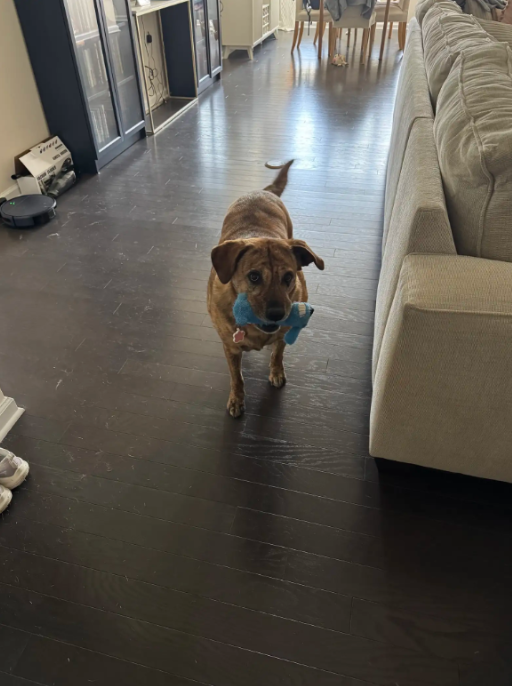
She started tolerating closeness from familiar staff. Then she started seeking it in small ways.
Eventually, she moved from the corner just a little more often. Enough to notice the world again instead of withdrawing from it entirely.
Over time, the “most shut down dog” label stopped describing who she was becoming.
And more importantly, people started to see what had always been underneath the fear.
A dog who wasn’t aggressive.
Not unreachable.
Just deeply scared for a very long time.
As trust continued to build, Tuna began showing glimpses of personality that had likely been buried for years — small signs of comfort, curiosity, and eventually, joy.
The kind of shifts that don’t look dramatic on video, but mean everything in real life.
Because they signal something bigger than behavior change.
They signal emotional recovery.
Eventually, after a long journey of patience and repeated gentle interaction, Tuna reached a point where she could be safely handled, walked, and cared for without shutting down completely.
And from there, her story moved toward what every shelter dog ultimately deserves — stability, consistency, and a home where fear no longer has to be the default response.
What makes her transformation so powerful isn’t that she became “different.”
It’s that she finally had enough time, safety, and patience to stop being only fear… and start being a dog again.