There are survival stories.
And then there are stories that sound like they belong in fiction — until you realize they actually happened.
This is one of them.
In 1958, during a Japanese Antarctic expedition, a team of sled dogs was left behind at Showa Station after severe weather made evacuation impossible.
The plan was never to abandon them permanently. The hope was that rescue would return soon.
But Antarctica does not wait for human plans.
Fifteen Sakhalin Husky sled dogs were chained at the base with only limited supplies.
When the expedition finally withdrew, the dogs were left behind in one of the harshest environments on Earth — freezing temperatures, months of darkness, and almost no food.
It was a decision made under pressure, but one that would haunt the story that followed.
When a new team returned nearly a year later in January 1959, they expected devastation.
And they found it.
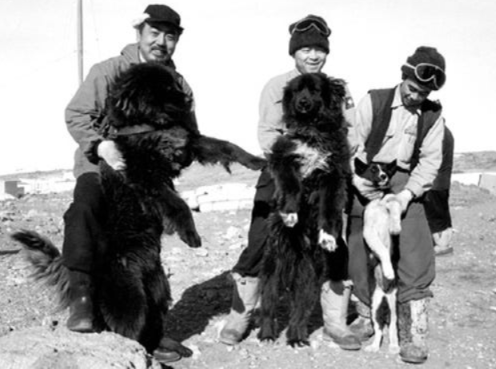
Seven dogs had died still chained in place. But something far more unexpected had also happened — eight of the dogs had managed to break free.
Most of those who escaped did not survive the brutal winter.
But two did.
Taro and Jiro.
Brothers. Three years old at the time. And the youngest of the original team.
What makes their survival so extraordinary is not just the duration — roughly 11 months in Antarctic conditions — but the environment itself.
Temperatures regularly plunged far below survivable limits, and food scarcity forced any surviving animals into extreme adaptation.
Investigators later concluded that the dogs likely learned to survive independently by hunting seals, penguins, and scavenging whatever organic material they could find on the ice.
No one can say with absolute certainty how they made it.
Only that they did.
When rescuers finally encountered them, it was not in a dramatic chase or a sudden capture.
It was a moment of disbelief — two familiar shapes standing in the distance at the station, alive when every assumption said they should not be.
In that instant, the expectation of total loss collapsed into something else entirely: astonishment.
The survival of Taro and Jiro quickly became national news in Japan.
Their story was not framed as simple endurance, but as resilience under conditions so extreme they were almost unimaginable.
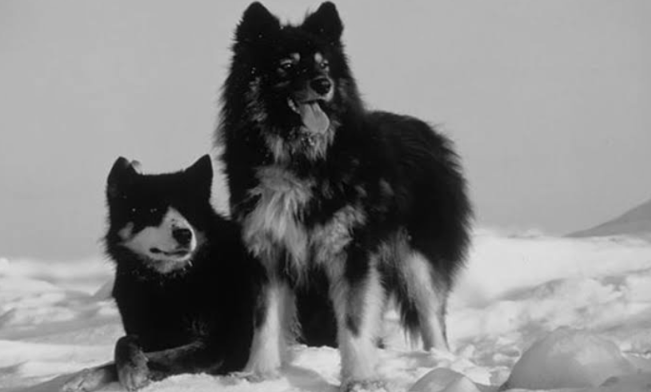
They were more than surviving animals at that point.
They became symbols.
After their rescue, the paths of the two brothers diverged.
Jiro remained in Antarctica, continuing as a working sled dog until his death in 1960. Taro was brought back to Japan, where he lived out the rest of his life at Hokkaido University, passing away in 1970.
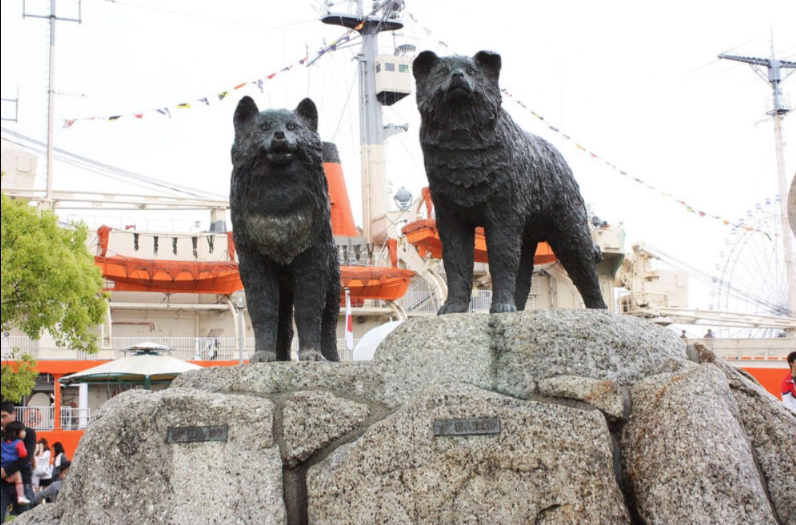
Both were later preserved and displayed as part of their historical legacy.
Their story also became part of cultural memory — inspiring films, documentaries, and repeated retellings across decades.
Not because the facts needed embellishment, but because the reality itself already sits at the edge of belief.
Fifteen dogs were left behind.
Most were lost to the cold.
Two came back from it.
And that contrast is what makes the story linger.
Not just survival against odds.
But survival against a world that gives almost nothing back once it decides to take.