Some dogs don’t get noticed quickly.
Not because they aren’t lovable.
But because shelter life has a way of making even the brightest personalities harder to see.
That’s what makes this story so powerful.
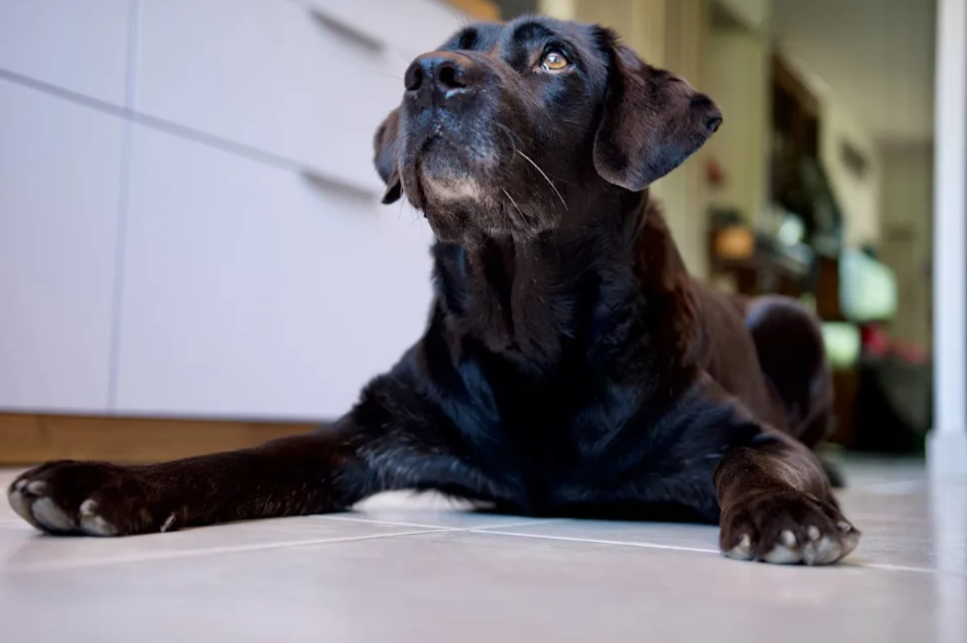
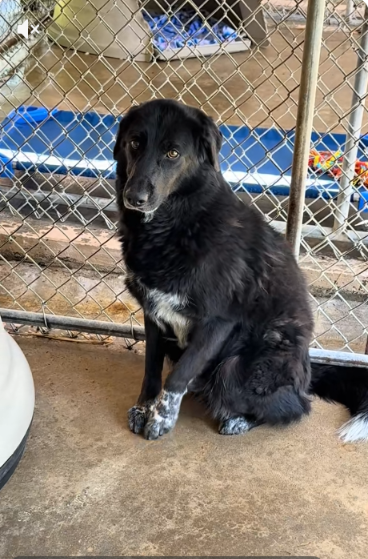
A Labrador mix spent nearly four years waiting in a shelter for someone to choose him.
Four years of kennel routines, passing visitors, and the kind of slow emotional wear that comes from being overlooked again and again.
For a dog, that’s a long stretch of time.
It means seasons change, faces come and go, and hope has to be rebuilt over and over in a place that never quite feels like home.
Dogs in long-term shelter care often develop a mix of resilience and emotional fatigue.
Many still greet people with wagging tails, but underneath that optimism is a quieter story — one shaped by repetition, uncertainty, and waiting.
Research and shelter reports consistently show that long-stay dogs are among the most overlooked simply because familiarity becomes invisibility.
But eventually, something breaks the cycle.
For this Lab mix, it wasn’t a sudden miracle moment.
It was the slow accumulation of visibility — volunteers continuing to advocate, visitors finally pausing long enough to notice, and a system that eventually put the right person in front of him at the right time.
And when that moment arrived, everything shifted.
The dog who had spent years behind kennel bars finally left the shelter behind and stepped into a home where he didn’t have to wait anymore.
Stories like this are becoming more visible in rescue communities, where long-term shelter dogs are increasingly being highlighted through social media, adoption campaigns, and foster programs designed to prevent animals from growing up or aging out in kennels.
Some dogs spend hundreds of days — even years — waiting before finally being adopted.
And yet, when they do get adopted, the transition can be surprisingly natural.
Many long-term shelter dogs adjust quickly once removed from high-stimulation environments.
The shift from constant noise and uncertainty to calm routines, predictable affection, and stable surroundings often unlocks behaviors that were hidden in shelter conditions — relaxation, playfulness, and deeper bonding.
That contrast is what makes these adoptions feel so emotional.
Because the dog you see in a kennel is not always the dog that comes home with you.
What shelter staff often describe is a transformation that begins within days: more rest, softer body language, and a growing sense of security that allows personality to surface again.
Even dogs who appeared shut down or emotionally distant often begin to engage once stress levels drop.
And for a dog who has waited four years, that change is even more profound.
It’s not just about getting adopted.
It’s about finally exiting a holding pattern where life is paused.
Now, instead of waiting for someone to walk past the kennel, this Lab mix gets to do something different entirely — live without uncertainty shaping every day.
No more guessing when the next walk will come.
No more watching doors open and close without being chosen.
No more years measured in “still here.”
Just a home.
A routine.
A place where he is no longer an option, but part of the family.
And while the shelter years don’t disappear, they do get replaced by something stronger.
Consistency.
Connection.
And the quiet relief of finally being where he was always meant to land.