
Not every special dog is trained to chase criminals, rescue hikers, or guide someone through a busy city street.
Some dogs change lives simply by sitting beside someone who feels alone.
In hospitals across the country, therapy dogs curl up next to frightened patients before surgery.
In nursing homes, they bring smiles to people who haven’t spoken much in days. In schools, anxious children relax the moment a gentle dog walks into the room.
And unlike service dogs trained for one individual person, therapy dogs spread comfort wherever they go.
That’s why more dog owners are asking the same question lately:
Could my dog become a therapy dog too?
The answer surprises many people.
Because therapy dogs don’t need to be perfect.
They just need the right temperament, patience, and trust in their human.
According to the experts at the American Kennel Club, the best therapy dogs are calm, friendly, and emotionally steady around strangers.
They enjoy being touched, approached, and handled without becoming fearful or overwhelmed. (akc.org)
That means the loudest or most energetic dog at the park usually isn’t the ideal candidate.
But the sweet dog quietly leaning against someone who’s sad?
That dog might be perfect.
One of the biggest misconceptions people have is believing therapy dogs need intense professional training from the very beginning.
In reality, most therapy dogs start with basic obedience.
Sit. Stay. Leave it. Walking calmly on a leash.
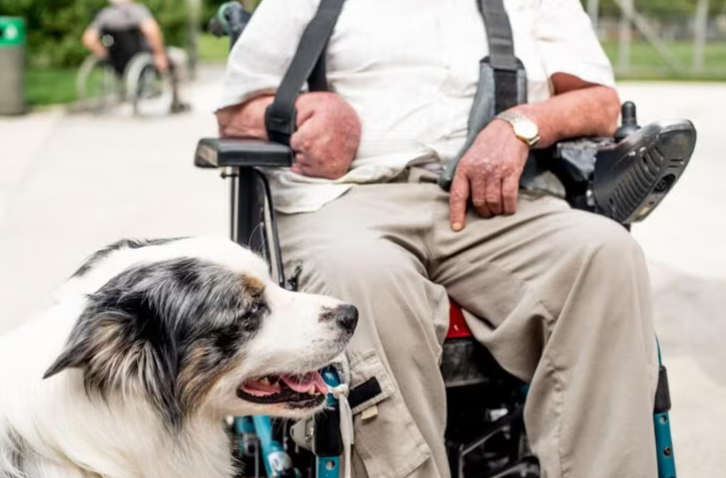
The foundation matters because therapy work places dogs in unpredictable environments filled with wheelchairs, medical equipment, sudden noises, children, and emotional people.
A therapy dog must stay calm through all of it. (akc.org)
But obedience is only half the equation.
The emotional side matters even more.
A true therapy dog genuinely enjoys human interaction.
Not tolerates it.
Enjoys it.
They naturally move toward people instead of away from them. They remain soft and approachable even when strangers pet them awkwardly or speak loudly.
Their presence lowers tension instead of increasing it.
And interestingly, breed matters far less than personality.
Golden Retrievers and Labrador Retrievers are common therapy dogs because of their gentle nature, but many smaller breeds thrive in therapy work too.
Some organizations even use Greyhounds, Poodles, mixed breeds, and rescue dogs.
What matters most is emotional stability.
Can the dog remain relaxed in stressful places?
Can they recover quickly from surprises?
Can they safely interact with vulnerable people?
If the answer is yes, training can begin.
The process usually starts with socialization.
Dogs need exposure to crowded environments, unfamiliar sounds, elevators, automatic doors, and different kinds of people.
Therapy dogs often visit places where patients use walkers, oxygen tanks, or wheelchairs, so those sights must feel normal rather than scary.
Handlers also play a huge role.
A nervous owner often creates a nervous dog.
That’s why therapy training focuses heavily on the bond between human and dog.
The handler must learn how to read body language, recognize stress signals, and advocate for the dog’s comfort at all times.
Because therapy work should never overwhelm the animal.
Good therapy teams understand when the dog needs a break.
That balance is what makes the work so powerful.
And the emotional impact can be enormous.
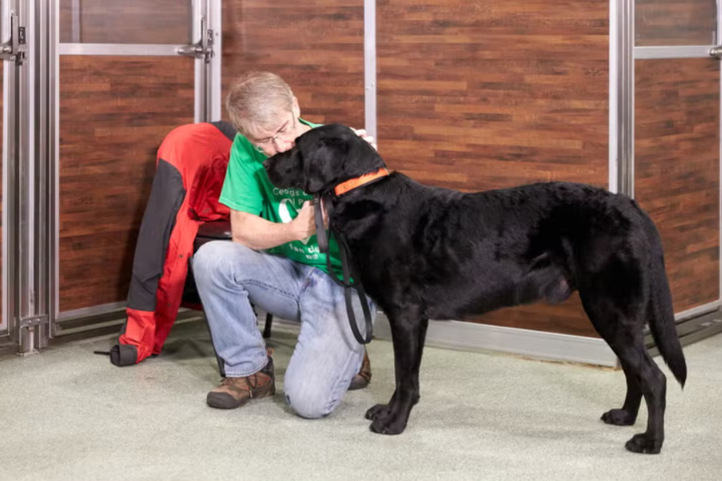
Research has repeatedly shown that therapy dogs can help reduce anxiety, loneliness, stress, and even blood pressure in certain settings.
Many hospitals now actively invite therapy dogs into pediatric wings because children often respond to dogs faster than adults.
For elderly patients, the effect can be just as profound.
A dog’s presence can unlock memories, conversation, and emotion in people who otherwise spend much of the day withdrawn or isolated.
Staff members frequently describe patients smiling more, talking more, and becoming visibly calmer after visits from therapy dogs.
And for college students battling anxiety or burnout, therapy dog events during finals week have become incredibly popular nationwide.
Sometimes healing doesn’t begin with words.
Sometimes it begins with a wagging tail.
Before becoming officially certified, most therapy dog organizations require evaluations that test how dogs behave in real-world situations.
Dogs must remain polite around strangers, avoid jumping, stay calm under pressure, and demonstrate reliable obedience skills.
But even beyond certification, experienced handlers say the best therapy dogs share one simple quality:
They love people.
Not because they were forced to.
Not because they were trained to.
Because comforting humans genuinely makes them happy.
And maybe that’s why therapy dogs touch people so deeply.
They don’t care what someone looks like.
They don’t care about age, illness, grief, or bad days.
They simply walk into a room and offer warmth without judgment.
For someone struggling emotionally, that kind of love can feel life-changing.
A soft head resting on someone’s lap.
A paw reaching forward.
A quiet dog choosing to stay close when the world feels heavy.
Sometimes that’s the therapy people need most.