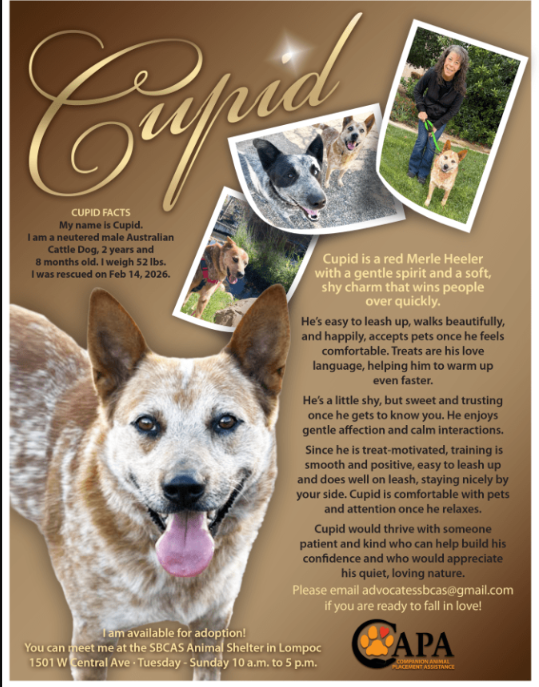
On a quiet porch in a nearly empty home, a dog named Cupid waited.
Day after day.
Night after night.
He didn’t understand what had happened—only that the people he loved had packed their things, loaded up their lives, and driven away without him.
And so he stayed.
Right where he last saw them.
According to rescue accounts featured in Edhat’s “Dog of the Week” spotlight, Cupid’s story began when neighbors noticed something unsettling: a dog still living at a house that no longer seemed lived in.
The family had moved out, but Cupid hadn’t been taken with them. Instead, he remained behind—confused, loyal, and waiting for a door that would never open again.
At first, no one realized how long he had been there.
But then the truth became clear.
Cupid wasn’t wandering.
He wasn’t lost.
He was waiting.
He would sit on the porch for hours at a time, staring at the door, as if repetition could somehow rewrite reality.
As if, eventually, the sound of footsteps would return and everything would make sense again.
When rescuers were finally alerted, they found a dog who still wasn’t ready to give up hope.
He avoided contact.
He kept his distance.
He retreated back to the only place that still felt like “home”—even if home no longer existed.
Food helped, but only a little. Trust had to be rebuilt slowly, one careful moment at a time.
Rescuers eventually managed to earn his confidence using calm voices, patience, and consistency. No rushing. No force. Just the quiet understanding that Cupid had already lost enough.
When he finally allowed a leash to slip around his neck, it wasn’t a dramatic surrender.
It was something softer.
A pause.
A decision, however fragile, to believe again.
The ride away from that empty house marked the beginning of something new—but it didn’t erase what came before.
Dogs like Cupid don’t forget easily.
They carry places with them.
They carry people with them.
And when those people disappear without explanation, the confusion doesn’t vanish overnight.
It lingers in small behaviors: the way they hesitate at doors, the way they look back more than forward, the way they wait before trusting that this time, someone will stay.
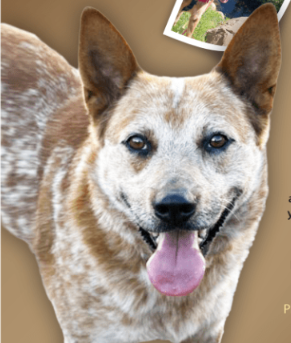
In rescue care, dogs like Cupid are often described as “decompression cases.”
That means they need time—sometimes weeks, sometimes longer—just to understand that their environment is no longer something to survive, but something to live in.
There’s no shortcut for that kind of healing.
Only consistency.
Only safety.
Only time.
But something remarkable begins to happen once the fear starts to loosen its grip.
The dog who once wouldn’t leave the porch begins to explore a room.
The dog who flinched at footsteps starts to move toward them instead of away.
The dog who waited for someone who never came starts to notice the people who actually did.
And that’s where Cupid’s story shifts from heartbreak into something quieter, but far more powerful.
Recovery.
Not loud.
Not instant.
But real.
Because underneath the waiting, the confusion, and the grief of abandonment, there was still the same dog who once trusted completely.
The same dog who still wants to believe that humans can be good, even after learning otherwise.
And that is what rescuers saw in him—not just loss, but possibility.
Cupid didn’t need promises.
He needed presence.
Someone who shows up today.
And tomorrow.
And the day after that.
Because for a dog who once waited endlessly on a porch for a family that never returned, the most healing thing in the world isn’t a grand gesture.
It’s the simple, steady truth that this time…
someone is finally staying.
Related posts:
 From Shy Shelter Dog to Family Favorite — A Long-Awaited Adoption Story
 After Adoption Event Success, Only One Dog Needed a Little Love
 The Fearful Stray Dog Living Inside a Tree Trunk Who Was Saved From Chicago’s Brutal Winter
 How Mr. Conor the Senior Rescue Chihuahua Found Pure, Undeniable Joy in His New Home