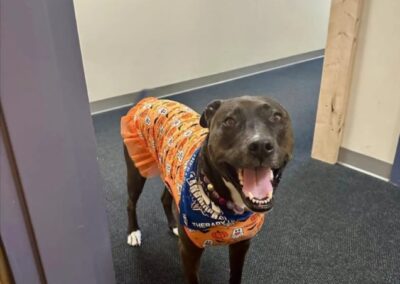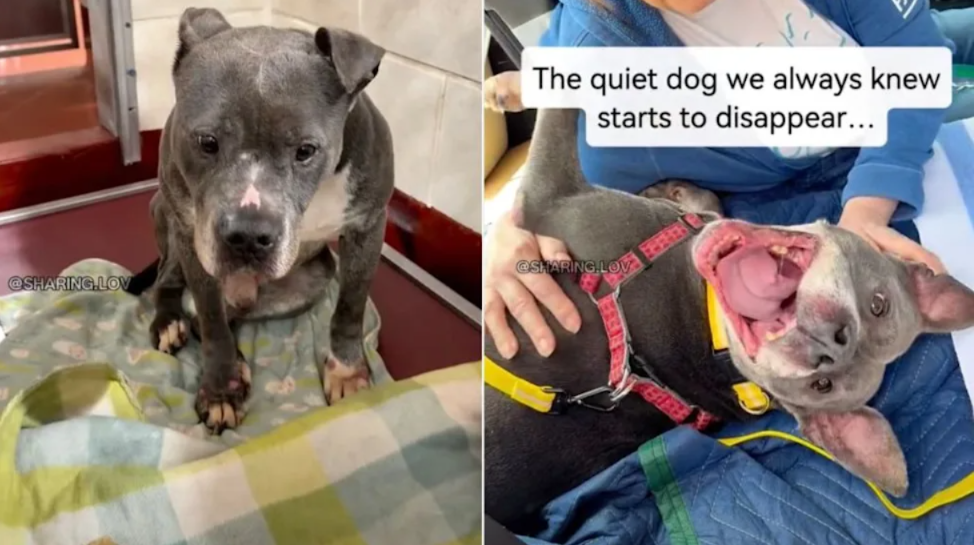
For a long time, the senior dog barely seemed to smile.
Inside the shelter, he carried the kind of quiet heartbreak that’s difficult to miss.
While younger dogs barked excitedly for attention or pressed eagerly against kennel doors, this older pup often stayed still—watching the world move around him with tired eyes and slow movements.
He wasn’t aggressive.
He wasn’t difficult.
He just looked defeated.
Shelter staff knew dogs like him often face the hardest odds.
Senior dogs are frequently overlooked in favor of puppies and younger animals, especially when they arrive carrying emotional scars or medical needs.
Days inside the shelter can begin blending together, and over time, even the most hopeful dogs can start shutting down emotionally.
That’s what people feared was happening to him.
The once-loving dog had become quieter and more withdrawn with each passing day.
Staff members did everything they could to comfort him, offering treats, soft beds, gentle affection, and extra attention whenever possible.
But what he really needed couldn’t fully exist inside a kennel.
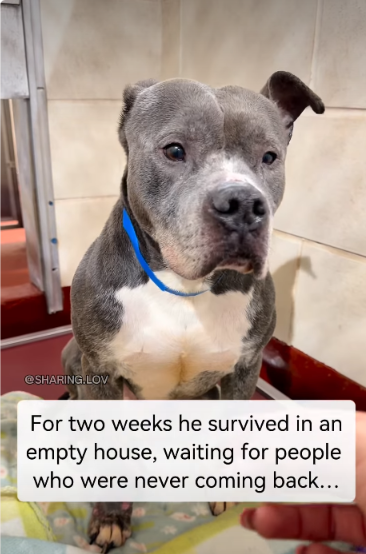
He needed a home.
Then one day, everything changed.
A family came to meet him.
At first, the senior dog didn’t seem to know what to think. Shelter life had taught him not to expect too much too quickly.
He approached cautiously, quietly studying the people standing in front of him.
But something about them felt different.
They moved slowly.
Spoke softly.
And instead of focusing on his age, they focused on him.
The connection wasn’t loud or dramatic. It unfolded gently—the way many meaningful rescue moments do.
A small tail wag. A softened expression. A willingness to lean closer instead of pulling away.
And before long, the family made their decision.
They wanted him.
For shelter workers, moments like these never lose their emotional weight.
Watching an older dog finally leave after waiting so long feels different.
There’s relief mixed with joy, especially knowing how many senior animals spend months—or even years—hoping for exactly this opportunity.
When the dog finally walked out of the shelter doors, it felt like watching emotional exhaustion begin lifting in real time.
The car ride home marked the beginning of an entirely different life.
No more concrete floors.
No more kennel noise.
No more wondering if someone would ever choose him.
At home, the transformation slowly began.
The senior dog explored carefully at first, moving through rooms with the cautious curiosity of an animal trying to understand whether this comfort was truly permanent.
He discovered soft places to sleep. Quiet corners to relax. Humans who welcomed him not despite his age—but with full awareness of it.
And gradually, the sadness that had once seemed permanent started giving way to something else.
Peace.
His personality began returning in small ways. A little more excitement during walks.
A little more confidence approaching for affection. Moments of playfulness that shelter stress had buried beneath survival mode.
That’s the thing about rescue dogs, especially seniors.
Sometimes they don’t need much to bloom again.
Just stability.
Patience.
And the feeling that they are finally safe enough to stop bracing for disappointment.
For his new family, adopting an older dog wasn’t viewed as settling for less time.
It was choosing to make the time he had left as full of love as possible.
And for the dog who once sat heartbroken inside a shelter kennel, that choice changed everything.
Because growing old isn’t the tragedy.
Growing old alone is.
Thankfully, he won’t have to anymore.