Every night, the neighbors heard him crying.
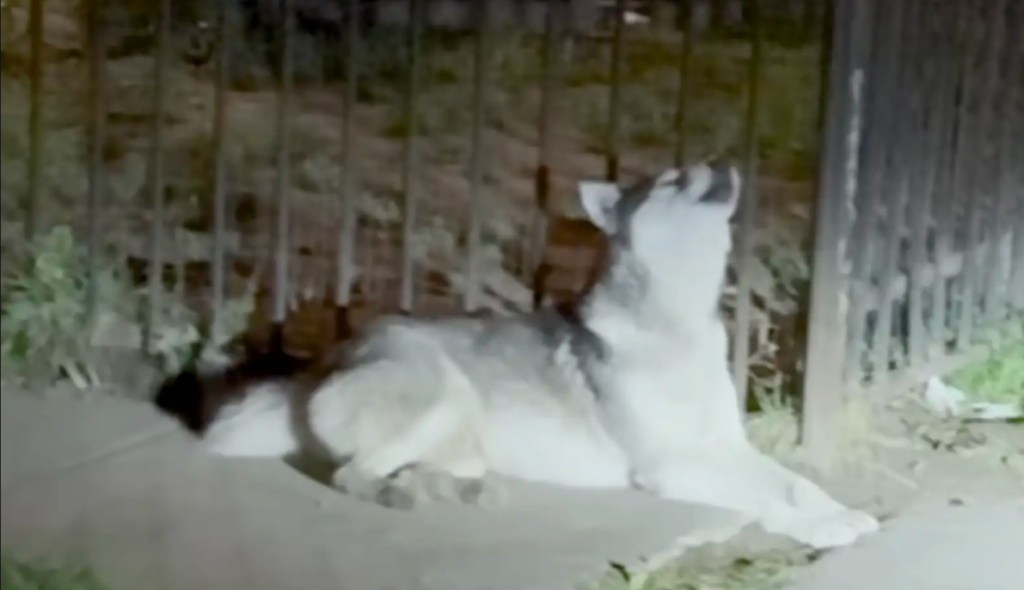
The sound echoed through the neighborhood long after dark—a deep, heartbreaking howl from a husky who refused to leave the same spot outside a house where nobody answered the door anymore.
At first, people assumed someone would eventually come for him.
But no one did.
Night after night, the dog returned to the same place, lying outside as if waiting for something impossible to undo itself.
He barely wandered far. He didn’t act like a stray searching for food or adventure.
He acted like someone had left him behind.
And eventually, neighbors learned the devastating reason why.
According to people in the area, the husky’s family had reportedly been taken away by ICE, leaving the dog suddenly alone with no one returning home for him.
The realization changed everything.
This wasn’t just a lost dog.
This was a grieving one.
Local rescuers quickly stepped in after hearing about the husky wandering the streets and crying outside the empty home each night.
When they first approached him, though, it became clear how deeply traumatized he was.
The dog wouldn’t let anyone near him.
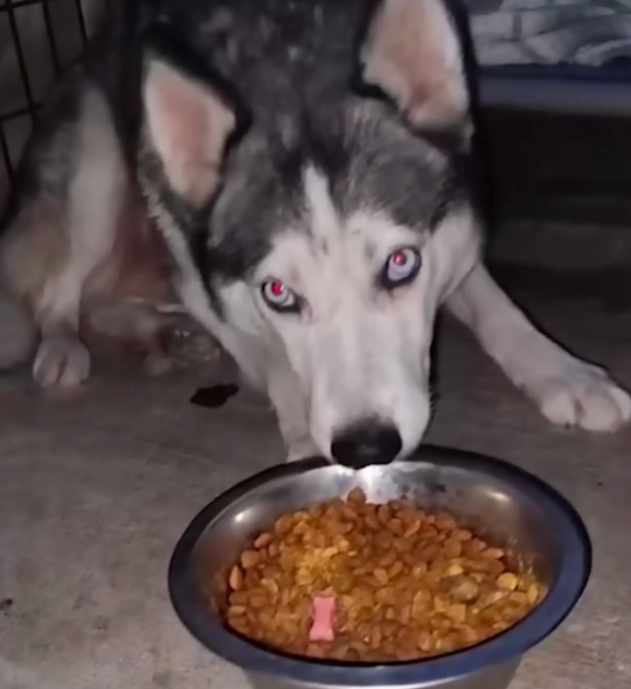
Every attempt to help sent him retreating further into fear.
Even gentle voices and food couldn’t fully break through the emotional wall he had built around himself.
He watched rescuers cautiously from a distance, uncertain whether humans could still be trusted after losing the people he loved most.
Still, they refused to give up on him.
Day after day, rescuers returned.
They sat nearby.
Spoke softly.
Waited patiently.
But the husky remained terrified and emotionally shut down.
At one point, rescuers noticed he had formed a loose bond with another stray dog nearby, almost as if he was clinging to the only companionship he had left.
Eventually, after repeated efforts, rescuers made the difficult decision to safely trap the husky so he could finally receive medical care and protection.
Even then, the fear didn’t disappear overnight.
When the dog first arrived in rescue care, he was reportedly too scared to walk on his own and had to be carried. But slowly—very slowly—small signs of healing began to emerge.
A few cautious steps.
A sniff toward another dog.
A tiny tail wag.
Moments that might seem small to outsiders but meant everything to the people trying to help him recover emotionally.
In another rescue effort involving a husky abandoned after his family was deported, a woman named Jaime Simpson discovered something especially emotional during the dog’s recovery: the husky responded most strongly when spoken to in Spanish.
His ears perked up instantly, as if hearing something familiar from the life he lost.
That detail stayed with many people online because it revealed something easy to forget:
Dogs don’t just lose homes.
They lose voices.
Routines.
Smells.
People they spent every day loving.
And sometimes, they keep waiting long after those people are gone.
Today, rescuers continue helping dogs like these rebuild trust and safety after unimaginable disruption.
The huskies once left crying through the night are slowly learning that stability still exists—that there are still humans willing to stay.
But their stories continue resonating because they reveal something painfully human beneath the rescue itself:
Loyalty doesn’t disappear just because someone vanishes.
Sometimes a dog will keep waiting at the same doorstep, night after night, believing the people they love are still trying to come home.