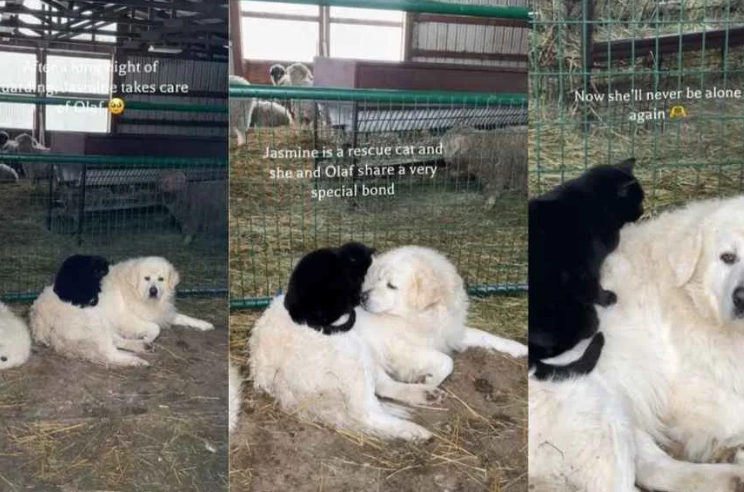
When the rescue cat first arrived, everything felt unfamiliar.
New smells. New sounds. New surroundings that didn’t feel safe yet.
Like many rescued animals, he stayed tense—watchful, unsure where to rest without feeling exposed.
Even the quiet moments didn’t feel fully peaceful at first.
He kept searching for something steady.
Something calm.
Something that wouldn’t move away.
That’s when the dog entered the picture.
At first glance, the dog and cat couldn’t have looked more different. One carried a relaxed confidence that comes from feeling at home.
The other moved like every step required caution. But something about that contrast seemed to work rather than clash.
Because instead of ignoring the newcomer, the dog simply accepted him.
No hesitation.
No tension.
Just quiet presence.
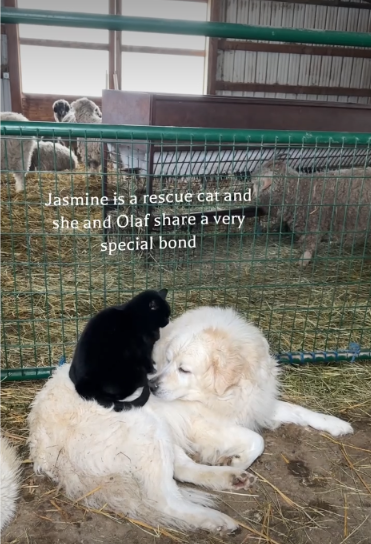
When the rescue cat finally settled nearby, unsure but curious, the dog didn’t react with surprise or discomfort.
He stayed still, giving the cat space to choose his own level of closeness. And that simple decision changed everything.
Slowly, the cat began to relax.
Not all at once—but in stages that only make sense when you watch trust develop in real time.
First, a pause where tension usually would be.
Then, a shift closer than before.
Finally, the decision to stay.
The dog remained calm the entire time, as if understanding that comfort doesn’t always come from interaction—it can come from stability.
Just being near someone who isn’t a threat can be enough to begin healing.
And that’s exactly what happened here.
The cat eventually curled up beside the dog, choosing his warmth over isolation.
For an animal used to uncertainty, that choice carried weight. It meant safety didn’t feel completely out of reach anymore.
What makes moments like this resonate so deeply is how simple they look on the surface. No training commands.
No structured intervention. Just two animals sharing space in a way that feels natural.
But beneath that simplicity is something more meaningful.
The cat is learning that not every presence requires fear.
The dog is showing that safety can be offered without force.
And together, they create a moment that looks small—but carries real emotional shift.
Rescue environments often rely on exactly this kind of quiet interaction.
Animals recovering from stress or neglect don’t always respond immediately to human comfort. Sometimes, they first learn stability from each other.
A calm body.
A steady routine.
A shared space that doesn’t demand anything.
Over time, those experiences build trust far more effectively than pressure ever could.
And in this case, that trust began with a dog who simply didn’t mind sharing his space.
No grand gesture.
No obvious decision.
Just acceptance.
And for the rescue cat, that was enough to begin letting his guard down.
Because sometimes healing doesn’t start with being rescued.
It starts with realizing you’re allowed to rest next to someone who won’t make you move.