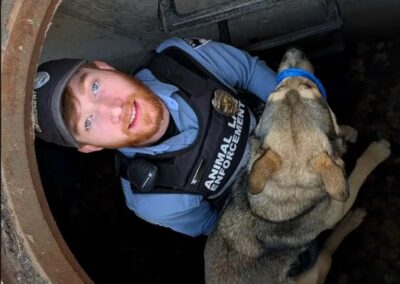
Oscar the dog didn’t start out knowing what it meant to be loved.
When rescuers first found him, he was in rough shape—physically neglected and emotionally starved for attention in a way that went far beyond simple hunger or loneliness.
What stood out most wasn’t just his condition, but his reaction the moment someone finally came close.
He didn’t hesitate.
He didn’t pull away.
He leaned in—like he had been waiting far too long for exactly this moment.
For dogs like Oscar, early life experiences can shape everything.
When affection is absent or inconsistent, even basic kindness can feel overwhelming at first.
But in Oscar’s case, that overwhelming need for connection quickly became something beautiful once he was placed in the right environment.
At the shelter, staff immediately noticed how intensely he responded to human presence. Just having someone nearby made him visibly brighter.
Attention didn’t confuse him—it healed him.
And once he was moved into foster care, that transformation accelerated.

In a calmer home environment, Oscar began to show what rescuers often hope for but don’t always get to see so quickly: a personality that had been buried under neglect slowly coming back to life.
He followed people around the house not out of anxiety, but out of attachment.
He sought out touch, companionship, and reassurance at every opportunity.
The same dog who once appeared “starved for attention” began to behave like a dog discovering, for the first time, that affection doesn’t disappear.
It stays.
It repeats.
It belongs to him too.
His foster family didn’t need to do anything extraordinary. They simply gave him what he had been missing—consistency, safety, and presence.
Meals came at regular times. Soft places to rest were always available. Most importantly, people didn’t leave him wondering whether love was temporary.
That stability changed everything.
Oscar began to relax in ways he likely never had before. His body language softened.
His energy shifted from survival mode into something closer to curiosity and joy.
Small behaviors—like seeking eye contact or leaning into affection—became signs that trust was taking root.
And as that trust grew, so did his happiness.
What made his transformation especially moving wasn’t just the change in behavior, but the speed at which he embraced it.
Some rescue dogs take months or even years to fully open up. Oscar, once given the chance, seemed eager to catch up on everything he had missed.
He didn’t just accept love.
He absorbed it.
Eventually, fostering turned into something more permanent.
The bond that formed in those early days didn’t fade when the formal foster period ended. Instead, it deepened into something lasting—something that felt less like a placement and more like belonging.
That’s often how these stories unfold when they go right.
A temporary home becomes the final one.
A foster dog becomes family.
And a dog once defined by neglect becomes defined instead by joy.
Oscar’s story resonates because it’s simple at its core: a dog who had been overlooked finally found people willing to pay attention—and that attention changed everything.
Not in a dramatic, overnight miracle.
But in steady moments of care repeated every day.
Food offered without hesitation.
Hands that didn’t pull away.
A home where love wasn’t a surprise—it was routine.
And for Oscar, that was everything he had been missing.