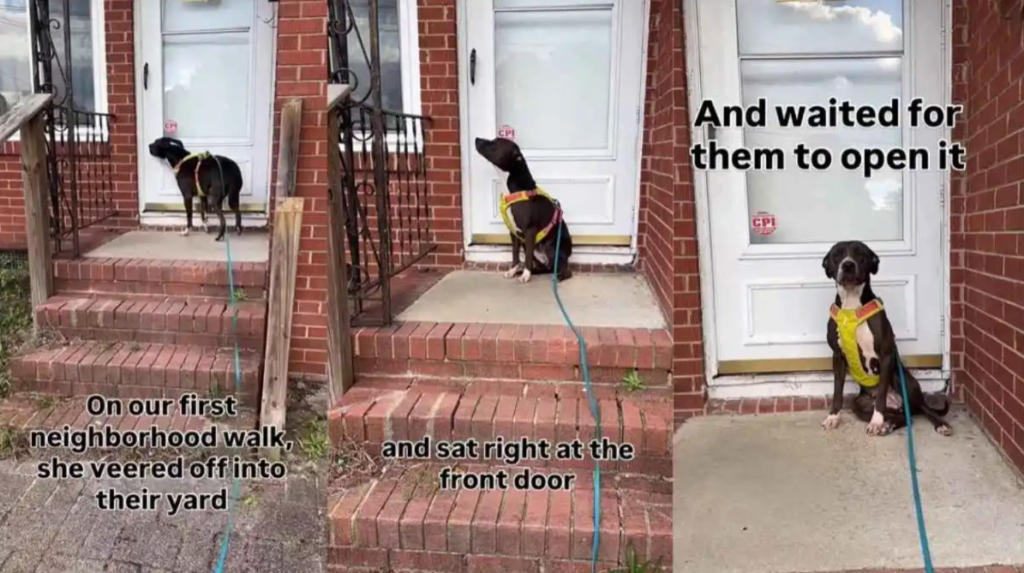
Sometimes a rescue dog doesn’t just remember people.
They remember places.
And for one particular dog, that memory kept pulling her back to a house she once called home.
Even after she had been moved into foster care and placed on the path toward a new life, something in her still reacted when she passed that familiar street.
The pull wasn’t emotional in a human sense—but instinctive. A pattern she couldn’t fully break yet.
So she returned.
Again and again.
Not because she had somewhere to be, but because something inside her told her that place still mattered.
Each time she reached the house, her behavior shifted.
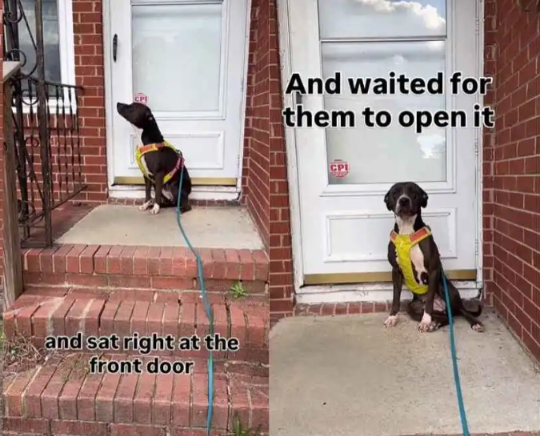
She would pause, move toward the door, and wait—almost as if expecting it to open the way it once did.
The door itself hadn’t changed, but everything behind it had.
That’s the part that makes moments like this so hard to watch.
Dogs don’t understand finality the way people do. There is no internal explanation for “you lived here before, but you don’t anymore.”
There is only recognition, memory, and the expectation that familiar places still hold familiar outcomes.
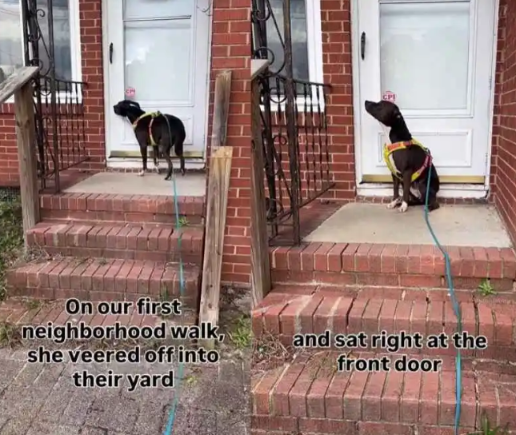
So when nothing happens—when no one comes out, when no voice calls her name—that confusion sits in her posture.
Still waiting.
Still trying to reconcile memory with reality.
Her foster caregiver eventually began noticing the pattern. It wasn’t random wandering—it was intentional.
A direct route to a specific place, as if guided by something stronger than curiosity.
And while heartbreaking, it’s also deeply common in rescue work.
Dogs often anchor themselves to the last stable emotional memory they have. A home. A person. A routine.
Even if that situation changed long before they were rescued.
The brain doesn’t erase that quickly.
Over time, gentle redirection becomes necessary. Not punishment. Not correction.
Just guidance—helping the dog learn that forward is the only direction that leads somewhere safe now.
So she was walked past the house more slowly. Redirected earlier. Given new patterns to replace the old route.
It didn’t erase the memory, but it began layering something new over it.
And slowly, the visits became less frequent.
That’s usually how progress looks in cases like this. Not a sudden “forgetting,” but a gradual loosening of attachment.
The emotional thread doesn’t snap—it stretches, then thins.
What replaces it is trust in a different direction. New walks. New routines. New places that start to feel predictable in a safe way.
And eventually, something important happens.
The old pull weakens enough that curiosity about what’s ahead becomes stronger than memory of what’s behind.
That’s the turning point every foster and rescue worker watches for. Not when a dog stops remembering—but when they stop returning.
Because stopping doesn’t mean forgetting.
It means accepting.
And for this dog, that acceptance didn’t arrive all at once. It arrived in small changes: fewer detours, less hesitation, more focus on the person walking beside her.
Still, stories like hers leave an impression because they highlight something easy to overlook.
Rescue isn’t just about saving a dog from a place.
It’s also about helping them leave a place behind emotionally.
And sometimes, the hardest part of that process isn’t the rescue itself.
It’s the moment a door they still remember… stops being a destination at all.
Related posts:
 Scared of Humans, Burdened With Tumors — How One Dog Is Finally Healing
 Watch Giant Dog Make His Feelings Known About New Puppy Roommate
 The Heartfelt Story of a Dog Found in a Cage Who Finally Found Freedom and Family
 A Thousand Miles and Five Years Later: The Miraculous Return of Bella the Chihuahua