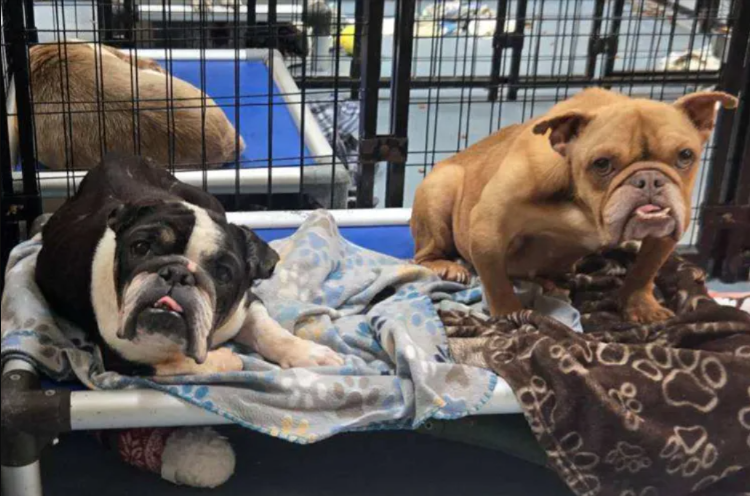
When rescuers arrived, what they found wasn’t just a case of neglect.
It was a bond.
A pair of French bulldogs, so deeply connected to each other that even in their weakest, most fragile state, they refused to let go.
Starving. Emaciated. Barely holding on.
And still together.
That detail changed everything.
The dogs—later named Frankie and Froggy—were discovered during a large-scale rescue operation involving dozens of animals pulled from a severe cruelty situation.
By the time help arrived, both dogs were in critical condition.
Their bodies showed the effects of prolonged starvation, and their condition made it clear they had endured far more than just a short period of neglect.
Frankie, in particular, was in alarming shape.
His condition was so severe that veterinarians later discovered something shocking during diagnostics: he had ingested non-food material in desperation, a sign of extreme hunger and prolonged deprivation.
It was a stark reminder of how far animals can be pushed when basic care disappears entirely.
And yet, through all of it, neither dog was alone.
That fact mattered more than anyone expected.
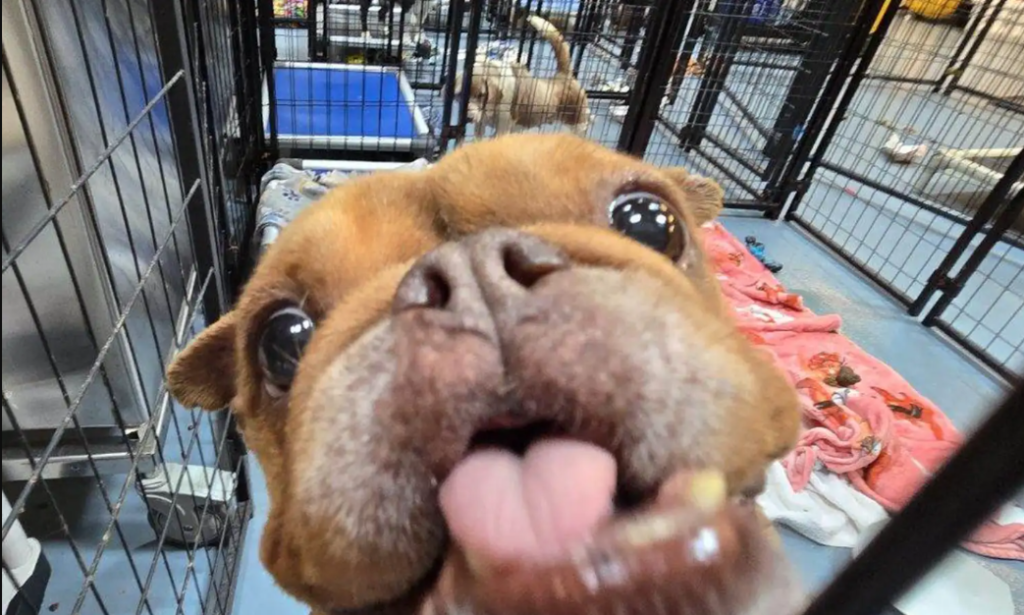
From the moment they were taken in, rescuers noticed something important: separation was not an option.
When placed even briefly apart, both dogs showed immediate signs of distress. Anxiety rose quickly. Restlessness followed.
It became clear that their emotional dependence on one another was not just behavioral—it was survival.
So the decision was made without debate.
They would stay together.
Recovery, however, would not be simple.
Both dogs required intensive medical care, including refeeding protocols, monitoring for complications linked to starvation, and ongoing veterinary supervision.
The process of restoring health after severe malnutrition is delicate. Too much food too quickly can be dangerous.
Too little slows recovery. Every step has to be carefully managed.
But even in clinical settings filled with uncertainty, one thing remained constant.
They were calmer when they were together.
Frankie and Froggy’s story highlights something rescuers see often but rarely talk about in such stark terms: the emotional architecture of bonded animals.
Dogs don’t just recognize companionship—they rely on it. In extreme environments, that bond can become the difference between panic and stability.
For Frankie and Froggy, it was both.
As their bodies began to recover, small changes appeared first. Improved energy. Better responsiveness. A gradual return of curiosity.
The early stages of healing are rarely dramatic, but they matter most. Weight gain is only one part of the story.
Trust, comfort, and emotional regulation take just as long to rebuild.
And throughout it all, they stayed side by side.
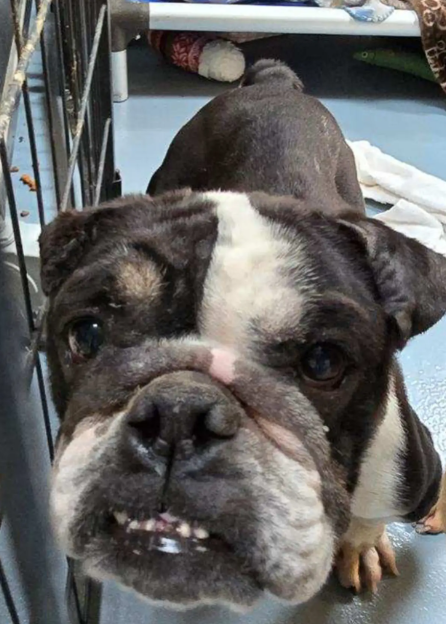
Rescue teams working with them emphasized a holistic approach—addressing not just physical rehabilitation, but emotional safety as well.
That meant consistent routines, gentle handling, and ensuring the dogs always had visual or physical contact with each other whenever possible.
Because separation wasn’t just distressing.
It was destabilizing.
As the pair continued their recovery journey, their story began to spread.
Not because of shock value, but because of what it revealed: that even in conditions of extreme neglect, animals can maintain connection, loyalty, and emotional structure that holds them together when everything else falls apart.
And that connection, in this case, became part of their healing.
Today, Frankie and Froggy are still in recovery, but their trajectory is hopeful. Their bodies are rebuilding strength.
Their energy is returning. And most importantly, their bond remains intact—unchanged by the conditions that nearly destroyed them.
They are still inseparable.
Still moving forward together.
Still, in every meaningful way, a pair.
Their story is not just about rescue.
It’s about what survival looks like when it is shared.
And sometimes, that shared survival is what makes healing possible at all.