They told her she might never walk again.
Not “might struggle.”
Not “needs time.”
But a near-final verdict—one that would have defined the rest of her life before she even had a chance to fight it.
For a young dog who had only just begun to understand the world, that prognosis could have meant a life confined to stillness, dependence, and limitation.
But what happened next didn’t follow the expected script.
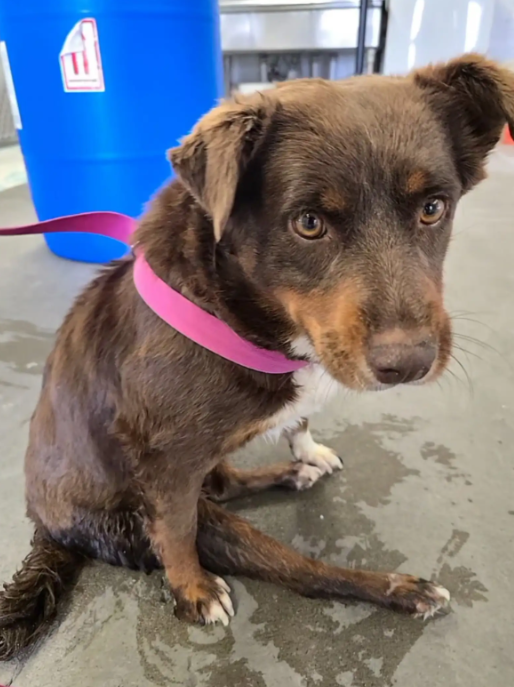
When she first arrived into rescue care, she was unable to use her hind legs properly.
Movement was difficult, uncertain, and inconsistent.
Every attempt to stand or walk required effort that didn’t match what her body was currently capable of producing.
For many animals in this condition, the outcome depends heavily on early intervention, therapy, and time.
And even then, recovery is never guaranteed.
But she had something on her side that can’t be measured in scans or charts.
She had persistence.
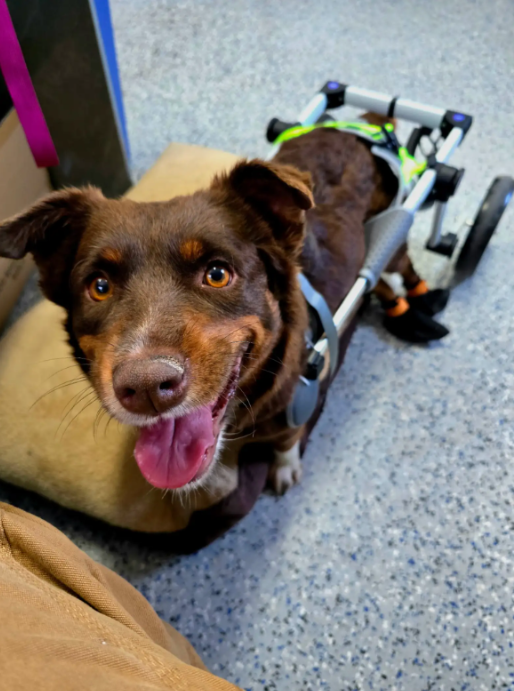
Rehabilitation began with the basics—supporting her body, encouraging small movements, and introducing controlled exercises designed to rebuild strength and coordination.
Nothing was rushed. Nothing was forced. The focus was always on comfort first, progress second.
At the start, progress was barely visible. Tiny adjustments. Slight shifts in balance.
Moments that would be easy to overlook unless you were watching closely every single day.
But recovery in cases like this rarely happens in dramatic leaps. It builds quietly, layer by layer.
Then came the first real change.
A moment where her body responded differently.
A shift in control that suggested something important was returning.
Her caregivers noticed it immediately—not because it was dramatic, but because it was new.
Movement that had once been uncertain began to stabilize.
The process continued, step by step. Physical therapy sessions became more productive. Her strength improved.
Her confidence began to match her capability again. And slowly, the idea that she might never walk started to lose its weight.
Still, no one rushed ahead. With conditions like hers, setbacks can happen easily, and every milestone has to be reinforced carefully.
The goal was never just movement—it was sustainable mobility.
Then came the moment that changed everything.
She stood.
Not briefly assisted. Not partially supported.
She stood on her own.
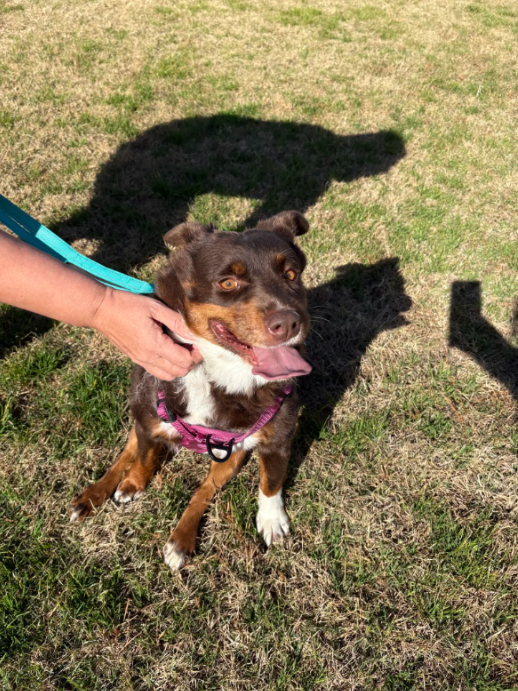
For a dog who had been told, in effect, that walking might not return, that moment carried more meaning than words can capture.
It wasn’t just a physical milestone—it was proof that her story wasn’t finished being written.
What followed wasn’t instant perfection. Walking again after paralysis is rarely smooth at first.
There were wobbles, adjustments, and continued therapy. But the foundation had shifted.
What was once considered impossible had become achievable.
And once that line is crossed, everything changes.
Her progress became a symbol of what careful rehabilitation, patience, and belief can accomplish when given enough time.
It also highlighted something important about recovery stories in general: predictions are not destinies.
They are possibilities based on what is known at a moment in time.
But bodies—especially resilient ones—do not always follow predictions.
Today, her movement continues to improve. Each day brings more coordination, more strength, and more freedom.
What once looked like a permanent limitation has become an ongoing recovery journey.
And perhaps the most powerful part of her story isn’t just that she learned to walk again.
It’s that she was given the chance to try.
Because sometimes, the difference between “never” and “again” is simply time, care, and someone willing to believe that the outcome isn’t already decided.