It started like any unexpected rescue story—until it didn’t.
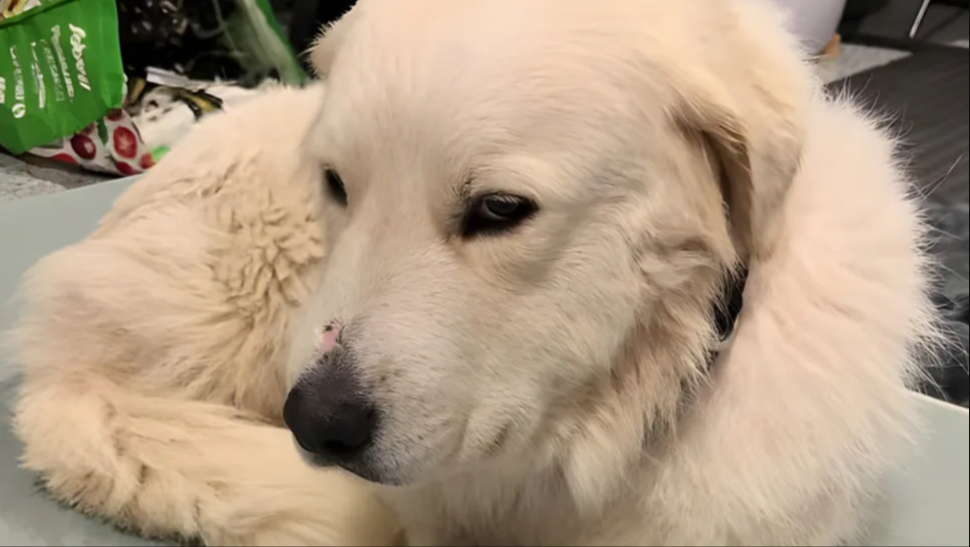
Joel and his husband, Scott, were out walking their own dog when they noticed a frightened Great Pyrenees standing in their front yard.
The dog looked lost, malnourished, and unsure of where she belonged. There was no microchip, no identification, and no missing report that matched her description.
But there was something about her that made them pause.
She didn’t act like a dog passing through.
She acted like a dog who had nowhere else to go.
So they did what many would consider a life-changing decision in an instant—they took her in.
They named her Waco.
At first, everything about her suggested recovery. She was safe. She was eating.
She was slowly learning how to exist in a home where fear wasn’t part of the daily routine.
Even simple things like toys and treats seemed unfamiliar to her, as if she was discovering comfort for the first time.
“She had to learn what treats were,” Joel shared, describing how even basic joys of being a pet were entirely new to her.
For a while, it looked like a straightforward redemption story: a neglected dog finally getting a second chance.
Then reality shifted.
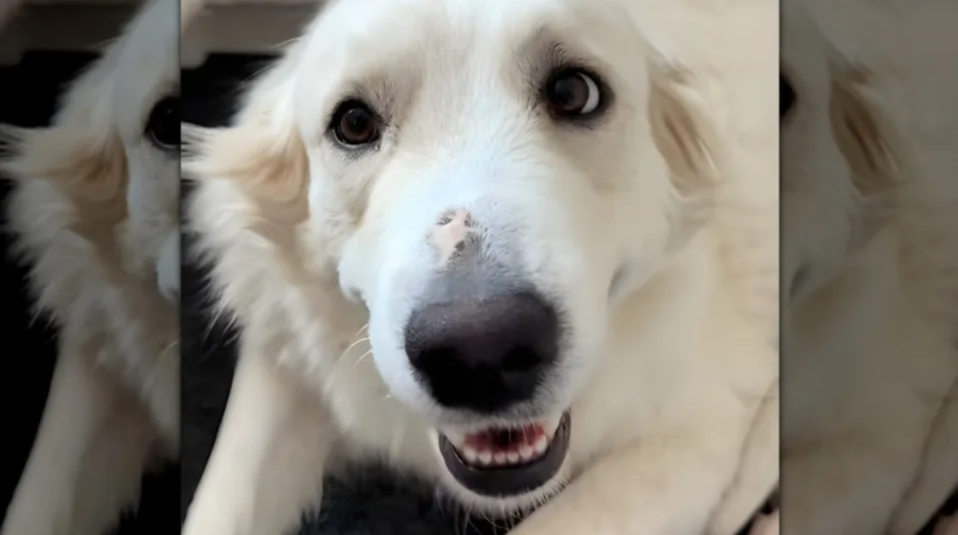
Waco began gaining weight—but not in the way they expected.
A vet visit confirmed something Joel and Scott never anticipated: Waco was pregnant. Not just a little—she was carrying eight puppies.
Suddenly, the rescue they thought they had completed transformed entirely.
They hadn’t just saved one dog.
They had unknowingly taken in a mother about to bring nine lives into the world.
The emotional weight of that realization was immediate.
Viewers later joked that it was like discovering they had “rescued a Trojan horse,” but for Joel and Scott, it quickly became something far more meaningful.
Waco’s behavior started to make more sense in hindsight.
She was gentle but cautious, as if she had lived through something that taught her to be wary of safety rather than trust it instantly.
Many believe she may have come from a breeding situation or environment where she had already been used as a mother before.
Her physical condition and demeanor suggested a life where stability was rare, and separation was likely traumatic.
But in her new home, things began to change.
As her pregnancy progressed, she slowly started to adjust to the idea that she was safe. That her space was secure.
That the people around her weren’t going to take anything away from her.
When the puppies were eventually born, Waco was initially protective—understandably unsure of what would happen next.
But over time, she began to trust Joel and Scott, allowing them into the process instead of pushing them away.
And instead of rushing to separate the litter, the couple made a different choice: they let Waco raise her puppies at her own pace, in a stable, loving environment.
Experts note that puppies typically need at least eight to twelve weeks with their mother and littermates to develop properly, both physically and socially.
In many unethical breeding situations, puppies are removed far too early, which can lead to lifelong behavioral and emotional challenges.
Waco’s past likely included exactly that kind of loss.
This time, things were different.
This time, no one was taken away too soon.
As the puppies grew, so did the bond between all of them.
Waco, once timid and uncertain, began to show confidence in her role as a mother under safe conditions.
And Joel and Scott found themselves not just rescuing a dog—but helping rewrite the outcome of an entire little family.
What began as a chance encounter in a front yard turned into something much bigger than anyone expected.
A reminder that sometimes rescue doesn’t stop at one life.
Sometimes it multiplies.