Not every adoption story begins with a perfect match.
Sometimes, it starts with hope… followed by disappointment.
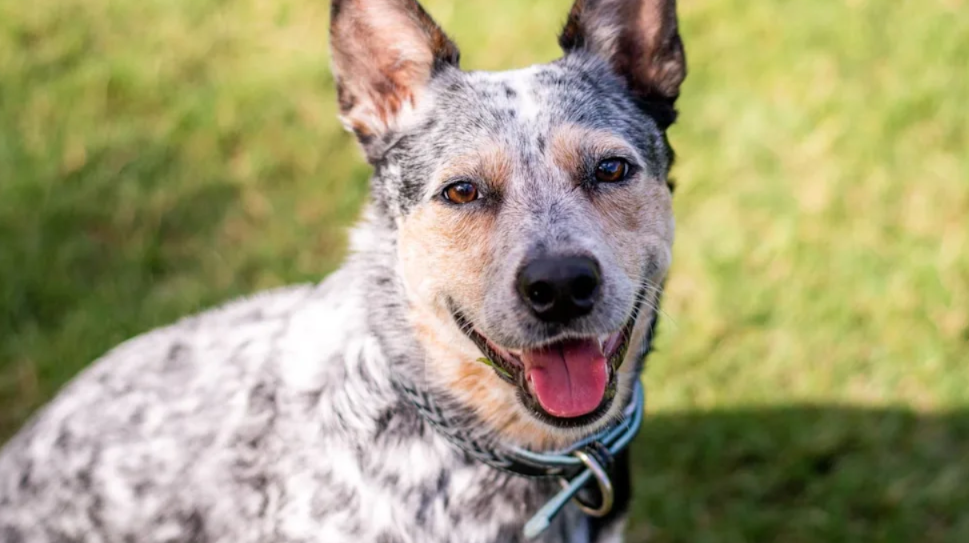
That was the case for an Australian Cattle Dog who was adopted into a home, only to be returned to the shelter after things didn’t work out as expected.
At first, everything seemed like a step in the right direction. He had a family. A place to sleep.
A routine that should have been the beginning of something stable. But somewhere along the way, the placement broke down.
According to shelter staff, the issue wasn’t about aggression or a lack of spirit. It came down to compatibility.
He reportedly struggled to adjust to certain expectations in the home, particularly around obedience and behavior.
Like many Australian Cattle Dogs, he carried a strong working-dog mindset—intelligent, energetic, and deeply independent.
And sometimes, that combination can be overwhelming in the wrong environment.
So he was returned.
And just like that, he was back in a kennel.
Back to waiting.
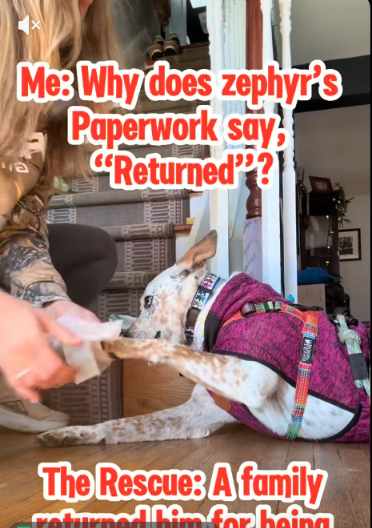
For many dogs, a return like that can change them. It can dull their energy or make them hesitant to trust again.
Shelters see it often—dogs who arrive once, leave briefly, and come back with a little less brightness in their eyes.
But that wasn’t the case here.
When he returned, staff noticed something important: he hadn’t shut down.
He was still alert. Still engaged. Still very much himself.
He greeted people. He responded to attention. He didn’t withdraw into the background or disappear emotionally into his kennel space.
Instead, he continued doing what he had always done—showing up with personality and presence, even in a place that had already disappointed him once.
That resilience is part of what makes Australian Cattle Dogs so remarkable.
Bred for endurance, problem-solving, and high-level engagement with humans, they don’t easily lose their spark.
But it also means they need the right kind of home—one that understands their intensity rather than trying to suppress it.
Shelter staff didn’t give up on him. Instead, they adjusted their approach.
They focused on better matching, clearer expectations, and finding someone who could meet him where he was instead of trying to reshape him into something else.
Because this wasn’t a “bad dog” situation.
It was a “wrong fit” situation.
And there’s a huge difference between the two.
As time went on, his story began to shift again.
Potential adopters were introduced to him with more context—his energy level, his intelligence, his need for structure and engagement.
People who understood the breed began to see what staff already knew: this wasn’t a difficult dog. He was a capable one.
Just misunderstood in the wrong setting.
Eventually, the right connection came forward.
Not someone expecting a low-maintenance companion, but someone prepared for a dog who needed purpose, routine, and stimulation.
Someone who didn’t see “returned” as a flaw—but as information.
And that changed everything.
Because once placed in the right environment, dogs like him don’t just cope—they thrive.
The return that once looked like a setback became part of the path forward.
Not the end of his story, but a redirection toward the home he actually needed.
And for a dog built on grit, intelligence, and persistence, that second chance wasn’t just important.
It was everything.