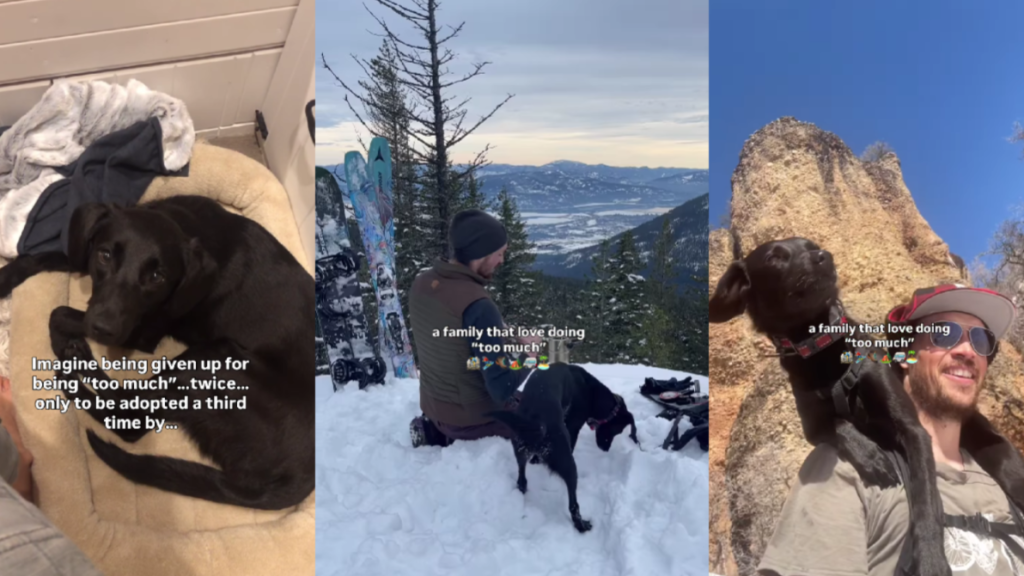
Some dogs don’t find their forever home on the first try.
Or even the second.
For one rescue dog, life kept circling back to the same heartbreak—being adopted, loved briefly, and then returned again. Twice.
And each time, it looked like maybe he was the problem.
But his story reveals something much more important: he wasn’t “too much.” He was just misunderstood.
Like many high-energy or strong-personality rescue dogs, he struggled to fit into homes that couldn’t match his needs.
Whether it was lifestyle, expectations, or simply the wrong environment, things didn’t work out.
And each return added another layer of confusion to a dog who only wanted stability.
Back in the shelter, he waited again.
Same kennel. Same uncertainty. Same quiet hope that someone would eventually see him differently.
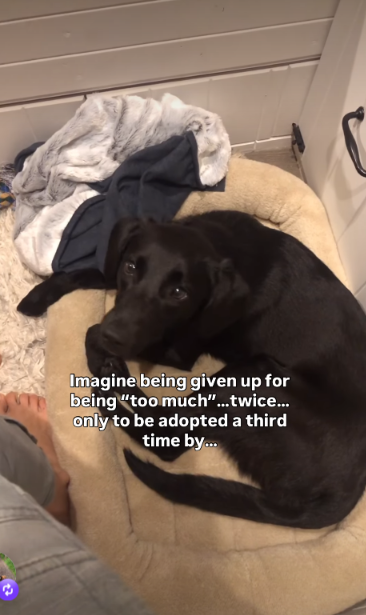
What makes stories like his so powerful is how invisible the turning point can be.
There’s no dramatic moment where everything changes at once.
Instead, it usually starts with a different kind of person walking through the door—someone who doesn’t see “too much energy” as a flaw, but as a match waiting to happen.
When that right family finally arrived, everything shifted.
Not because the dog changed—but because the situation did.
This time, his energy wasn’t overwhelming. It was welcome. His personality wasn’t a challenge.
It was exactly what they were looking for. The same traits that once led to him being returned twice suddenly became the reason he was chosen.
That’s the part people often miss about rescue dogs: compatibility matters more than perfection.
A dog who needs space, activity, structure, or patience doesn’t become easier just because they are loved.
But when they land in a home that understands them, everything clicks into place.
And that’s what happened here.
Instead of trying to suppress who he was, his new family embraced it.
They met him where he already was—mentally, emotionally, and physically—and built a life around that instead of against it.
The change wasn’t just behavioral. It was emotional.
A dog who had learned to be cautious about attachment suddenly found consistency. No more temporary goodbyes.
No more confusing transitions. Just a steady rhythm of care that allowed him to finally relax.
For dogs with histories like this, stability is often more powerful than training.
It tells them, day after day, that they’re not going anywhere again.
And slowly, the transformation begins.
The dog who once struggled to stay in a home starts to settle into one.
The dog who was labeled “too much” becomes exactly enough.
And the dog who was returned twice finally understands what “forever” actually feels like.
Stories like his don’t just offer a happy ending—they challenge the idea that a dog can be “wrong” for a home in a permanent way.
More often than not, it’s about timing, fit, and patience.
Because somewhere out there, there’s always a family that doesn’t want less of a dog.
They want that dog.
The one who was almost given up on, but wasn’t.
The one who just needed the right place to finally belong.