Most puppies have a pretty simple agenda.
Eat. Play. Nap. Find something they’re not supposed to chew.
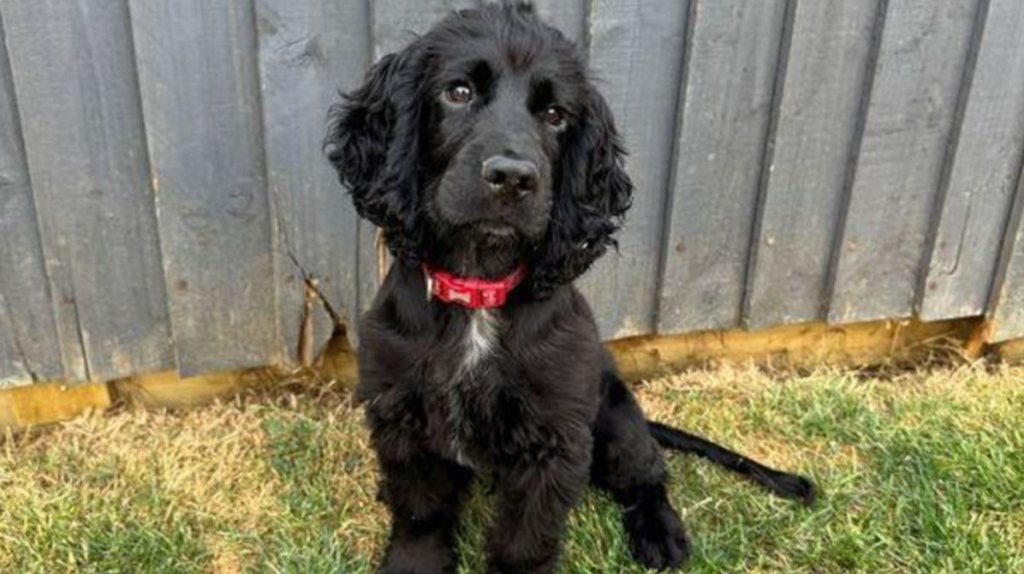
But Chase, a five-month-old Cocker Spaniel, has a much bigger job ahead of him.
This curious little pup has joined the London Fire Brigade’s specialist fire investigation team, where he’s learning to help investigators uncover clues that could explain how a fire started.
And judging by his early progress, Chase might be just the right dog for the job.
A Little Puppy With a Very Important Mission
Chase isn’t training to put out fires or race into burning buildings.
His specialty is using his extraordinary canine nose to detect traces of ignitable substances that could help investigators determine whether a fire was deliberately started.
It’s a serious responsibility.
When firefighters respond to a blaze, the flames aren’t always the end of the story.
Investigators must sometimes examine the scene carefully to establish what happened and whether a crime may have been committed.
That’s where specially trained search dogs can make a remarkable difference.
Their powerful sense of smell allows them to detect tiny traces of substances that humans might struggle to identify.
For Chase, learning to use that natural ability will be the focus of his training over the coming months.
But before he becomes a fully qualified member of the team, there’s plenty for this energetic youngster to learn.
Why Playtime Is Part of the Training
Here’s something that makes Chase’s story particularly fascinating.
The London Fire Brigade looks for dogs with a strong desire to play when selecting potential fire investigation dogs.
Why?
Because that enthusiasm can become a powerful training tool.
Rather than relying on punishment or intimidation, trainers use positive reinforcement to teach dogs what they’re expected to do.
The dog’s natural motivation to play helps make the learning process rewarding.
As Chase discovers the scents he’s being trained to recognize, his handlers can reinforce the correct responses and gradually build his searching skills.
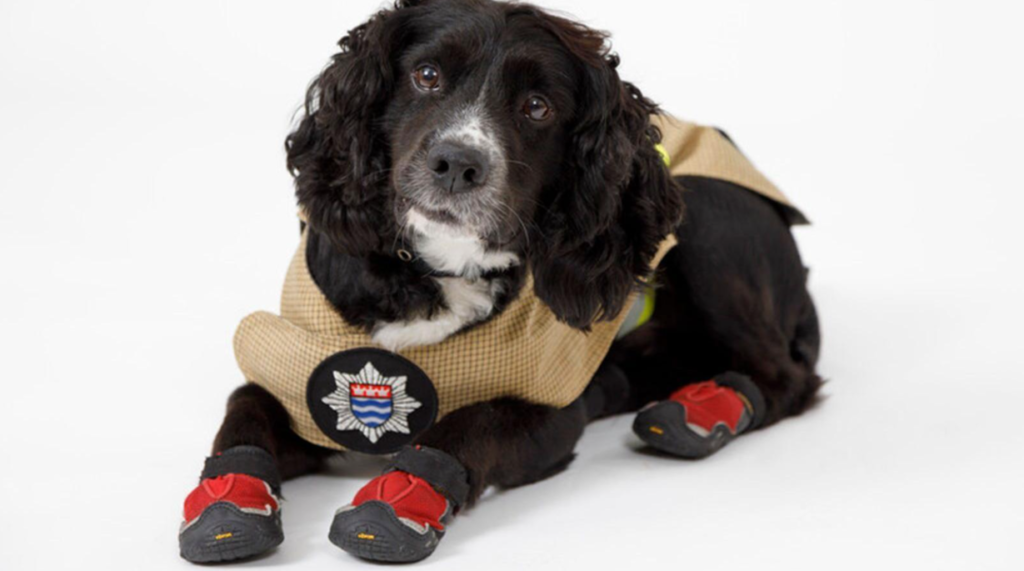
It’s a wonderful example of how a dog’s natural instincts can be developed into a valuable working ability.
And Chase seems to have the right attitude.
His handler, sub officer Peter Guppey, describes him as an enthusiastic, inquisitive little character who’s always eager to get involved.
Of course, being curious is one thing. Learning to concentrate, search unfamiliar environments and work reliably alongside a handler is another.
Chase still has a long road ahead.
But his early progress has given the team plenty of reasons to feel optimistic.
Following in the Paw Prints of a Legend
Chase is following in the paw prints of Sherlock, the brigade’s longest-serving fire investigation dog, who has recently retired.
He also joins Smokey and Simba, two other specialist search dogs working with the brigade.
For Chase, that means becoming part of a team whose work can help uncover crucial evidence after a fire.
At the end of his training, both Chase and Guppey will be assessed on their ability to work together, search different environments and locate traces of ignitable substances.
Fire investigation station commander Darren Woodhams says Chase is showing the drive and enthusiasm the team wants to see.
Still, nobody is rushing the process.
The goal isn’t simply to train a clever puppy. It’s to develop a dependable working dog whose findings can support important investigations.
One Puppy, One Remarkable Future
For now, Chase is still a young dog learning the ropes.
There will be new smells to investigate, unfamiliar places to explore and plenty of skills to master.
But every successful search brings him one step closer to his goal.
Chase may be small, but his nose could help solve some very big mysteries.
And somewhere between the training sessions and puppy playtime, this curious Cocker Spaniel is preparing to make a meaningful difference.