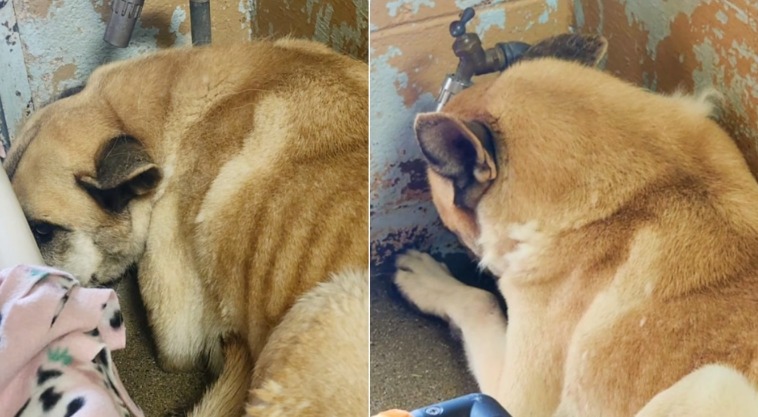
There are stories that don’t make the headlines—they sit in the corners of shelters, in the folded edges of hope, where dogs once proud and bright become quiet, ghost‑like.
This one is about Ollie, a German Shepherd mix whose spark had all but faded when he arrived at the shelter in Madera, California.
No one fully knows how he got there. Maybe he was surrendered—or maybe he wandered in and lost his way.
What’s clear is what happened after. Ollie stopped wagging his tail. He stopped stepping lively. He curled into the back of his kennel.
He trembled at gentle touches. He looked defeated—like he’d known loyalty and love, and believed he’d lost it all.
“One of the most withdrawn dogs we’ve seen,” said a caretaker. “He’s given up hope.” He walked slower.
He no longer greeted visitors wanting to be chosen. He had been the kind of dog who would have pulled a family forever.
Now he barely pulled a leash.
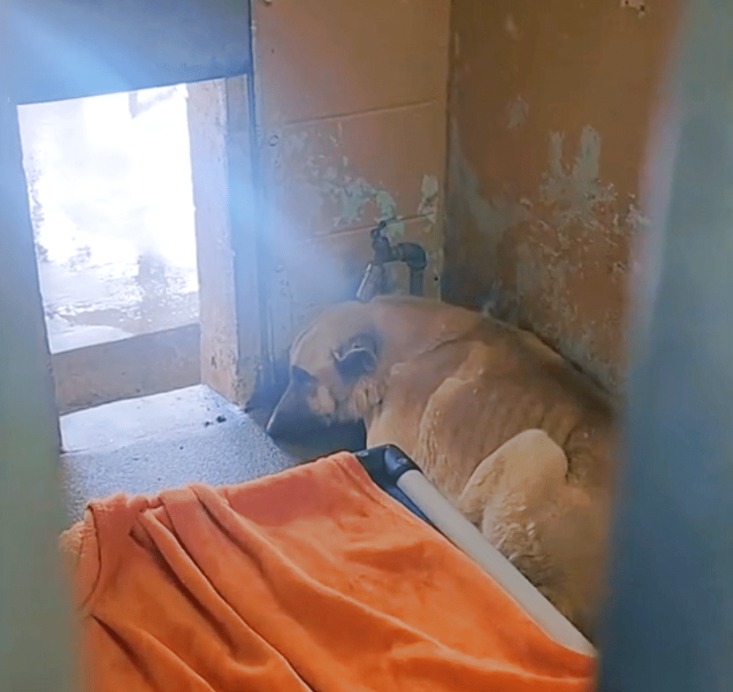
When shelter workers noticed, they stepped in, quietly. They walked him out to the yard, one slow step at a time.
They whispered words he had forgotten.
One volunteer said: “After 25 minutes of slow walking, he looked at me like he didn’t believe someone could be here for him.”
But in that moment, a seed of something new was planted. Because even when hope seems gone, dogs remember how to believe.
They just need someone to wait.
That’s when the message went out. “Ollie wants to love—but he needs a chance,” the shelter said.
They asked for patience, not perfection, for time to mend what neglect and heartbreak caused.
They guaranteed no aggression in that still body—just pain turned inward. “He’s hiding confidence under a neglected coat.”
And then came the Christmas miracle part. Stories like Ollie’s remind us that miracles sometimes aren’t sudden—they’re quiet preparations for someone to show up.
And someone did. Patched from heartbreak, slow from waiting, but steady.
That home will need to give him space. To sit with him. To walk slowly. To hand him treats and trust.
And when he wags again, it will mean more than just happiness—it will mean healing.
Ollie didn’t surrender light—he merely had to wait for someone to flip the switch.
If you watch his video you’ll see his ribs visible. You’ll see eyes that ask, Is it my turn? Am I chosen? You might feel tears, and you should.
Because what he’s feeling is far deeper than hunger—it’s loss, it’s memory, it’s yearning.
But put the tears aside for a second and look closer: the stance still there. The flank that shifts when someone kneels.
The slight tail lift when a caring voice calls his name. These are uncut clues: Ollie wants company.
Not just a home—but a family.
So this Christmas season, if you scroll past the puppies and the festive fluff, pause on dogs like Ollie.
The ones no longer bouncing, no longer charming—just waiting. Waiting for the right person to shrug off rush, to stay slow, to say: “I’ll wait for you.”
Because some dogs don’t just need a home—they need someone to give them a reason to believe.
Ollie’s story isn’t just a plea—it’s an invitation: to rescue, to heal, to belong.
And when he finally leaves the kennel for good, it won’t be a celebration. It will be redemption.
Because everyone—even the dog who lost everything—deserves a second chance.
And THAT is Ollie’s miracle.
Your article helped me a lot, is there any more related content? Thanks! https://accounts.binance.bh/uk-UA/register?ref=XZNNWTW7