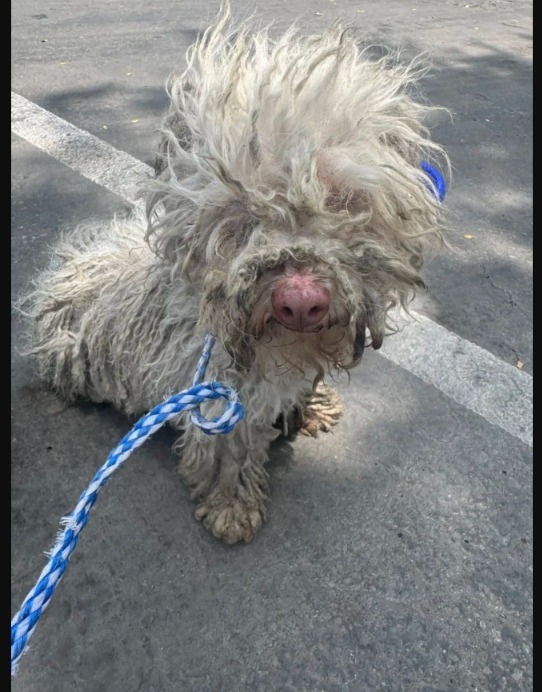
It should have been a normal drive. A few cars, the usual traffic. But one driver’s eyes caught something strange — a lump in the road.
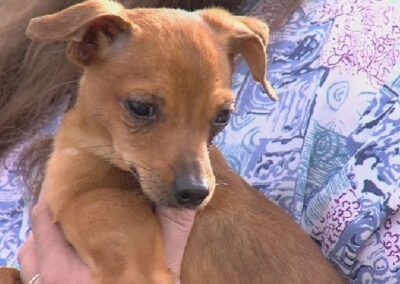
At first glance, it seemed like a dog: small, mangy, badly matted — probably abandoned and in danger. So the driver did something many don’t.
He stopped. He got out. He slowed traffic behind him. And he saved what he thought was a pup.
As cautious motorists waited and honked, the driver carefully approached. The dog-looking creature didn’t run — it didn’t have the energy.
Its fur was overgrown, filthy, tangled. Fear showed in its posture. For all anyone knew, this could be a stray.
So the man acted fast: he coaxed the animal to his car, used a leash, and gently moved it away from danger. Heart pounding.
Traffic behind him. But he did it. That alone would have been heroism.
But when they got to a vet, everyone’s assumptions unraveled.
After a careful check, the “dog” was revealed not to be a dog at all — but a wild coyote.
The matted fur had disguised its features, making its muzzle and ears look domestic.
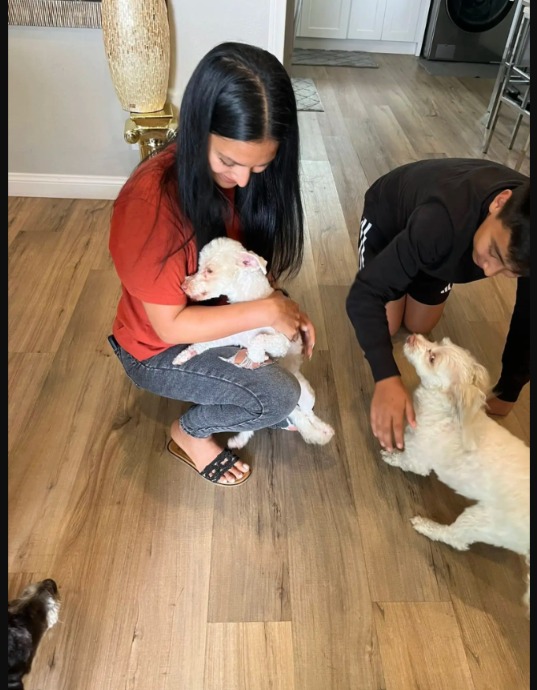
Even the professionals were stunned. A coyote? On a busy road? In what looked like dog hair?
It was the kind of twist you’d expect in a movie — but this was real life. And thanks to one person’s compassion, a life was rescued.
The coyote was transferred to a wildlife rescue organization. There, it received treatment, care, and a chance at rehabilitation.
Imagine that: a wild animal mistook for a stray dog, given water, safety, gentle hands.
What might have been a fatal mistake — a strike on the road, a panicked car wreck — became a rescue, because someone refused to ignore the frightened bundle on the pavement.
This moment matters.
Not just because a life was saved. But because it challenges the black-and-white comfort we humans draw between “pet” and “wild.”
It asks: when you see suffering, does the label matter? Or does compassion?
Think about it: how many times do we drive past motion on the roadside, dismissing it as trash, shadow, or a stray?
How many times do we close our windows, check rearview mirrors, and speed on? But this driver didn’t. He saw life.
Even if it meant chaos. Even if it meant standing in the middle of traffic. He saw a living being — and acted.
In a world overwhelmed by cruelty, neglect, abandonment — where stray-dog rescues flood feeds and shelter stay-overs — the rescue of a wild animal feels different.
Rarer. Softer. Stranger. It reminds us that rescue isn’t just for what we call “pets.”
It’s for any creature with breath, fear, and a chance at life — if someone stops.
So the next time you’re behind the wheel and you see something on the roadside — a lump, a swirl of fur, a motion — let yourself slow down.
Look.
Because sometimes, what looks like a “matted pup” could be something wilder, more fragile, more deserving of help than you imagine.
And maybe, if you act — slow, careful, compassionate — you too could save a life that nobody else even noticed.