A call came in one scorching May morning: a neighbor in Phoenix had spotted what looked like a “leopard” tied up outside — with puppies.
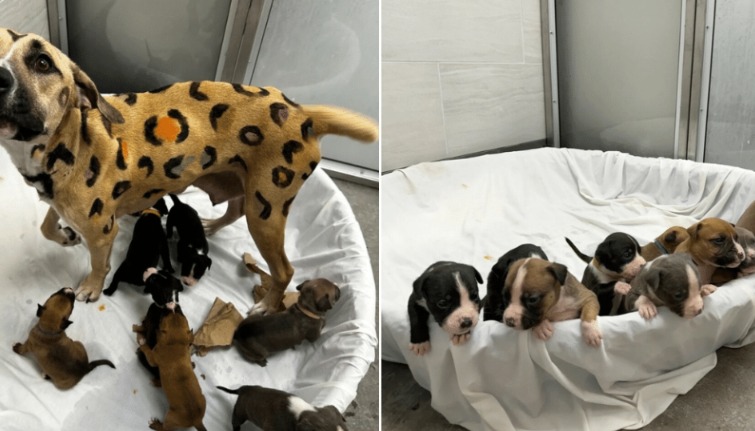
When Arizona Humane Society (AHS) showed up, investigators realized the “wild animal” was in fact a 5-year-old pit bull terrier mix now named Rainbow Brite, her coat painted with colorful spots to resemble a leopard.
She was tethered on a short leash under the blistering Arizona sun, and beside her were nine tiny, vulnerable puppies.
The weather that day pushed the scene from bad to dangerous: ambient temperatures reached 99 °F, but the concrete where the dogs were standing registered a scorching 133 °F — a deadly surface for any living being.
AHS’s emergency-response team and local police found Rainbow Brite dehydrated, parched, and nursing pups without water or shade.
Her body temperature measured a dangerous 105.7 °F. She was underweight — an alarming sign for a nursing mother caring for nine pups.
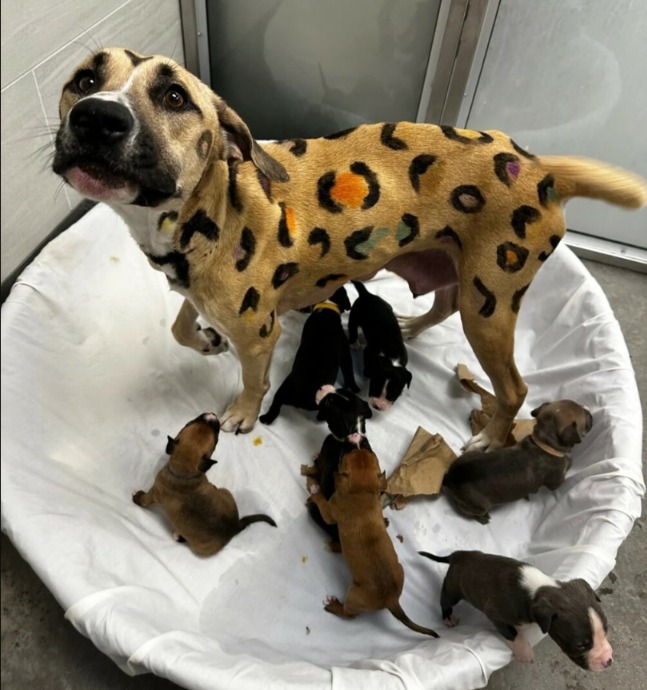
Once stabilized, the unusual family moved into foster care. Rainbow Brite and her “sprites,” as AHS staff affectionately call the pups, began the slow journey toward recovery.
Warmth, water, proper food, and a calm environment replaced neglect and danger.
Already, signs of healing appeared: the puppies gained weight; Rainbow Brite’s coat, though still spotted, began to regain luster; her eyes brightened; and her entire demeanor softened.
Their story — shocking and heartbreaking at first — became a beacon of hope.
A shelter video posted on social media showed Rainbow Brite nursing her pups, relaxing for the first time in months, eating treats, and resting.
Viewers were stunned: not by their painted “leopard” look, but by their fragility, their need, their resilience.
The clip rapidly went viral, opening conversations about shelter overcrowding, animal neglect, and the dangers of tethering pets in extreme weather.
But Rainbow Brite’s rescue isn’t just a single happy moment.
It shines a light on recurring problems — pets abandoned in heat, unsupervised, tethered without water or shelter.
Although some areas, like Phoenix, have laws prohibiting tethering during heat advisories or when hydration and shade are unavailable, such laws are limited in scope and consistency statewide.
The shelter hopes Rainbow Brite’s story will prompt more comprehensive legislation across the region.
For now, Rainbow Brite and her puppies remain safe, cared for, and on the path to health — thanks to quick rescue, compassion, and a foster family willing to help.
Once they’ve recovered, spay/neuter procedures and vaccinations will follow, and adoption can begin.
Their futures are no longer tied to suffering. They stand a chance at a second beginning.
Rainbow Brite’s story reminds us that sometimes even the most traumatized animals — painted, abandoned, overheated, and alone — only need one chance.
One act of kindness.
One rescue.
One stable home.
That single moment can change everything.