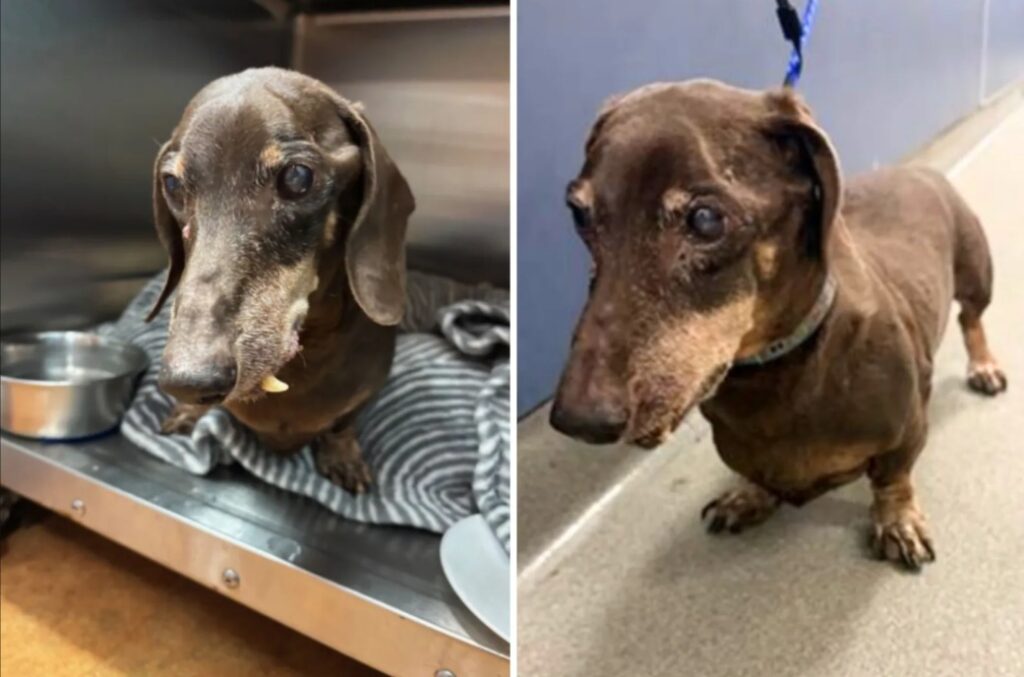
When rescue workers first laid eyes on him, he looked like so many other senior dogs who drift into shelters — old, weary, and carrying the invisible weight of years without care.
His coat was dull, his steps were slow, and his eyes looked tired from a lifetime of life’s hard knocks.
But even among other older dogs, there was something especially poignant about this little guy.
At an estimated 16 years old, he had lived longer than many dogs ever do, and yet here he was: alone, confused, and in need of help.
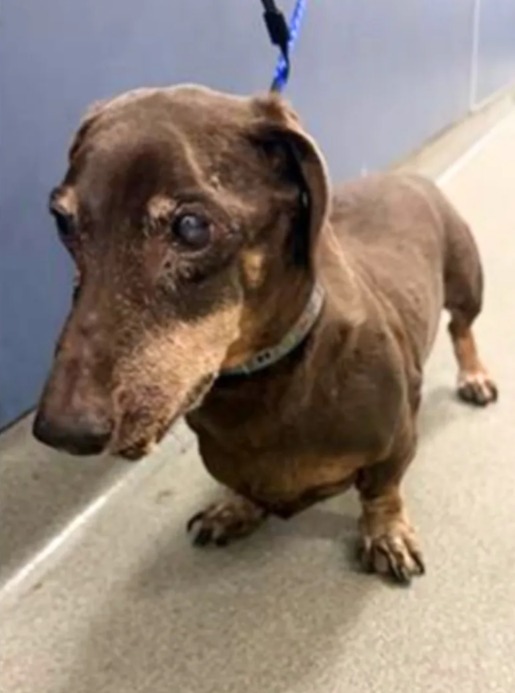
The rescue organization in South Florida soon learned his name was Wonka, a tiny chocolate Dachshund whose age alone was enough to tug on the heartstrings of anyone who saw him.
But there was more to his story than his years — and what his microchip revealed became a stark and heartbreaking reality that left staff and volunteers deeply shaken.
At first, rescuers assumed Wonka was a stray: one of countless dogs surrendered, lost, or abandoned each year.
But when the team scanned his microchip, they found registered contact information tied to a family — a detail that offered the first real glimmer of hope in an otherwise bleak moment.
Perhaps Wonka had simply wandered away from home, and now a long‑lost reunion was possible.
What came next, unfortunately, was devastating.
The shelter and Dachshund Rescue South Florida tried repeatedly to reach the people listed on Wonka’s chip — by phone, by message, by every available means — only to receive no response at all.
Silence. No calls back, no return of messages, no visible interest in this dog who once belonged to someone.
It was as if 16 years of shared life and memories suddenly meant nothing.
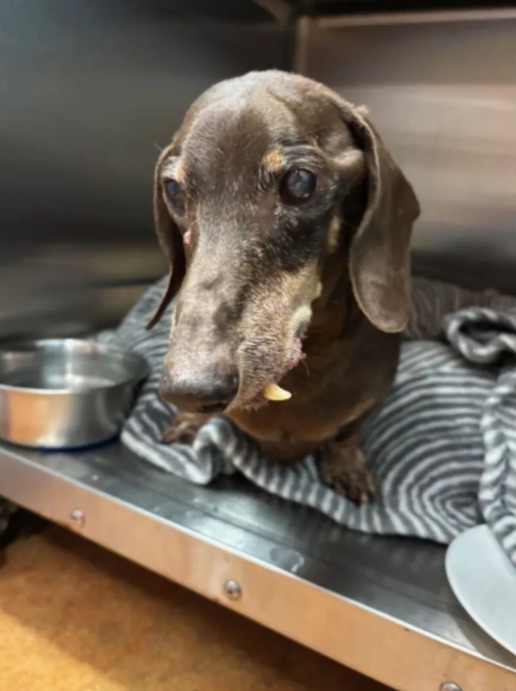
For a dog that had presumably spent his entire life with a family, the discovery that they did not want him back was a blow.
“16 years of love and loyalty discarded,” the rescuers wrote online, capturing the heartbreak felt by many who read the story.
Despite having a chip meant to connect him to his people, not a single effort was made by those listed to bring him home.
Wonka’s condition when he arrived was another sign of how long he had been neglected: his mouth was described by vets as one of the worst they had ever seen, with his teeth badly decayed and painful.
The rescue organized fundraising efforts, and animal lovers from across the region donated generously so that Wonka could undergo extensive dental surgery to remove rotten and mobile teeth and give him relief in his later years.
Even at 16, with much of his life already lived, Wonka’s spirit seemed intact.
After surgery and careful monitoring at a 24‑hour veterinary clinic, he began to recover and was placed into a foster home where he could rest, heal, and enjoy comfort he had clearly been denied for too long.
His foster caretakers described him as good with people and other dogs — a reminder that despite his hardship, his temperament hadn’t been damaged by the years alone.
The rescue has not yet placed Wonka for adoption, choosing instead to wait for the right person who will treat his remaining years not as a burden, but as precious time worth cherishing.
“We hope there is someone out there who wants to spoil him for the remainder of his life,” they wrote.
Stories like Wonka’s highlight not only the tragedy of abandonment but also the importance of microchipping and responsible pet ownership.
Microchips exist precisely to help reunite lost pets with their families, but only if the contact information is monitored and the owners remain engaged.
Sadly, in Wonka’s case, the chip became less a tool of reconnection and more a testament to a painful truth: sometimes the people who once loved a pet no longer choose to claim them, even when given the chance.
Yet there is hope here too.
Thanks to the efforts of compassionate rescue volunteers and the generosity of donors, Wonka has a chance at comfort, care, and affection — things no dog should ever live without, especially after sixteen years of life.
His story has resonated with thousands online, prompting conversations about how we care for senior dogs and how crucial it is to ensure pets are truly part of our lives for their entire lifespans.
No matter how much time a dog has left, he deserves dignity, warmth, and love.
Wonka’s story — painful as it is — reminds us that rescue can give new beginnings even in the twilight of life, and that every dog’s remaining days can be filled with kindness and care.
And perhaps, one day soon, Wonka will find a home where he can finally be treasured for all the years he gave to someone — and more.