When you look at a dog like Drax, an AKC Grand Champion Cane Corso, you see power, lineage, and an imposing physical presence.
This is a dog built to guard.
Yet, his family knows that beneath the massive frame lies a gentle giant whose greatest joy is not winning ribbons, but showering affection on his tiny human siblings.
A recent, heartwarming video of Drax’s morning routine sparked an intense online debate, proving that even the cutest moments can be complicated when dealing with the silent language of a dog.
The scene is one of sleepy domestic perfection.
Drax is casually dozing next to his toddler sister, who rests near him with an endearingly exhausted expression—a look many viewers instantly recognized as “the morning slump.”
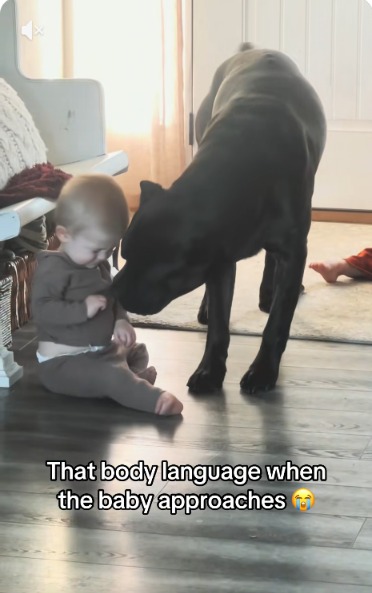
The real heart-melting moment occurs when Drax’s baby brother comes into view.
Without hesitation, the massive dog leans in to offer the infant a gentle kiss.
His mom instantly captured the universal feeling: “Oh, my heart can’t take it!”
It was an undeniable portrait of devotion, showing a bond so strong that the children clearly had no fear of their powerful protector.
The first reaction from the internet was pure adoration, with many praising the dog’s patience and the sibling connection.
One viewer perfectly summed up the sweetness, noting that Drax was “making himself small” and behaving with incredible care, hailing him as “the most loving, oldest son.”
The toddler sister, watching the interaction with a tiny, trusting smile, only reinforced the sense of security and love in the room.
However, the video’s viral spread prompted a wave of critical analysis, turning the sweet scene into a teachable moment about animal behavior.
Where some saw tenderness, others saw tension.
Expertly dissecting Drax’s body language, some commenters pointed out subtle cues: “ears lowered, turning the head away, appeasement kisses, blinking, yawning.”
These viewers argued that the dog was actually showing signs of stress and was attempting to “escape the situation” or seeking help from the person filming.
They warned that these signals—often misinterpreted as affection—are a dog’s way of saying they are uncomfortable, and ignoring them can lead to dangerous situations later on.
This crucial perspective prompted Drax’s family to address the debate, adding a vital layer to the conversation.
They clarified that they saw the “appeasement and submissive behaviors” but distinguished them from “major stressor indicators.”
The family assured everyone that the entire interaction was being carefully and constantly monitored to ensure the safety and proper behavior of all participants, both canine and human.
Their involvement and vigilance were the final, crucial safety net, ready to step in if any true sign of distress or overstimulation appeared.
Ultimately, this viral exchange became a valuable lesson for every dog owner: while the heart readily sees the love, the mind must be trained to recognize the silent language of a dog’s body.
Drax proved that he is an undeniably sweet and patient champion, but the conversation he started reminds us that responsible guardianship requires constant, educated vigilance.
Love is certainly abundant in their home, but so is respect for the powerful, often complex, language of a dog.