It started with a foster kitten. Tiny, curious, and full of energy, the little feline was exploring her new surroundings—and immediately, she found something that made her stop. Something big. Something fast. Something unfamiliar.
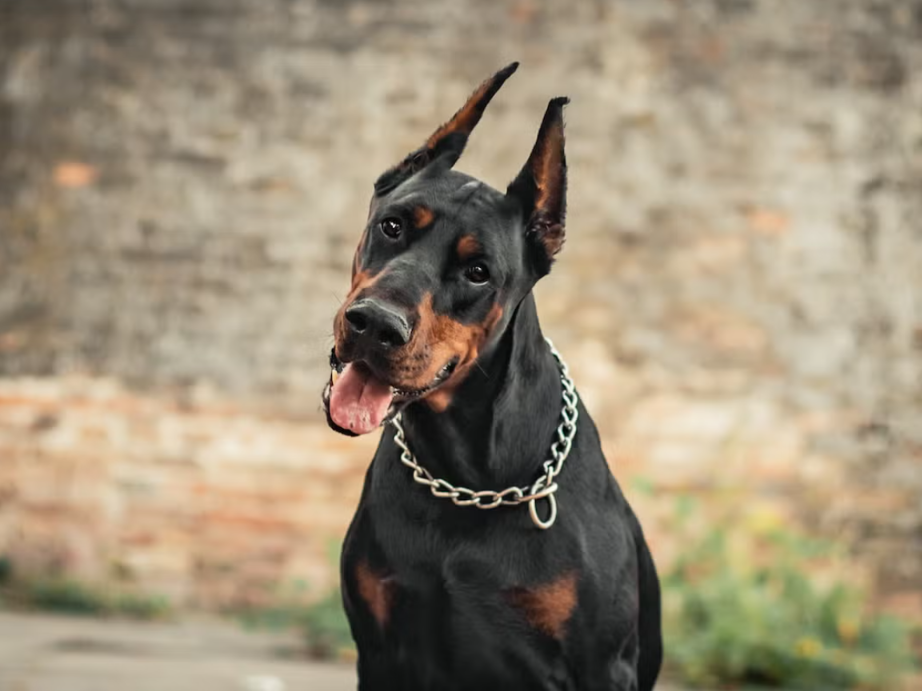
A massive Doberman named Thor was in the room. And for reasons only dogs understand, he froze. Not out of aggression. Not out of anger. But out of sheer uncertainty. The tiny kitten’s quick movements and loud little sounds were overwhelming.
The first instinct for most dogs might have been to retreat, bark, or tense up. But not Thor. He did something different. He turned toward his sibling, a calm Pit Bull named Max, and positioned himself so Max was between him and the kitten.
Thor used his own body as a shield, not just protecting himself, but giving Max a chance to adjust, to understand, and to feel safe in the presence of the tiny newcomer.
It was subtle at first. A nudge here. A shift there. But soon it became clear to anyone watching: this was deliberate. Thor had decided to trust his sibling to handle the initial interaction.
He would follow Max’s lead, letting the smaller dog absorb the tension, while he remained close, vigilant, and ready if the kitten’s playful energy became too much.
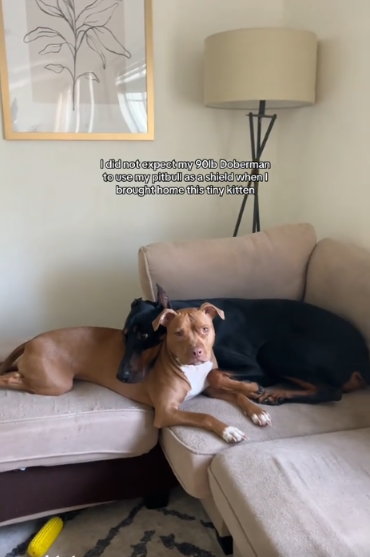
Observers couldn’t help but notice the dynamic. The kitten, oblivious to the silent negotiation happening around her, continued to explore. Max, confident and steady, allowed the little feline to approach in her own time.
Thor stayed nearby, enormous and imposing, yet gentle, a calm giant keeping watch from the sidelines.
This simple moment revealed something profound about canine relationships. Dogs aren’t just protective in obvious ways. They negotiate, adapt, and strategize, often instinctively.
Thor wasn’t aggressive. He wasn’t scared. He was choosing the best way to support both his sibling and himself, showing a kind of emotional intelligence that’s rare and remarkable.
Eventually, the kitten gained confidence. She darted and pounced, exploring corners she had avoided moments before. Max and Thor relaxed. The tension melted, replaced by curiosity, play, and a cautious friendship that promised many shared adventures to come.
Watching the interaction, it was impossible not to feel awe at the layers of care displayed. A massive dog using a sibling as a buffer isn’t just cute—it’s an act of trust, teamwork, and empathy.
It’s a reminder that animals navigate the world with complex social strategies, balancing instinct, affection, and caution in ways that mirror our own relationships more than we often realize.
By the end of the day, the room that had seemed tense was now a space of gentle camaraderie. The kitten explored freely. Max moved with calm confidence.
Thor remained the ever-watchful protector, large but measured, gentle but aware. What started as fear transformed into understanding, and what could have been chaos became harmony.
This story isn’t just about a Doberman and a Pit Bull. It’s about the quiet ways animals care for one another. About instinctive protection that’s thoughtful, not reactive.
About how love and loyalty can manifest in surprising and beautiful ways, even in the smallest, seemingly ordinary moments.
Thor’s shield, Max’s guidance, and the kitten’s bravery combined to show a truth that’s easy to forget in the bustle of everyday life: sometimes protection doesn’t look like force.
Sometimes it looks like presence, patience, and letting someone else take the first step.
In the end, the Doberman, the Pit Bull, and the tiny foster kitten weren’t just sharing space.
They were creating a bond—a lesson in trust, courage, and the subtle, profound ways animals care for each other.