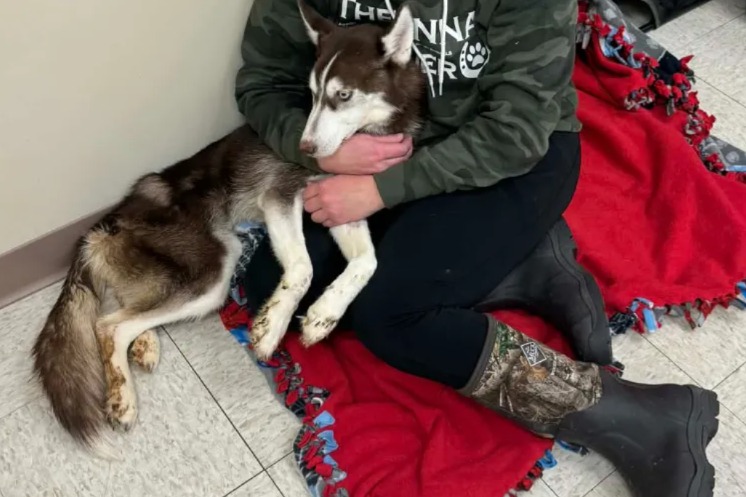
On a bitterly cold day in Erie, Pennsylvania, something heartbreaking and shocking unfolded: a young Siberian husky puppy was found abandoned in a crate under a bridge in near‑freezing temperatures — so cold and motionless that rescuers initially believed she might already be frozen and deceased.
The puppy, about six months old, was discovered on January 19 during a routine patrol, with her body temperature and heart rate dangerously low and her thin frame shivering uncontrollably.
What made the moment even more devastating was how filthy and neglected she appeared — covered in her own waste and emaciated from being left alone in conditions many animals simply do not survive.
Despite the grim first impression, something remarkable happened. When shelter staff and police approached the crate, the puppy did not give up. Though barely conscious and frostbitten, she showed signs of response — a flicker of life that told rescuers she still wanted to live.
Local authorities later arrested two people in connection with the abandonment, underscoring that this wasn’t a stray dog lost by accident but likely a deliberate act of cruelty. Such cases are heart‑wrenching yet important reminders that abandoning animals in extreme weather — whether freezing cold or scorching heat — can be criminal negligence and endanger their lives.
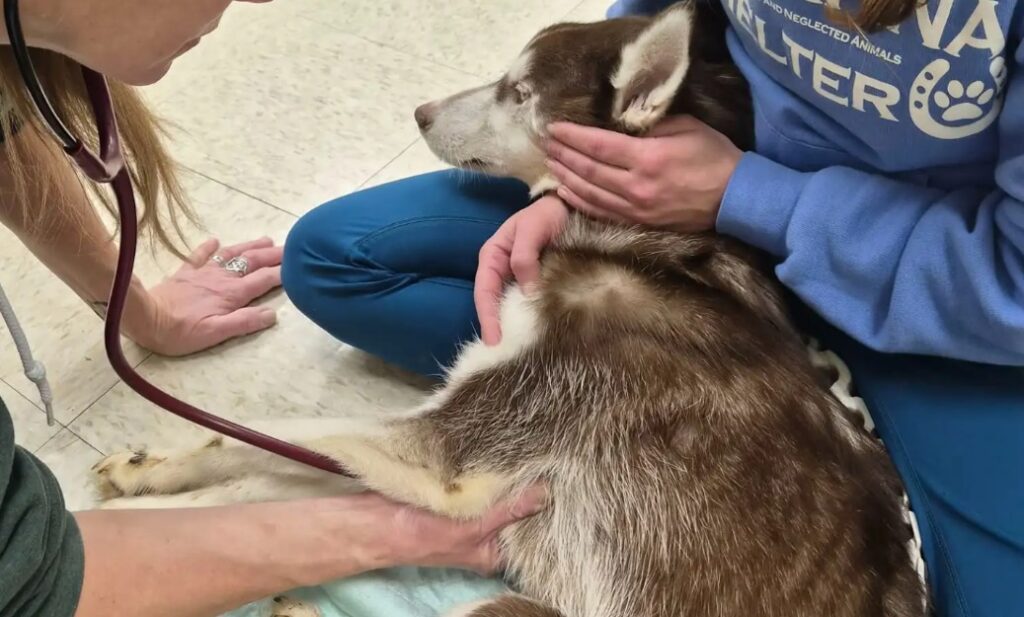
Once taken into care by a local animal shelter, veterinarians began the critical work of warming and stabilizing the pup.
That can be a delicate process — too much heat too fast can harm a hypothermic animal — so staff wrapped her in blankets and used careful, gradual warming techniques to raise her temperature safely.
Over the following hours and days, something hopeful started to happen: her condition improved. Her body temperature rose, her energy ticked upward, and her instinct to survive became ever more obvious.
Each small sign of improvement was a reminder that even in the worst situations, animals can cling to life with incredible resilience.
Rescue teams and animal advocates later shared updates on the puppy’s progress, saying she “isn’t giving up” and continues to respond to care and affection.
Dogs — especially breeds like huskies that evolved to thrive in cold climates — can have strong survival instincts, but even for them, exposure to freezing temperatures without shelter, heat, food, and water is a life‑threatening situation.
This case also highlights a broader issue: winter can be deadly for pets left outside. Extreme cold doesn’t just make animals uncomfortable — it can cause hypothermia and frostbite within minutes, especially for puppies, older dogs, or animals in poor health.
Knowing the signs of frostbite and hypothermia — including shivering, lethargy, pale skin, and cold extremities — can literally save a pet’s life.
In freezing weather, veterinarians and animal welfare groups strongly urge pet owners to keep animals indoors or, at minimum, provide insulated shelter, bedding, and access to unfrozen water.
Even short periods outside can be dangerous when temperatures drop below freezing, especially if wind chill and moisture are involved.
For the husky puppy found in Erie, what began as a near‑fatal abandonment has become a story of fight and hope — and a reminder of the difference compassionate action can make.
While her road to full recovery may be long and require ongoing medical care, her survival so far is a testament to both her resilience and to the people who didn’t walk away when it seemed too late.
Would you like this version rewritten with an emotional, narrative‑style flow perfect for blog posts or newsletters?