If you’ve ever watched your dog drift toward the kitchen like a heat-seeking missile…
or try to make a break for it the second your front door cracks open…
you know exactly why boundary training matters.
And here’s the good news: you can teach your dog to stay put — without yelling, chasing, electric fences, or bribing them with snacks every five minutes.
Real boundary training works because it teaches your dog how to make the right choice on their own.
Step 1: Get Consistent — Or Forget the Whole Thing
Boundary training starts long before you teach your first “stay.”
It starts with management.
If the dog isn’t supposed to cross the line into the kitchen, the bedroom, or the hallway — then that rule has to be airtight. No exceptions. No “Oh fine, just this once.” Dogs don’t do “maybe.” They do patterns.
Use leashes, baby gates, or closed doors at first. Outside, stick to a long line until your dog understands the rules.
You’re building the boundary in their brain before trusting them with the real world.
Step 2: Teach Indoor Boundaries First
Forget big outdoor yards for now — start where the temptations are smaller.
Here’s the play-by-play:
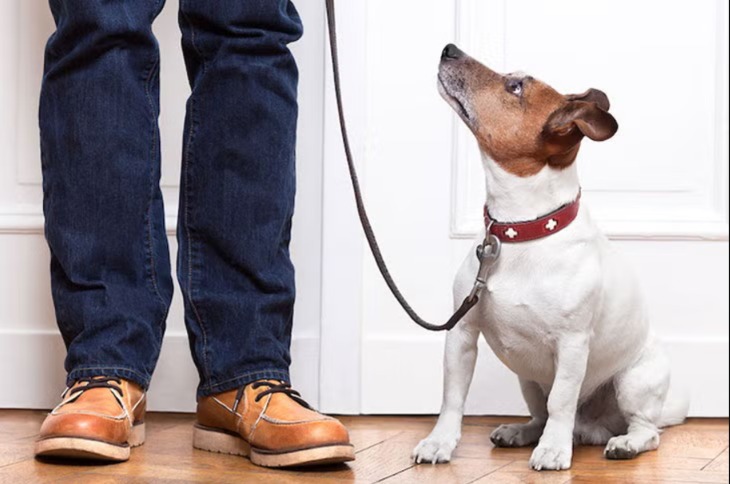
- Put your dog on a leash and walk toward the boundary (like a doorway).
- Stop before the line and wait for your dog to stop with you.
- The second they hesitate or pause — reward.
- Step into the room. If the dog stays back, reward again.
- Repeat until the dog starts treating that invisible line like a force field.
Once they get it, raise the difficulty:
- Walk farther into the room.
- Leave for a few seconds.
- Add distractions — people talking, a toy rolling by, the smell of dinner.
You’re shaping a behavior: “Stay behind the line, even when you want to cross it.”
Step 3: Take It Outside — Long Leash, Big Rewards
Now it’s time for graduation: the yard.
You’ll need:
- A long lead
- High-value treats
- Small flags or visual markers (optional, but powerful)
Walk your dog along the boundary of the yard. Every time they approach a marker, wait. The moment they turn back toward you — reward.
This teaches your dog that choosing the inside of the boundary is what pays.
Do this once or twice a day. Don’t rush it. Boundary skills outdoors take weeks — sometimes months — to become reliable.
But stick with it, and you’ll see a shift: your dog starts checking in with you, slowing down near the edge, and choosing safety instead of impulse.
Step 4: Add Distractions — The Real Test
Your dog might follow the rules when the world is calm…
but what happens when:
- A squirrel sprints by?
- A kid rides past on a bike?
- The delivery driver shows up?
- A neighbor’s dog starts barking?
This is where you add distractions on purpose.
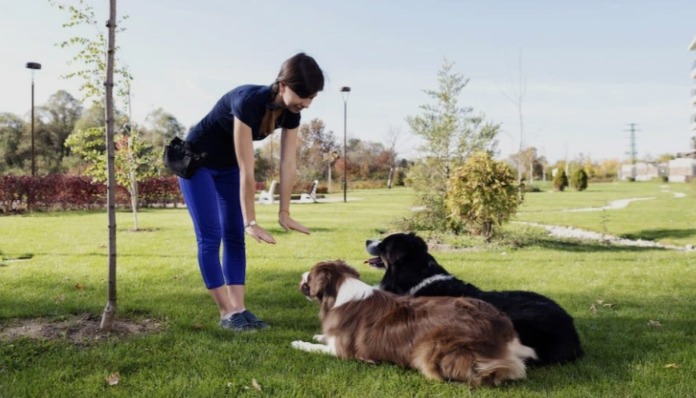
Stand near the boundary with your dog on a long line. Introduce mild distractions and reward your dog every time they resist the urge to cross the line.
Slow, steady pressure.
Distraction → Good choice → Jackpot reward.
Eventually, your dog stops reacting and starts thinking.
Step 5: Make Their Space Worth Staying In
Here’s what most people forget:
A dog will only respect boundaries if they love what’s inside them.
So make that space awesome:
- Play there.
- Train there.
- Give special toys there.
- Hang out with them there.
You’re turning the “safe zone” into their happy place.
And the line they shouldn’t cross?
That becomes an afterthought — because everything they want is already inside.
Also, build a strong recall. If your dog does slip, having a rock-solid “come” command is your safety net.
Why Boundary Training Works — Long Term
When done right, boundary training gives you:
✓ A safer dog
They won’t bolt into traffic, chase something across the yard, or slip out the door.
✓ A calmer home
No more yelling “Back! Back!” every time you open the fridge.
✓ A more confident dog
Dogs thrive when they know what’s expected of them.
✓ Real trust
Not the wishful kind…
the kind where your dog proves they can handle freedom.
The Bottom Line
Boundary training isn’t magic — it’s method.
It’s repetition paired with consistency, fair expectations, and meaningful rewards.
Stick to it.
Do it daily.
Keep your cool.
And one day, without fanfare, you’ll look up and realize something amazing:
Your dog has learned the line…
respects the line…
and stays behind it — not because you forced them…
…but because they chose to.
That’s real training. That’s real freedom. And that’s the kind of relationship every dog deserves.