
Most dog owners know the routine.
Morning walk.
Dinner time.
A few toys scattered across the living room floor.
From the outside, it seems like a perfectly happy life.
But for many dogs, something important is missing.
Not food.
Not love.
Not exercise.
What they’re missing is mental stimulation.
Just like people, dogs need challenges, curiosity, and new experiences to feel fulfilled. Without it, even the sweetest dog can become bored, frustrated, or destructive.
The good news?
Keeping a dog mentally enriched doesn’t require expensive gadgets or complicated routines.
Sometimes the smallest changes can make the biggest difference.
The Hidden Problem: Boredom
Dogs are incredibly intelligent animals.
Their senses are constantly scanning the world — noticing smells we can’t detect, sounds we barely hear, and movements we never see.
When that natural curiosity has nowhere to go, boredom sets in.
And boredom rarely stays quiet.
You might notice chewing on furniture, digging in the yard, constant barking, or restlessness around the house.
Many owners assume their dog simply has “too much energy.”
But often, the real issue is a lack of stimulation.
Dogs were designed to explore, solve problems, and interact with their environment.
When those instincts aren’t satisfied, they invent their own activities.
Unfortunately, those activities don’t always match our expectations.
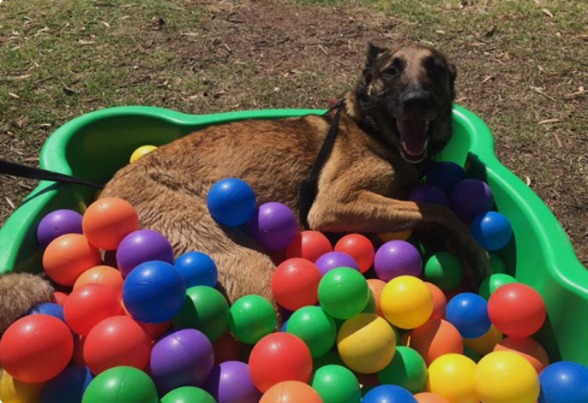
What Environmental Enrichment Really Means
Environmental enrichment simply means creating opportunities for your dog to use their brain and instincts.
Instead of living the exact same day over and over again, enrichment introduces variety, challenges, and discovery.
Think of it as turning everyday life into a series of small adventures.
It can include:
- Puzzle toys that make dogs work for treats
- New walking routes with unfamiliar smells
- Games that encourage problem-solving
- Training exercises that build focus and confidence
Even simple changes can transform a dog’s day.
And when their minds are engaged, their behavior often improves naturally.
Food Can Become a Game
Feeding time is one of the easiest opportunities to introduce enrichment.
Instead of placing food directly in a bowl, many owners are discovering the benefits of turning meals into challenges.
Puzzle feeders, treat-dispensing toys, and snuffle mats allow dogs to hunt and search for their food the way their instincts encourage.
Suddenly dinner isn’t just a quick meal.
It becomes a rewarding activity.
Dogs who work for their food often eat more slowly, stay mentally engaged, and feel more satisfied afterward.
For a curious dog, it’s the difference between a routine and a mission.
The Power of Scent
A dog’s nose is one of the most powerful tools they have.
While humans rely heavily on sight, dogs experience the world primarily through smell.
That’s why scent games can be incredibly fulfilling.
Hide a few treats around the house or yard and encourage your dog to find them.
At first, keep it easy.
Soon your dog will begin searching eagerly, following scent trails with determination.
This type of activity taps into natural instincts that many household dogs rarely get to use.
And the mental effort can tire a dog out faster than a long walk.
Rotate Toys to Keep Things Fresh
Many dogs lose interest in toys because they’re always available.
Imagine watching the same movie every day for months.
Eventually, it stops being exciting.
Instead of leaving every toy out at once, try rotating them.
Put a few away and bring them back later.
When a “forgotten” toy suddenly reappears, it feels new again.
That small change can instantly revive your dog’s curiosity and playfulness.

Training Isn’t Just for Puppies
Some owners think training ends once a dog learns basic commands.
But ongoing training is one of the most powerful forms of enrichment.
Teaching new tricks, practicing obedience games, or introducing agility-style activities keeps your dog mentally engaged.
It also strengthens communication between you and your pet.
And the truth is, most dogs love learning.
Every new challenge feels like a puzzle waiting to be solved.
Social Time Matters Too
Dogs are naturally social animals.
Many enjoy interacting with other dogs, people, or both.
Dog parks, playdates, or supervised daycare environments can provide valuable mental and emotional stimulation.
Of course, every dog has a unique personality. Some thrive in busy environments, while others prefer quieter interactions.
The goal isn’t constant activity.
It’s meaningful connection.
A Happier Mind Creates a Happier Dog
When dogs receive the mental stimulation they need, something remarkable happens.
Behavior problems often decrease.
Destructive habits fade.
And dogs begin to relax more easily at home.
It’s not because they’re tired from physical exercise alone.
It’s because their minds feel satisfied.
Environmental enrichment isn’t about making life complicated.
It’s about making life interesting.
Because when dogs are given opportunities to explore, solve problems, and experience new things, their world becomes richer.
And a richer world leads to a happier dog.
One curious sniff, playful puzzle, and joyful discovery at a time.
Related posts:
 The Heavy Truth: How Dog Obesity Silently Steals Joy (and Years)
 Dog Allergy Signals Explained: Food Allergies Compared With Seasonal Triggers
 Why Spaying and Neutering Your Pet Is One of the Most Responsible Choices You Can Make
 Decoding the “Bad Dog”: Why Your Pup’s Habits Are Actually a Cry for Connection