When we think of routine police work, we rarely imagine it leading to a life‑or‑death rescue.
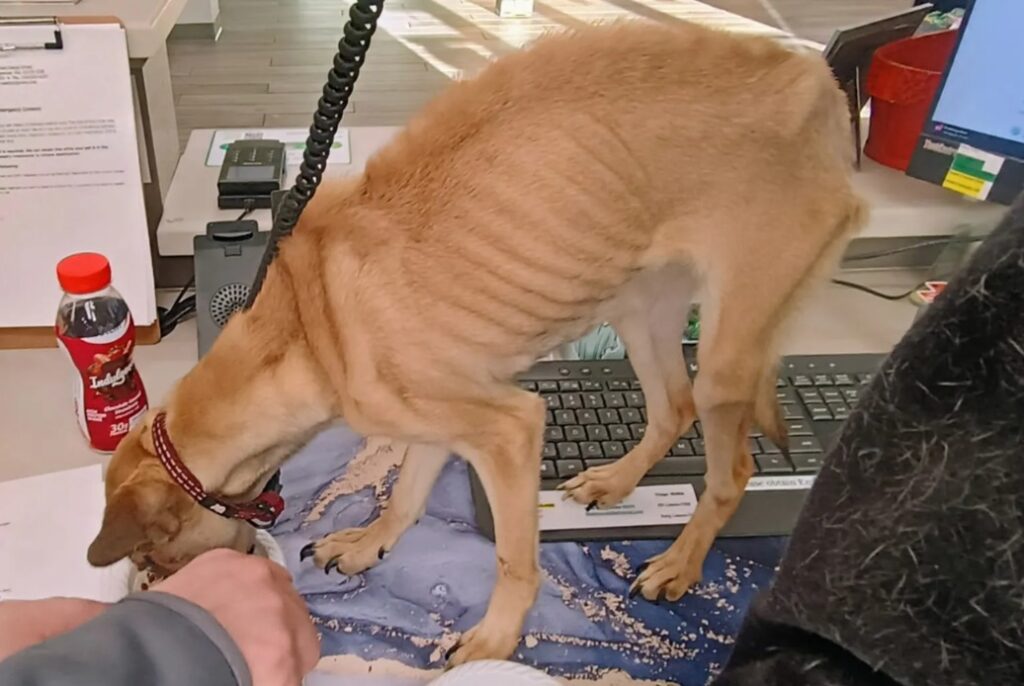
But that’s exactly what happened on a chilly November day in West Bridgewater, Massachusetts, when officers pulled over a vehicle for speeding and made a discovery that stopped them in their tracks: a dog so emaciated and neglected she was described as just skin and bones.
That dog, now known as Sprout, has since become a symbol of both the devastating reality of animal neglect and the transformative power of community care.
It all began on Nov. 24, when a West Bridgewater Police Department officer noticed something troubling in the backseat of a car stopped for speeding. The small mixed‑breed dog looked frighteningly frail, unable to hide the severity of her condition even in the brief moment before authorities intervened.
Animal rescuers at the scene immediately knew this was not just a case of thinness — it was a life pushed to the brink.
Shelter staff from the Animal Protection Center of Southeastern Massachusetts (APCSM) later described Sprout as “severely anemic” and in desperate need of urgent care.
Veterinarians who examined her confirmed the gravity of her condition: Sprout’s hematocrit level — the proportion of her blood comprised of red blood cells — was shockingly low at just 15 percent, far below the level required to carry sufficient oxygen throughout her body. Without intervention, she had less than 48 hours to live.
What made the discovery even more heartbreaking was what came next: the dog’s owner reportedly admitted that Sprout had been in their care for less than a year and claimed she had “literally never been fed,” citing a lack of time and resources.
Whether that admission stemmed from negligence, ignorance or indifference, the result was tragically clear — a defenseless animal had gone without proper nourishment for far too long.
From the moment rescuers took Sprout into their care, the focus shifted from despair to survival — but not without complications. Animals that have endured extreme starvation cannot simply be given abundant food immediately. Doing so can trigger a condition known as refeeding syndrome, which can be fatal.
So veterinary staff and shelter workers devised a carefully monitored nutritional plan, designed to gradually restore her strength without overwhelming her weakened system.
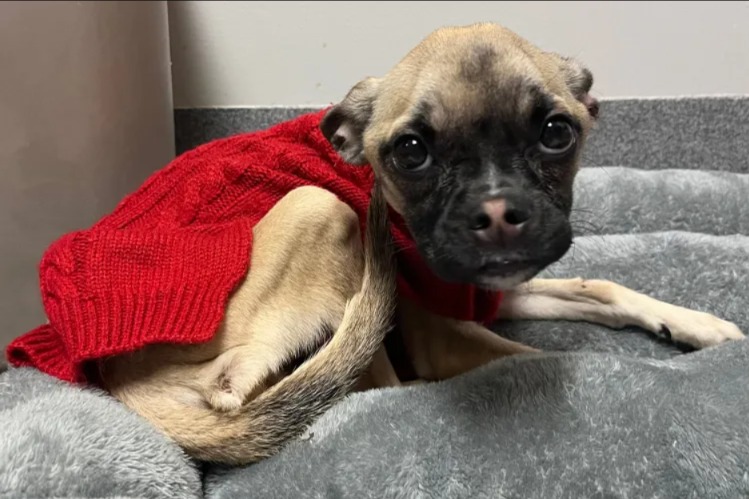
Sprout wasn’t just medically fragile; she was emotionally starved as well. Early photos shared by the shelter show her in a tiny red sweater, her eyes wide with a mixture of confusion and longing — a stark contrast to the severe physical damage wrought by neglect.
Still, those involved in her care described her temperament as “incredibly sweet,” recounting moments when she responded positively to gentle touches and affection despite everything she had endured.
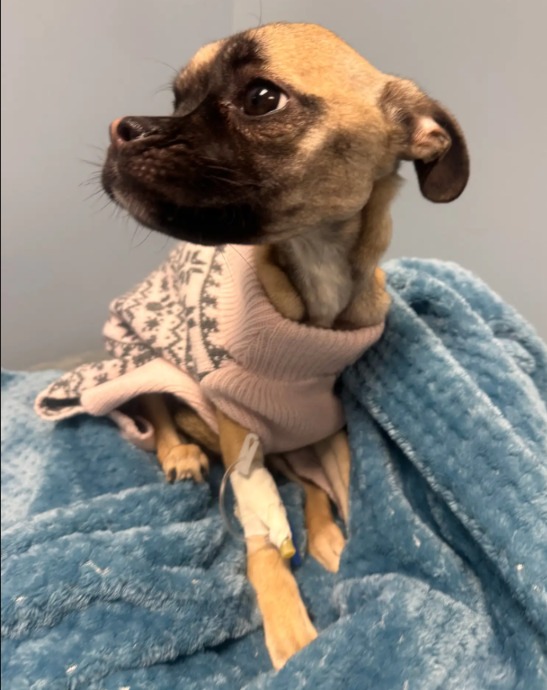
As news of Sprout’s condition spread, community support began to build. A fundraising campaign was launched to cover her emergency veterinary care, bloodwork, medications and ongoing treatment — a tangible example of how ordinary people can make extraordinary differences when they rally behind a vulnerable creature in need.
Sprout’s recovery has been slow and careful, but hopeful. Shelter updates indicate she is now on medications to stabilize her system, and each day brings incremental improvements as her body adapts to nourishment and medical support.
That progress — from a dog with almost no strength to one gradually regaining life — is testament to both her resilience and the decisive actions taken by police officers, veterinarians and shelter staff.
In the months ahead, Sprout will continue to require close monitoring and ongoing care.
But perhaps equally important is what her story represents: the stark reality that many companion animals suffer unnoticed, and the unforgettable impact that intervention, compassion and community support can have when a life is at stake.
Sprout’s journey from abandonment and starvation to careful rehabilitation is a powerful narrative of survival — and a reminder that sometimes, the most profound rescues begin in the most unexpected moments.