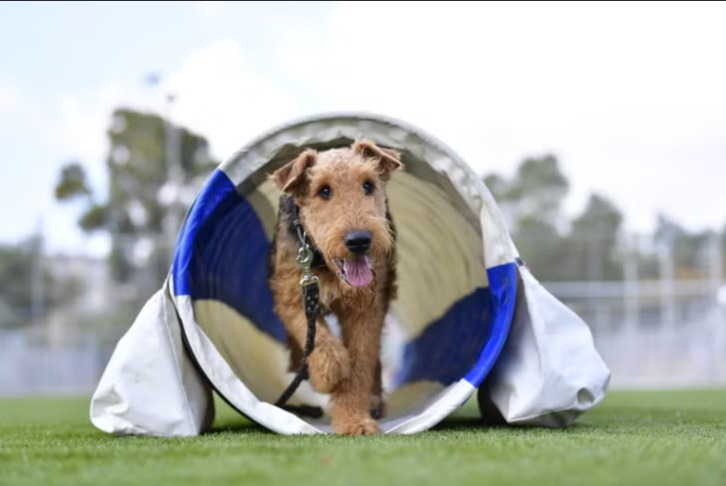
It starts with a jump in the yard.
A burst of speed.
A sharp turn.
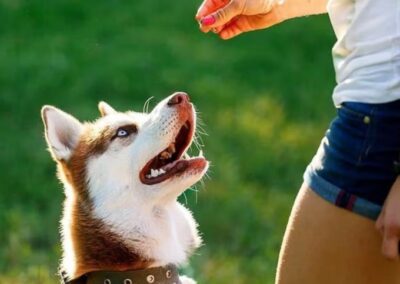
Eyes locked on you, waiting for the next cue.
Agility isn’t just about obstacles. It’s about connection at full motion — your dog reading your body language at 20 miles per hour, trusting that every signal you give leads somewhere safe.
When done right, agility competition isn’t chaos.
It’s choreography.
And if you’re thinking about stepping into the ring, preparation makes all the difference.
Foundation First — Always
Before you worry about weave pole times or tight turns, ask yourself one question:
Does my dog understand the basics under distraction?
Solid sit-stays. Reliable recalls. Focus on you even when something more exciting is happening nearby.
Agility magnifies everything. If your dog struggles with impulse control in the backyard, it will show up under bright lights and loud crowds.
Build the foundation patiently. Reward eye contact. Reinforce calm starts. Practice short sequences before full courses.
Precision grows from clarity.
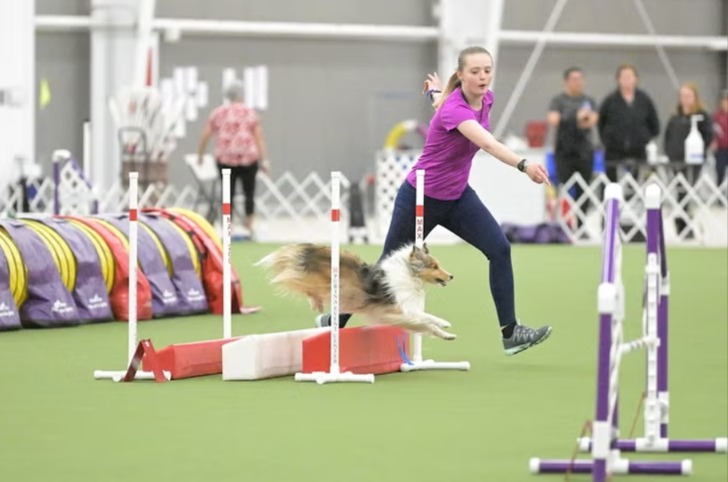
Train Skills — Not Just Speed
It’s tempting to chase faster runs. The thrill of a quick time is intoxicating.
But speed without accuracy costs points — and confidence.
Work each obstacle individually before chaining them together. Make sure your dog understands proper contact behavior on equipment like the A-frame and dog walk. Clean entries and exits on weave poles matter more than rushing through them.
Break down complex sequences into small, winnable pieces.
Confidence builds speed naturally.
Handle With Intention
In agility, your body is a language.
Where your shoulders point.
How your feet move.
When you accelerate — and when you decelerate.
Dogs read physical cues far more than verbal commands. A late step or unclear arm signal can send your dog off course.
Practice handling skills without obstacles at first. Walk courses solo. Visualize your lines. Know where you’ll switch sides before the run begins.
Hesitation from you creates confusion for them.
Lead clearly.
Move decisively.
Condition the Athlete
Agility is a sport. And like any athlete, your dog needs conditioning.
Core strength supports balance on narrow planks. Rear-end awareness helps with tight turns. Flexibility reduces injury risk.
Incorporate strength-building exercises into your routine — controlled sit-to-stands, backing up, balance work on stable surfaces. Keep your dog at a healthy weight. Warm up before runs and cool down afterward.
Longevity in the sport depends on preparation off the course.
Train the Mind, Too
Competition environments are stimulating — barking dogs, applause, unfamiliar smells.
If your dog has only trained in quiet spaces, trial day can feel overwhelming.
Expose them gradually to new environments. Practice near mild distractions. Reward focus heavily when they choose you over the noise.
The goal isn’t to eliminate distraction.
It’s to make you the most rewarding thing in the environment.
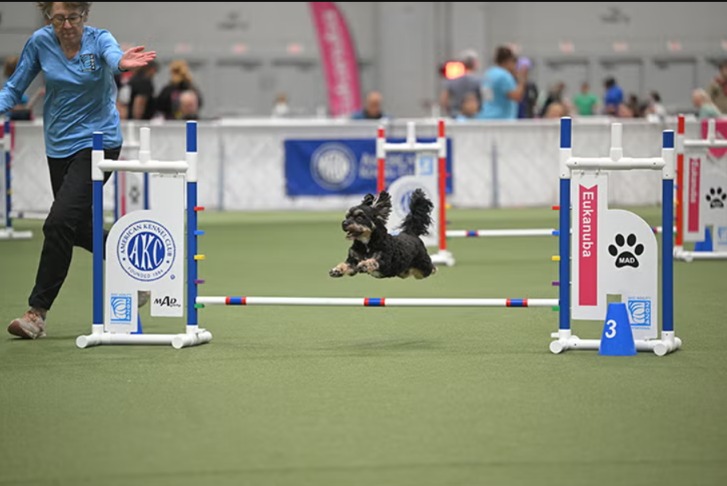
Keep It Fun
Agility should feel like a game.
If your dog shuts down, avoids obstacles, or loses enthusiasm, reassess. Frustration — from either end of the leash — erodes trust.
Celebrate small wins. End sessions on success. Keep training short and energetic.
Remember why you started.
Not for ribbons.
For the joy of running together.
Trial Day Mindset
When you finally step into the competition ring, breathe.
Your dog doesn’t know what a title is. They don’t understand qualifying scores. They only know whether you’re excited, tense, confident, or unsure.
Walk the course with intention. Visualize clean lines. Then trust your training.
Mistakes happen.
Knocked bars. Missed contacts. Off-course detours.
Shake it off.
Your dog doesn’t dwell on the run. They’re ready for the next cue, the next challenge, the next moment with you.
The Real Win
Yes, titles feel good.
Yes, ribbons look great on the wall.
But the real victory happens long before the judge calls “Go.”
It’s in the quiet practice sessions. The early mornings. The repetition. The teamwork built step by step.
Agility competition isn’t just about navigating obstacles.
It’s about building a partnership so strong that at full speed — through tunnels, over jumps, across narrow planks — your dog chooses you every single time.
And when you cross that finish line together, breathless and smiling, you’ll realize something important:
The course wasn’t what mattered most.
The trust was.