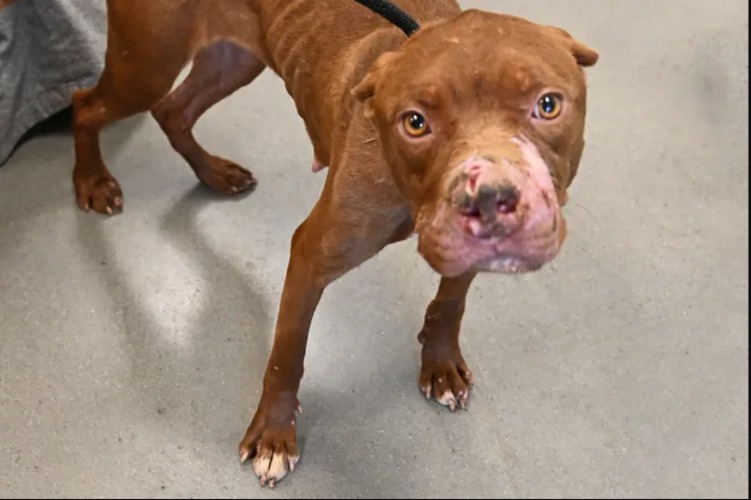
When rescuers found Gertie, a young dog lying abandoned on the side of a rural California road, it was immediately clear that her ordeal had been harsher than most.
Underweight, wounded, and surrounded by trash and debris, she was in a dire state — but what made her condition even more heartbreaking was the likely reason she had been left there: Gertie appeared to have been used as a “bait dog” in illegal dog‑fighting operations, a form of animal cruelty that’s grotesque and illegal in all 50 U.S. states.
Bait dogs aren’t trained — they’re victims. They’re used to help train fighting dogs to be aggressive by enduring attacks, intimidation, or harm.
These dogs are often kept in deplorable conditions, neglected, mistreated, and treated as tools rather than animals with emotions and the capacity for love. Signs seen on Gertie’s body — scars, wounds near her mouth, and physical trauma consistent with bite marks or handling — suggested she may have endured this kind of cruelty.
When animal control officers came across her, she didn’t lift her head immediately. She didn’t bark or growl.
Instead, as rescuers approached with both caution and compassion, she responded with a tail wag — a small movement that spoke volumes. Despite what she’d likely been through, she still greeted kindness with hope.
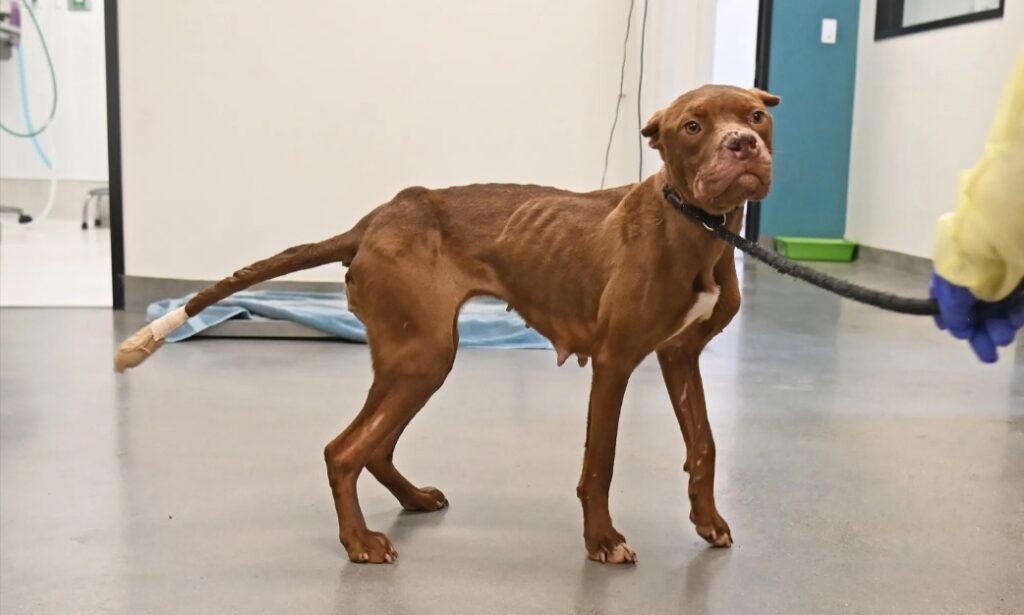
The shelter that took her in, the Helen Woodward Animal Center in Rancho Santa Fe, California, knows all too well the kinds of injuries and emotional scars animals like Gertie carry.
The immediate priority was to stabilize her medically — treating wounds, administering supportive care, and ensuring that she was no longer in danger of infection or further physical harm. Facing weeks of recovery and rehabilitation, she wasn’t just healing physically; she was beginning to learn that not all humans are cruel.
Beyond the physical injuries, rescue workers saw something remarkable: Gertie’s gentle nature remained intact.
She wasn’t afraid of humans; she wasn’t defensive. She seemed genuinely calm and accepting of care, leaning into affection and soft attention from her caregivers. For dogs who’ve faced extreme abuse, this is no small thing — it’s a sign that recovery isn’t just possible, it’s already beginning.
Still, the cruelty she likely suffered reflects a broader issue: underground dog‑fighting rings continue to exist, and their impact spills far beyond the ring itself.
It isn’t just the fighting dogs who suffer, but bait dogs, family pets taken without consent, and community dogs stolen from yards and homes. Law enforcement agencies are clear: dog fighting is a felony offense, and anyone involved in training, arranging, promoting, or facilitating such activities can face serious criminal charges.
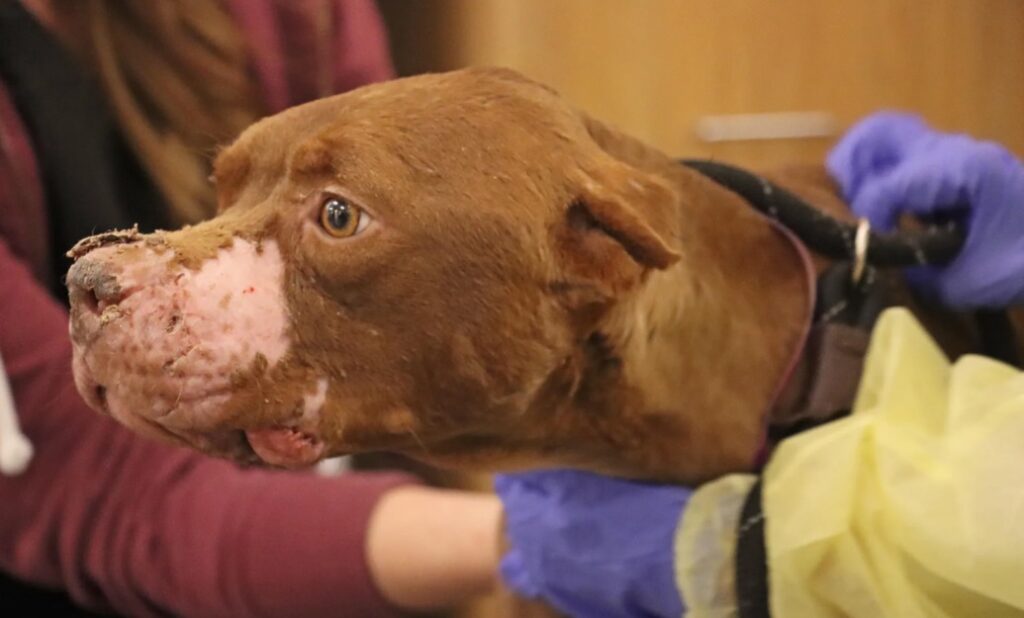
The public outpouring of support for Gertie has been tremendous. People have responded with compassion — not just because her appearance is a shocking example of cruelty, but because her resilience is inspiring.
Every wag of her tail and relaxed posture as she receives care shows how much animals can rebound when love replaces cruelty.
Gertie’s road to recovery will take time, but her story carries a message: resilience matters, and intervention changes everything.
In a world where abuse still occurs, there are still countless people willing to step forward, lend a helping hand, and allow these animals not merely to survive — but to thrive.
If you’ve ever considered supporting animal welfare, cases like Gertie’s highlight how crucial it is to advocate for shelter resources, tougher penalties for animal cruelty, and community vigilance.
When we look out for the most vulnerable, we give them not just care, but a future worth living.