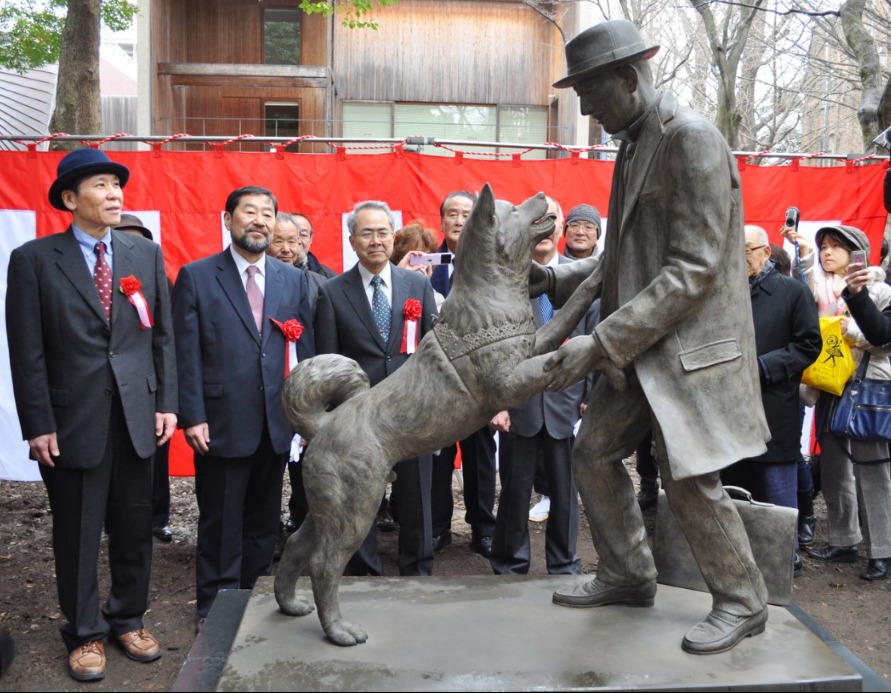
For dog lovers and storytellers alike, few tales capture the true essence of devotion better than the story of Hachikō — a dog whose unshakeable loyalty became a legend in Japan and around the world.
This is not just a canine anecdote. It is an emotional compass that points directly at the heart of what it means to bond with another living soul.
Hachikō was born in November 1923 in Ōdate, tucked away in the northern Akita prefecture of Japan.
From the beginning, this Akita-inu pup found more than just a home — he found a deep connection with Professor Hidesaburō Ueno, a respected academic at Tokyo Imperial University.
Ueno wasn’t just Hachikō’s owner; he was his companion, his routine, and the center of his canine universe.
Every day, in a ritual that would define Hachikō’s legacy, the dog walked with Ueno to Shibuya Station as the professor left for work.
And every evening, Hachikō returned to the station — same place, same time — to wait for his beloved master’s return.
This simple daily act was not extraordinary at first. Many pets follow their humans to the door and back.
But for Hachikō, this wasn’t about routine. It was about dedicated affection.
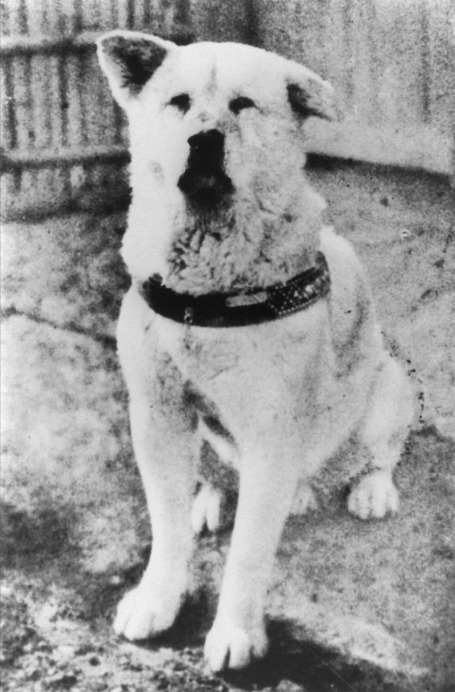
Then tragedy struck. In 1925, Ueno suffered a sudden cerebral hemorrhage and died unexpectedly.
That day, Hachikō watched his master leave for the station as usual. But Ueno never came home again.
For most dogs, such a moment signals confusion, fear, or retreat. For Hachikō, it marked the beginning of something astonishing: a decade-long vigil of loyalty.
Without Ueno by his side, Hachikō didn’t abandon his daily walk to the station.
Morning after morning, evening after evening, rain or shine, he returned to Shibuya Station — not out of habit, but out of devotion.
For almost ten years, he stood and waited, eyes fixed on the trains, hoping for his master’s return.
People noticed him. Station workers saw him settle into his familiar post. Commuters began to recognize him.
His presence at the station became as much a part of the daily rhythm as the coming and going of trains.
And slowly, the story of the loyal Akita spread beyond Shibuya, beyond Tokyo, and ultimately across Japan and the world.
Journalists wrote about him. Volunteers fed him. A sense of reverence grew around this steadfast dog.
And in 1934, thanks to public support and donations, a bronze statue was erected in his honor right outside Shibuya Station — a place he had chosen every day of his vigil.
Hachikō himself appeared at the statue’s unveiling, a living testament to the power of love that refused to fade with time.
Sadly, like all living beings, Hachikō’s time eventually ended. In 1935, at around thirteen years old — equivalent to roughly ninety human years — he died from illness.
But his legacy did not. His body was interred near his beloved professor’s grave, symbolically reuniting them after years of separation.
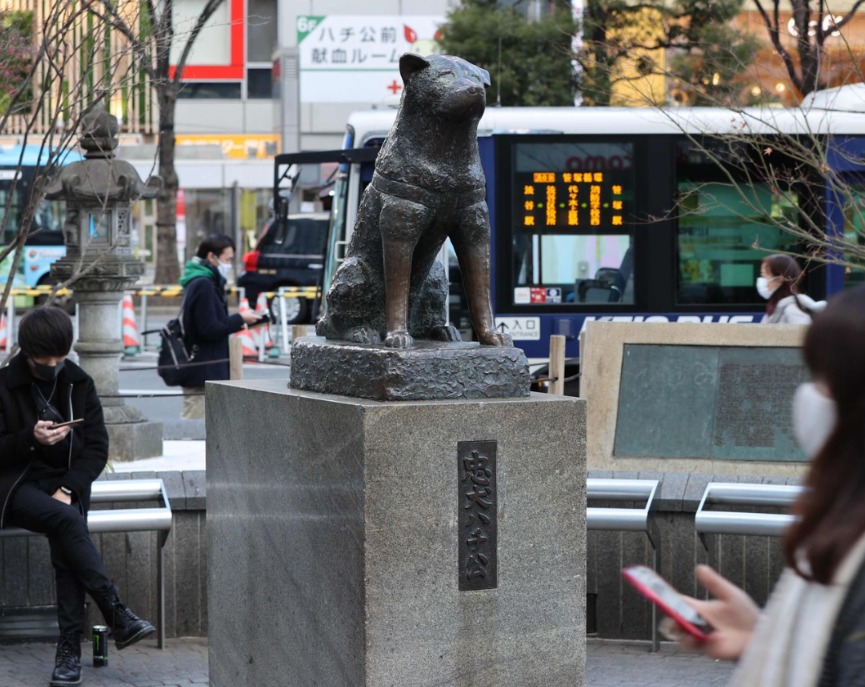
Today, Hachikō’s statue in Shibuya isn’t just a meeting spot; it’s a symbol — a global emblem of loyalty, dedication, and unconditional love.
Visitors from around the world stand beside it, place flowers at its base, and reflect on what it means to love without expectation and remain faithful in the face of absence.
What makes Hachikō’s story so deeply moving isn’t simply that he waited. It’s that he chose to hope every single day, even when all logic said there was nothing left to hope for.
It’s the way he walked back to that station, again and again, believing in the return of someone he cherished more than anything.
Movies, books, and documentaries have been inspired by Hachikō’s devotion — including the American film “Hachi: A Dog’s Tale,” starring Richard Gere — retelling the powerful narrative for new generations.
His story continues to touch hearts precisely because it speaks a universal truth: love doesn’t need words, and loyalty doesn’t need conditions.
In a world of relentless change, the statue of Hachikō stands still — a reminder that some truths are timeless: that love can endure beyond logic, that gestures of faith matter, and that the heart of a dog can teach us lessons about life, loss, and unbroken devotion.
Hachikō didn’t just wait for his master. He taught the world what it means to truly love — and that is why his story will forever matter.