When winter grips the Great Lakes region, the icy waters and shifting ice flows around Detroit can look beautiful — but they can also turn deadly in an instant.
That stark reality came into sharp focus one frigid morning when a young dog found himself trapped in a perilous spot on the Detroit River, and the extraordinary response by rescuers turned what could have been heartbreak into hope.
It was Feb. 23, and the temperature in southeast Michigan hovered well below freezing. Snow and ice lingered along the riverbanks near the Gordie Howe International Bridge, a landmark linking Windsor, Ontario and Detroit, Michigan.
Amid the chill and quiet of an early weekday, something unusual caught the eye of people walking along the shore — a dog, stranded near an icy tunnel beneath a riverside structure, his body pressed against the cold, unforgiving water.
The husky was young — just 2 years old — and clearly in distress. His thick white coat was matted with ice, and he was showing signs of hypothermia, a dangerous drop in body temperature that can be fatal if not treated promptly.
A fisherman in the area spotted the dog and immediately called for help. It didn’t take long for emergency services to respond: a coordinated rescue involving the Detroit Fire Department, the Michigan Humane Society, Detroit Animal Care and Control, and law enforcement was launched at once.
Responders knew the situation was delicate — one wrong step on thin ice or a missed current could turn a rescue mission into a recovery mission.
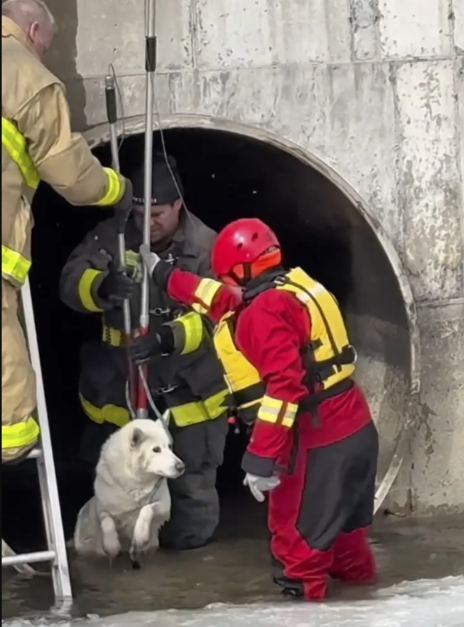
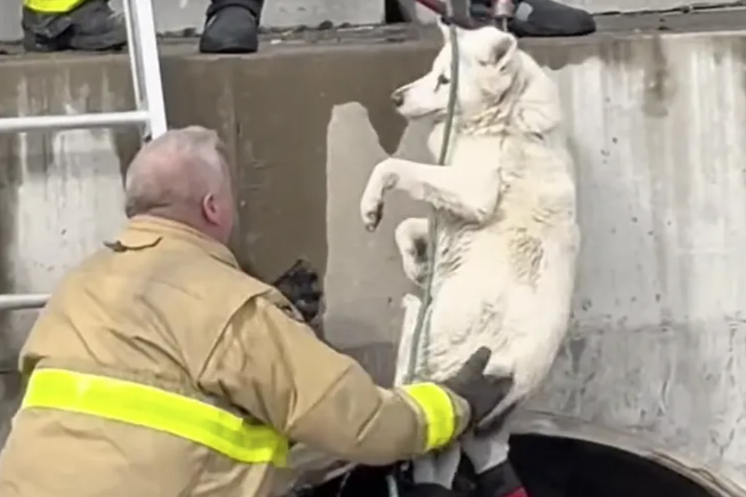
What followed was a display of courage, teamwork and sheer grit. Firefighters and animal rescue crews dressed in wetsuits and safety gear waded into the ice‑choked water, breaking through sheets of slush to reach the terrified pup. The icy tunnel where the husky was trapped was surrounded by shifting ice flows and dangerously cold currents — but rescuers didn’t hesitate.
For nearly four hours, teams worked tirelessly to navigate the unstable river ice and bring the dog to safety. It was an all‑hands on deck effort: one group breaking trail through the ice, another focused on securing the husky, and others coordinating nearby emergency medical support in case the dog needed immediate care once freed.
The moment of rescue came early in the afternoon. One by one, rescuers maneuvered closer to the dog, speaking in calm voices and using whatever tools they had to create a safe path. Finally, they were able to grab hold of the husky, secure him with a harness, and hoist him up out of the river. As he was lifted onto solid ground, rescuers wrapped him in blankets and checked for signs of injury.
Officials reported that the husky was suffering from hypothermia when he was pulled from the water. Without immediate attention, that condition could have turned lethal — especially in conditions this cold.
Once on land, he was taken to the Mackey Center for Animal Care in Detroit, where veterinarians and animal care staff could warm him up gradually and provide close monitoring. At the center, he received fluids, warmth, and medical evaluation to ensure there were no underlying injuries beyond the cold exposure.
What struck many about this rescue wasn’t just the technical challenge — it was the way multiple agencies came together seamlessly to save a life. In cities across the country, animal rescue operations often rely on collaboration between fire departments, humane societies, animal control, and law enforcement, and this mission was a prime example of what that teamwork can achieve.
Local residents and animal lovers quickly applauded the rescue effort online as photos and updates spread across social media. Many noted how difficult river ice rescues can be, especially when wind, current and thin ice create treacherous conditions that even humans struggle to endure. Yet here was a husky — a breed known for its resilience in cold climates — even he had reached his limit and needed help.
The husky’s story also serves as a reminder to dog owners and outdoor enthusiasts about the hidden peril of winter waterways. It can be easy to underestimate how quickly ice can loosen, crack, or melt, especially around moving water and river channels. Keeping dogs on a secure leash, staying aware of local ice conditions, and avoiding the edge of rivers in frigid weather can be lifesaving precautions.
In the days after the rescue, updates from the animal care center were positive: the young husky responded well to treatment, regained strength, and began showing signs of his lively personality coming back. Warmth, nutrition and ongoing veterinary support helped him recover from the shock of the cold exposure, and staff were optimistic about his long‑term prospects.
What began as a chilling situation on the Detroit River ultimately became a testament to compassionate action and community effort. The husky’s survival wasn’t just luck — it was the result of people willing to push into dangerous conditions, apply their skills, and work together to give a vulnerable animal a second chance at life.