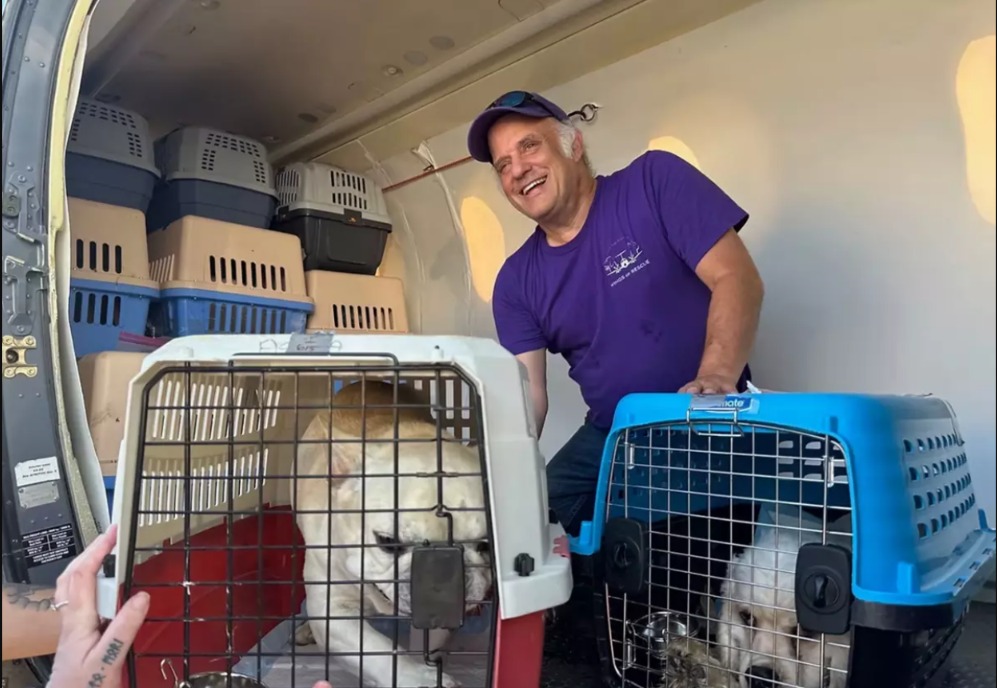
Imagine a plane full of dogs, cats, rabbits — even birds and snakes — all headed somewhere completely different from where they began.
These aren’t trophy-winning pets with pedigrees.
These are at-risk animals from overcrowded or disaster-stricken shelters — and dozens of them are flying toward a second chance at life.
This remarkable work is the mission of Wings of Rescue, an aviation-based nonprofit that uses airplanes to literally lift pets out of danger and deliver them into loving homes and safer shelters.
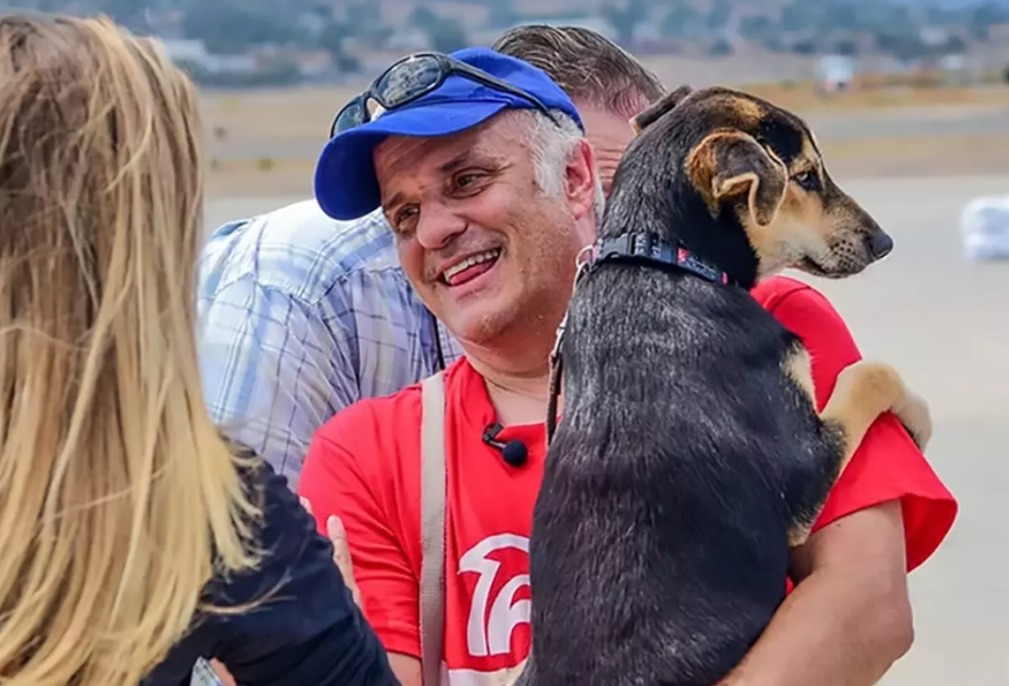
At the heart of this life-changing effort is Ric Browde, a man whose career journey reads like a movie script.
Once a record producer involved in rock and roll for decades, Ric and his wife realized one day that they wanted to do something more meaningful with their time.
Their discovery: dog rescue. What began as volunteer efforts at local shelters soon evolved into something much larger, driven by an operational philosophy that has kept Wings of Rescue flying for years: never fly an empty plane.
Ric took lessons learned from the music business — particularly logistics and networking — and applied them to animal rescue.
Early on, volunteers photographed dozens of shelter pets and shared those photos online, significantly increasing adoption rates.
Today, Ric’s work scales far beyond local kennels.
Since he assumed leadership of Wings of Rescue in 2017, the organization has grown from regional flights to a global force for animal welfare, moving pets out of overcrowded or high-risk areas into spaces where they have a real chance at adoption.
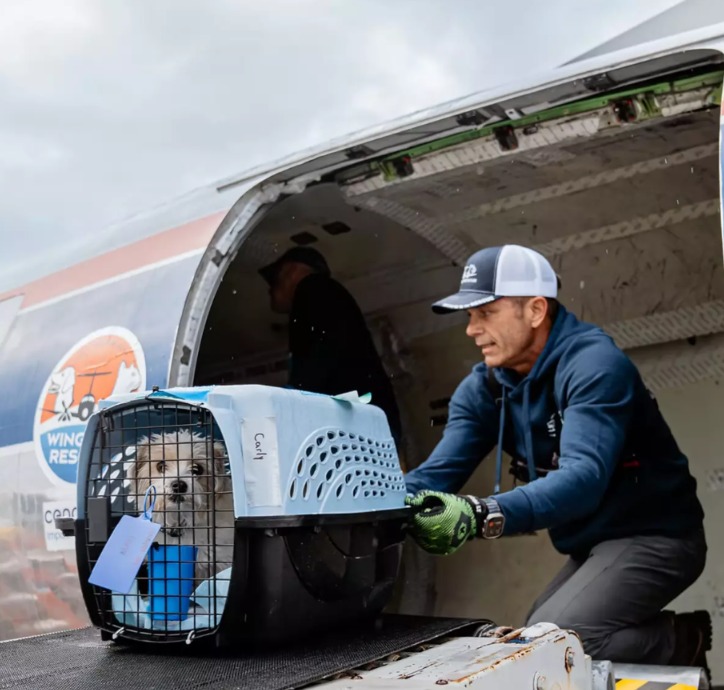
The scale of the operation is astonishing.
Wings of Rescue conducts hundreds of flights each year, connecting overburdened shelters with rescue partners in areas with available space and high adoption demand.
Just recently, they flew from Riverside, California, to Seattle Humane, and in one multi-stop mission, more than 100 pets were transported to Chicago, New York, and Maine — all in a single day.
This work becomes even more critical when disaster strikes.
During hurricanes, floods, wildfires, and other emergencies, local shelters often receive an influx of displaced and lost pets even as they struggle to care for animals already there.
Wings of Rescue steps in, flying pre-disaster shelter pets out to make room for newly displaced animals — a strategy that both saves lives and gives families time to be reunited with their pets.
The organization doesn’t just transport animals, either.
Their flights carry vital veterinary and humanitarian supplies into disaster zones.
Blankets, food, medical equipment, and other essentials head in on one leg of the trip, while on the return leg, crates filled with adoptable pets head toward waiting rescue partners.
This dual-purpose approach ensures that every mission delivers measurable impact at both ends of the route.
For the animals on board, the flight experience itself is memorable.
The initial takeoff is noisy and chaotic, but once the plane reaches cruising altitude, many pets calm down, sleeping peacefully throughout the journey.
Upon descent, excitement builds again as they anticipate meeting new volunteers and new homes.
Of course, none of this happens without funding.
A single flight can cost tens of thousands of dollars — for example, a route from Riverside to Seattle costs roughly $17,000, while multi-stop trips can surpass $40,000.
Larger military-style aircraft used in major relief efforts cost hundreds of thousands.
The nonprofit relies almost entirely on donations, a large social media following, and the passion of a small core team to keep operations moving.
Wings of Rescue also addresses a long-term issue that underlies so much of the shelter crisis: pet overpopulation.
During the pandemic, spay and neuter procedures became prohibitively expensive or unavailable, leading to a spike in animals entering shelters.
To tackle this, Ric and his team launched Operation Pit Stop, a program providing free spay/neuter services to low-income families.
Their belief is that relocation and transport save individual lives, but spay/neuter is the real key to reducing euthanasia on a broader scale.
Ric’s motivations are rooted in the real pain that comes with rescue work.
He admits that trips can be emotionally heavy, especially when you realize you can’t save every animal.
But each successful flight and every picture of a rescued pet settling into a new home reminds him that the work matters — and that imperfect progress is better than doing nothing at all.
The story of Wings of Rescue is not simply one of planes and pets.
It’s a testament to what can happen when logistical ingenuity meets compassion.
What began as a volunteering effort has become a globally recognized operation that turns overcrowded shelters and disaster zones into lifelines and new beginnings.
And at its core is a message that all of us can take to heart: when we choose to act — even when the challenge is big — we truly can make the world better for those who cannot speak for themselves.