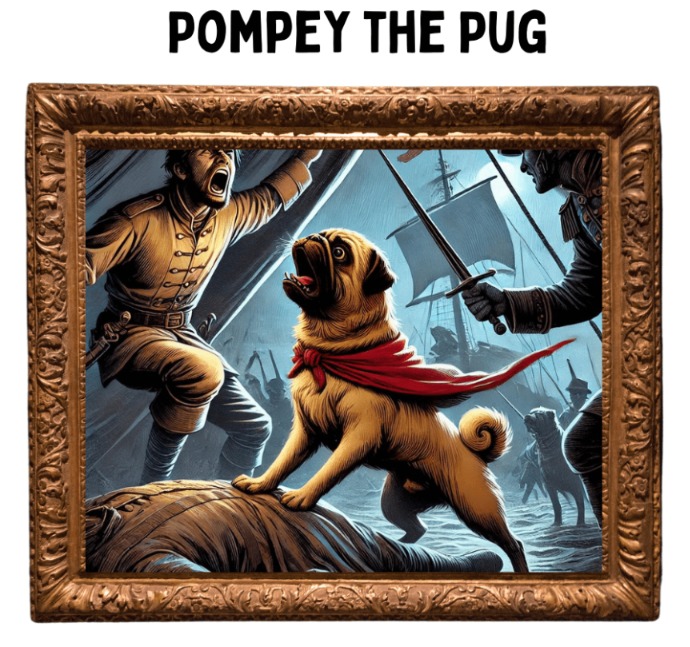
Imagine a tiny dog, curled up beside a prince in a dark, uneasy war camp.
This little dog, known as Pompey, became a legend not because of his size or cuteness, but because he saved a life.
Pompey’s story is a striking reminder that courage, loyalty, and instinct are qualities that don’t come in one shape or size.
Pompey lived with Prince William of Orange, a central figure during a volatile period in European history.
At a time when political unrest and danger lurked around every corner, Pompey was far more than a pampered lapdog.
He was a constant presence at William’s side, sharing in both the comforts of noble life and the dangers of a volatile world.
Pugs were highly favored by European royalty, and Pompey enjoyed the benefits of that status: cozy quarters, fine food, and a close, trusted bond with his master.
Yet his role went far beyond companionship. Pompey’s instincts and awareness would soon prove invaluable.
The moment that sealed Pompey’s place in history came one tense night when assassins slipped into William’s camp, intent on ending his life.
The prince rested unaware, confident that his guards would protect him. Pompey, however, was alert.
The dog sensed the danger approaching the tent and immediately sprang into action. He barked, scratched, and jumped onto his master, making noise and rousing William from his sleep.
The prince awoke just in time, realizing the peril he had narrowly escaped.
Thanks to Pompey’s vigilance, what could have been a deadly ambush was averted, changing the course of history that night.
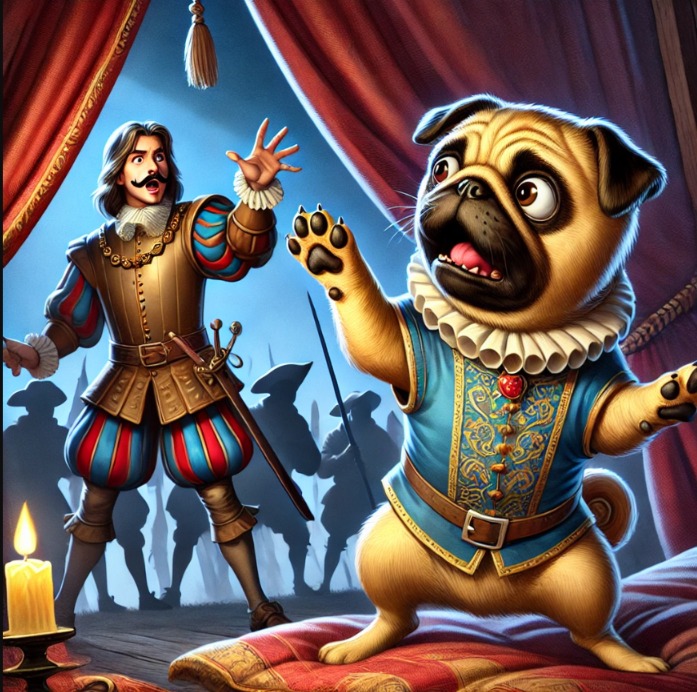
Pompey’s actions are remarkable not simply because they saved a human life, but because they reveal the extraordinary bond between dogs and people.
Despite his small size, Pompey displayed intelligence, courage, and keen awareness—qualities often underestimated in toy breeds.
He wasn’t just a comforting companion; he was a protector.
His loyalty and quick action underscored the potential for pets to play critical roles in our lives, sometimes in ways we cannot predict.
Beyond the immediate rescue, Pompey’s heroism elevated the status of pugs among the nobility and solidified their reputation as not only charming companions but also alert and trustworthy animals.
His legacy endured long after the events of that night. Some stories claim that a figure of Pompey was immortalized at William’s tomb, faithfully lying at his master’s feet.
Whether this account is fact or legend, it illustrates the profound admiration people held for the little dog.
Pompey became more than a royal pet; he became a symbol of loyalty, bravery, and the deep emotional connection that a dog can have with their human family.
For modern dog lovers, Pompey’s story remains deeply inspiring.
He embodies traits that we cherish in our own pets: devotion, courage, and an unshakeable bond with those they love.
He shows that heroism is not defined by size, strength, or prominence, but by instinct, heart, and the willingness to act when it matters most.
The tale of Pompey reminds us that our pets are capable of extraordinary awareness, even in moments of life-or-death danger, and that the bonds we form with them are both meaningful and transformative.
Pompey’s heroism also teaches lessons that extend beyond his historical moment. Loyalty isn’t about physical stature; even the smallest dog can make a difference in the world.
Trusting your dog’s instincts can sometimes avert danger or signal a warning we might overlook.
And the companionship of a pet is far more than comfort or entertainment—it can be a source of protection, inspiration, and enduring partnership.
History often celebrates kings and battles, but Pompey’s story reminds us that sometimes the most profound impact comes from those at our feet, quietly vigilant, ready to act when needed.
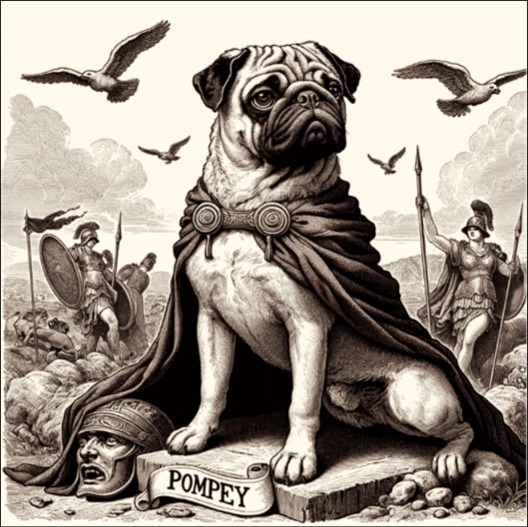
Even centuries later, Pompey the Pug is remembered not just for being a royal pet, but for proving that heroism can come in the smallest packages.
His actions illustrate the extraordinary depth of connection that can exist between humans and dogs, and the remarkable ways that loyalty and awareness can shape history.
Today, his story continues to captivate dog lovers and historians alike, serving as a timeless example of how courage and devotion can transcend size, species, and circumstance.
Pompey’s tale is a celebration of more than heroism—it is a tribute to the heart and intelligence of dogs.
In the end, the measure of bravery isn’t in barks or battles, but in the instinctive, devoted action that comes from love and loyalty.
Pompey may have been small, but his legacy is vast, reminding us that heroism, at its purest, is defined by the courage to protect those we love.
Related posts:
 Ten Feet Down, Surrounded by Rushing Water—But Rescue Climbed the Ladder
 Twice Abandoned — This Rescue Dog’s Reaction to Moving Should Break Your Heart (and Fix It)
 Senior Great Pyrenees Lets Toddler Spoon-Feed Him—and the Internet Can’t Handle It
 Kayaking + Glacier Views + Golden Retriever Naps = Pure Bliss
Thank you for your sharing. I am worried that I lack creative ideas. It is your article that makes me full of hope. Thank you. But, I have a question, can you help me? https://accounts.binance.com/en-ZA/register?ref=B4EPR6J0