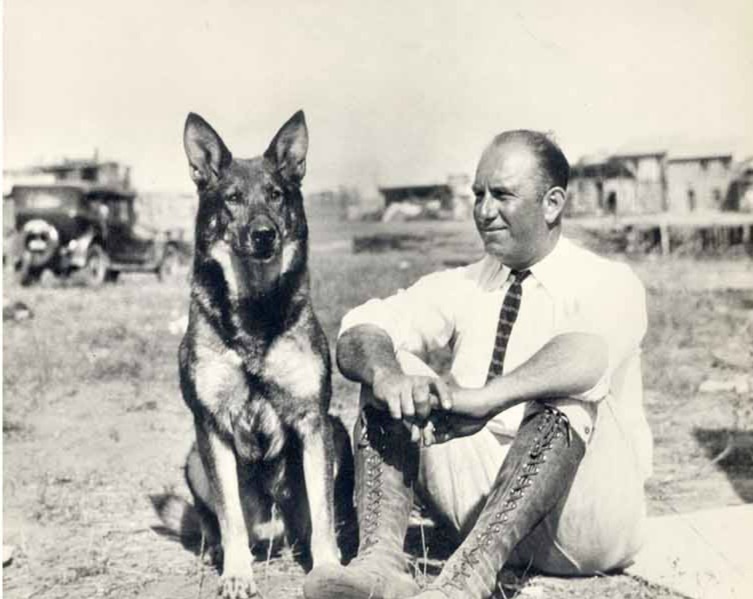
Long before CGI animals and digital effects, Hollywood had a very real canine star whose story reads like a movie script itself. Rin Tin Tin, a German Shepherd rescued during World War I, grew from a vulnerable battlefield puppy into one of the most beloved animals in American popular culture — a dog whose courage, talent and bond with his owner captured hearts around the globe.
The tale begins in 1918, near the end of World War I. As Allied troops pushed German forces back near Saint‑Mihiel in northeastern France, an American soldier named Lee Duncan came upon a devastated battlefield. Among the ruins of a German military working dog kennel — used to house war‑trained German Shepherds — he found a starving mother dog and her tiny puppies.
Moved by the sight, Duncan couldn’t leave them behind. He and a fellow soldier brought the mother and her pups back to their base, cared for them, and eventually selected two puppies to keep: a male and a female. The puppies were named Rin Tin Tin and Nanette, after small French good‑luck charms soldiers often carried for protection.
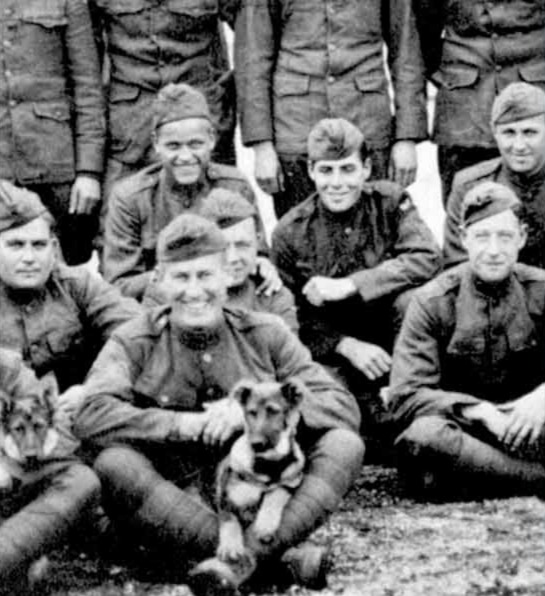
When the war ended, Duncan arranged to bring his dogs home to Southern California. After a brief detour to stay with a breeder while he finished his return trip, he reunited with Rin Tin Tin and made his way back to the United States.
What followed was a partnership that would change not only their lives, but the early film industry as well.
Duncan trained Rin Tin Tin with great dedication, using the kind of reward‑based techniques that highlighted the dog’s natural intelligence and athleticism.
They attended dog shows where Rin Tin Tin demonstrated extraordinary abilities — including scaling incredibly high walls — feats that caught the attention of people connected to the burgeoning movie business.
At the time, Hollywood was still in its infancy and studios were struggling financially. But Rin Tin Tin’s on‑screen debut — first in small roles and later as the hero of his own adventure pictures — became a phenomenon.
Warner Bros., in particular, found that films starring Rin Tin Tin drew large audiences, helping the studio stay afloat during hard times before the rise of “talkies.”
Rin Tin Tin’s popularity wasn’t just about action sequences. Audiences were drawn to the dog’s expressive presence, loyalty, and unmistakable bond with his human companions.
Over his career, he appeared in more than 20 films, often playing heroic roles that foiled villains, saved protagonists from danger, and showcased the remarkable abilities of his breed.
Beyond box office success, Rin Tin Tin became a cultural icon. He helped popularize the German Shepherd breed in the United States, appeared in endorsements for pet food and related products, and became one of the first animal stars whose image was widely recognized in promotional materials and memorabilia.
Even after his death in 1932, his legacy continued through descendants and tribute productions.
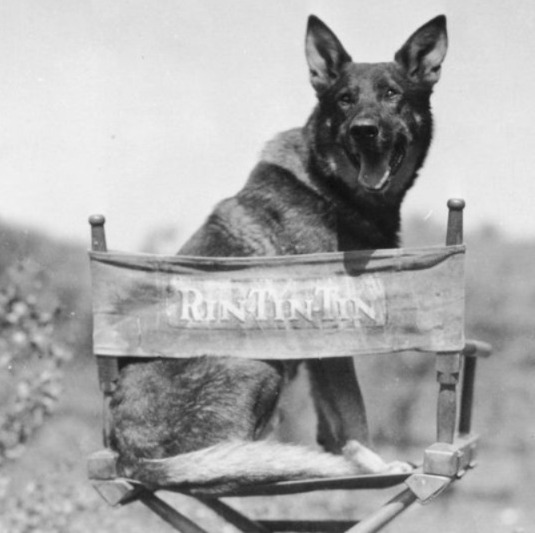
The impact of Rin Tin Tin extended into television as well. Decades after the original dog’s passing, The Adventures of Rin Tin Tin aired from 1954 to 1959, featuring successors who carried forward his name and spirit in serialized stories often centered on a cavalry scout and his loyal dog partner.
Perhaps what makes Rin Tin Tin’s story so enduring is not just his cinematic achievements, but the powerful human‑animal bond at its heart.
Lee Duncan’s decision to rescue a frightened puppy on a war‑scarred field set in motion a partnership that brought joy to millions — and helped shape the early days of Hollywood storytelling.
People weren’t just watching an animal on film; they were connecting with a symbol of courage, loyalty, and hope — traits that still resonate with dog lovers today.
Rin Tin Tin’s legacy lives on, not only in film archives and television reruns but in the countless families who name their dogs after this legendary shepherd — a testament to the enduring impact of a humble dog whose journey from war to stardom inspired generations.