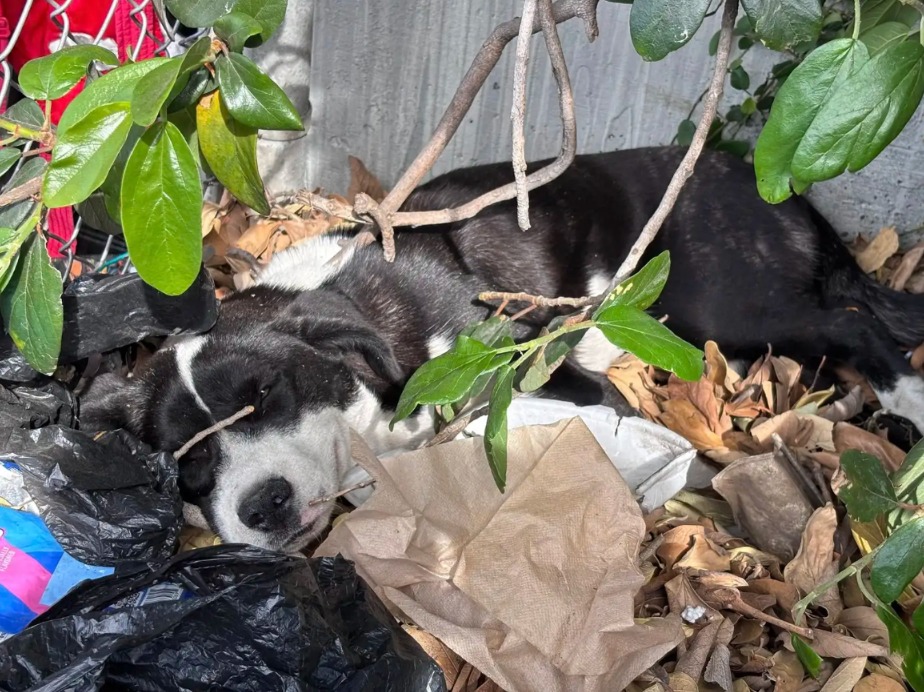
In a quiet, overlooked corner of an urban neighborhood, a dog lay on a pile of trash for days, not because she preferred filth, but because she had nowhere else to go.
Her life had been reduced to scraps and discomfort, and her only hope was that someone would stop — someone would see her, care enough to help.
People walked by her repeatedly. Sometimes they glanced her way; sometimes they didn’t. But she stayed where she was, curled up on discarded bags and broken boxes, her ribs visible beneath her fur and eyes that seemed to say, I’m still here.
Don’t forget me. She wasn’t just resting — she was waiting. Waiting for relief, for kindness, for someone to break the cycle of neglect she had known far too well.
Her name became Star when rescuers finally reached her, but before that moment, she lived in a limbo familiar to many stray dogs: stuck between survival and desperation.
Her shelter was a mound of refuse; her protection was thin layers of fur and instinct. Yet even in that harsh spot, she held on.
Eventually a neighbor who had seen her lingering near the trash called a local animal rescue group. When volunteers arrived, they found her exactly where she’d been spotted — head down, body exhausted from the ongoing struggle, and eyes lighting up as if hope had finally arrived.
But getting her out of that situation wasn’t simple. Star was cautious, naturally wary of approaching humans after days without care. She sniffed at outstretched hands, uncertain whether help meant danger or something else.
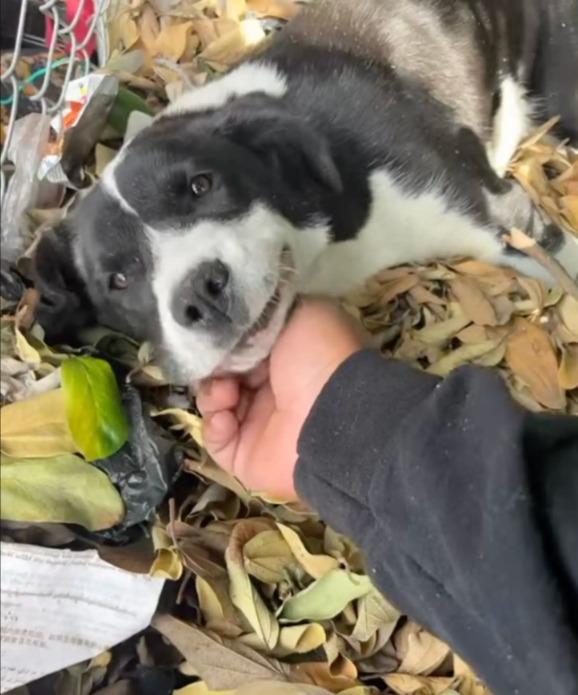
Rescuers worked patiently. They didn’t rush. They spoke softly, knelt near her instead of above her, and offered food and water — not as bribes, but as peace offerings.
Star hesitated, but hunger and curiosity eventually encouraged her closer. When she accepted the food, it wasn’t just about nourishment — it was the first step toward trusting again.
Once Star was gently secured and placed into a safe transport, volunteers could assess her condition more closely.
She was underweight and worn, her body showing clear signs of hardship and prolonged neglect. But her spirit — remarkable in its quiet resilience — was still there, flickering like a small flame refusing to extinguish.
At the shelter, Star received baths, medical care, and the warmth she had long lacked. A soft bed replaced the cold trash pile. Clean water replaced stagnant puddles.
Nutritious meals replaced whatever scraps she could find. And gradually, as her physical body recovered, something deeper began to shift — her emotional healing.
Day by day, Star’s demeanor changed. Where once she flinched at sudden movements, she now lifted her head to follow rescuers walking by. Where once her eyes looked tired and defeated, they began reflecting curiosity and tentative hope.
She learned that not all humans walk past without a second glance — that some are willing to pause, offer help, and stay a while.

Star’s rescue became a community story of compassion. Neighbors who once looked the other way now shared updates on her progress. People donated blankets, toys, and treats.
Messages from strangers poured in, celebrating her resilience and cheering for her recovery. The attention wasn’t about celebrity — it was about acknowledgment that her life matters.
The most powerful part of Star’s story is not that she survived on a trash pile. It’s that she refused to give up while she waited for someone to care.
Her strength wasn’t about muscle or threat — it was rooted in the quiet truth that even in the darkest places, hope can still be present when one compassionate person chooses to act.
Star’s future now looks brighter. With each gentle pat, each bowl filled with wholesome food, each clean blanket at her feet, she learns that soft places and kind hands are not foreign concepts.
They are home. And for a dog who once slept amid garbage, that transformation — from survival to safety — is nothing short of miraculous.