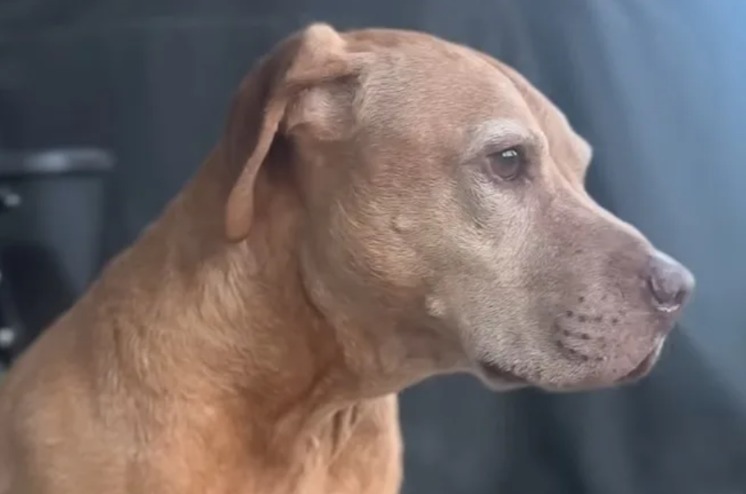
When you first see Honey, it’s hard not to feel your heart tighten.
She arrived at a shelter in Daphne, Alabama — skinny, frightened, shell-shocked, and unsure if the world could ever be safe.
Her eyes looked empty, her body stiff, and every new sound seemed to make her curl into herself a little more.
As the volunteer who first fostered her, Kerrie, said: “When I saw her, my heart was completely broken.”
Life had clearly not been kind to Honey. At first, even simple outings were terrifying.
According to Kerrie, whenever she’d take Honey outside, the dog would “go to the bathroom and then just sit there looking at the back door and just shaking.”
She was visibly afraid of being outdoors — a heartbreaking stance for any dog.
That was Day One. But this story isn’t about fear. It’s about transformation — slow, gentle, sometimes barely noticeable, then suddenly undeniable.
Because Honey had someone who would stay, and someone who believed she could heal.
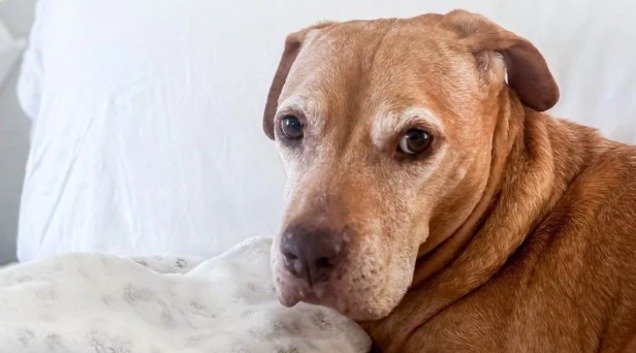
Into her foster life came a friend: a calm, confident foster-sister dog named Ellie. Ellie didn’t scold, bully, or force Honey.
She simply lived — running, playing, sniffing, lying in the grass, chasing toys. And day by day, Honey watched. Every tail-wag.
Every confident stretch. Every soft pant with relaxed eyes. She saw safety. She saw normal. She saw what “dog life” could be.
Then came the moment that made thousands online reach for tissues.
On Day 29 of her foster care, Honey — timid, scared, broken — followed Ellie into the yard and rolled in the grass.
At first she was hesitant, unsure, as if saying, Is this okay? But then something shifted. She closed her eyes, flopped onto her side, and let herself go.
In that instant, you could see the walls crack. Hope seeped in. The world didn’t feel so scary.
The video of that moment — captured lovingly by her foster mom — has touched more than 1.8 million viewers.
Comments flooded in: hearts, tears, words of encouragement. People saw what rescuers already knew: Honey was beginning to live again.
Since then, Honey has kept growing.
The same foster update posted in September 2025 shows a dog who now plays with toys, chases stuffed animals, curls up on cozy beds — and even enjoys simple comforts like cheese treats.
Yes, loud noises still make her jump. She still prefers calm, quiet spaces. But compared with the shaking, back-door-gazing dog of weeks ago?
It’s night and day. Her progress is proof: trauma doesn’t have to define a lifetime.
Honey’s exact age is unknown — but the shelter believes she’s about seven.
That kind of rescue dog often gets overlooked. People look at their scared eyes and think “too damaged,” “too difficult.” But maybe the problem isn’t with the dog.
Maybe it’s with expectations. Dogs like Honey need patience, calm, and time — all of which she’s now getting.
Her story isn’t just a feel-good moment. It’s a reminder that sometimes what a broken dog needs most isn’t a big adoption party or instant transformation.
It’s soft voices. Gentle consistency. The sight of another dog playing, running, being normal. And space to breathe, explore, and rediscover joy.
If you’re considering adoption — or even fostering — think about Honey’s journey. Think about what patience can do.
Think about the power of showing up every day. Because in Honey’s case, it turned fear into trust; silence into grass-rolling; heartbreak into hope.
And now, as she lies on a comfy bed, paws gently twitching in a dream, you realize: she’s not just safe. She’s alive.
She’s full of possibility — and waiting for the right home to call her own.
Related posts:
 Ten Feet Down, Surrounded by Rushing Water—But Rescue Climbed the Ladder
 Twice Abandoned — This Rescue Dog’s Reaction to Moving Should Break Your Heart (and Fix It)
 Senior Great Pyrenees Lets Toddler Spoon-Feed Him—and the Internet Can’t Handle It
 Kayaking + Glacier Views + Golden Retriever Naps = Pure Bliss