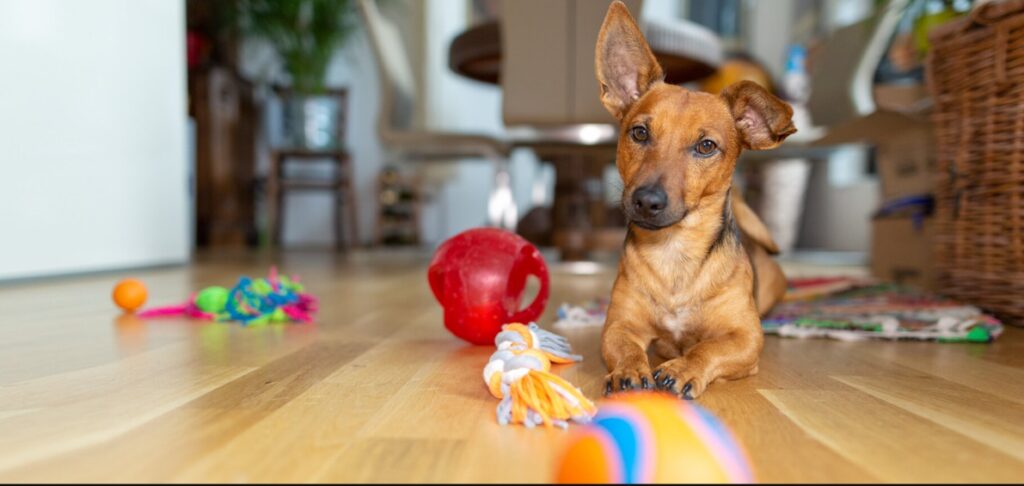
We’ve all been there. It’s 2026, and the weather outside is doing everything in its power to keep you and your best friend tethered to the sofa.
Whether it’s a torrential downpour, a blistering heatwave, or just one of those days where you’re stuck in back-to-back virtual meetings, the “rainy day blues” are real—and for your dog, they can manifest as pacing, whining, or a sudden, mysterious interest in the leg of your dining table.
But here is the secret that professional trainers wish every pet parent knew: A tired dog isn’t just a dog that has run five miles; a tired dog is a dog whose brain has been given a workout. Mental stimulation can be just as exhausting (and rewarding) as a long hike. By shifting our perspective, we can turn our four walls into a sanctuary of discovery and joy.
The Power of the “Nose Work” Revolution
To understand why indoor games are so effective, we have to look at how a dog’s brain actually works. While humans are visual creatures, dogs “see” the world through their noses. Their sense of smell is roughly 10,000 to 100,000 times more acute than ours. When we engage their olfactory system, we are tapping into their most primal and satisfying instincts.
Engaging in scent-based games releases dopamine in a dog’s brain, providing a natural “high” that leads to a deep sense of contentment and, eventually, a very long nap.
1. The Classic Shell Game
This isn’t just a trick for street performers; it’s an incredible cognitive challenge for your pup.
- The Setup: Take three opaque cups and place a high-value treat under one.
- The Game: Shuffle them slowly while your dog watches.
- The Reward: Encourage them to “find it.” This builds focus, encourages problem-solving, and teaches them to use their eyes and nose in tandem.
2. The Muffin Tin Brain Teaser
If you have a muffin tin and some tennis balls, you have a high-tech puzzle toy.
- Place treats in a few of the muffin cups.
- Cover every cup with a tennis ball.
- Your dog has to figure out how to remove the balls to reach the treasure underneath. It’s a physical and mental coordination test that keeps them occupied far longer than a standard bowl of kibble.
Movement in Small Spaces
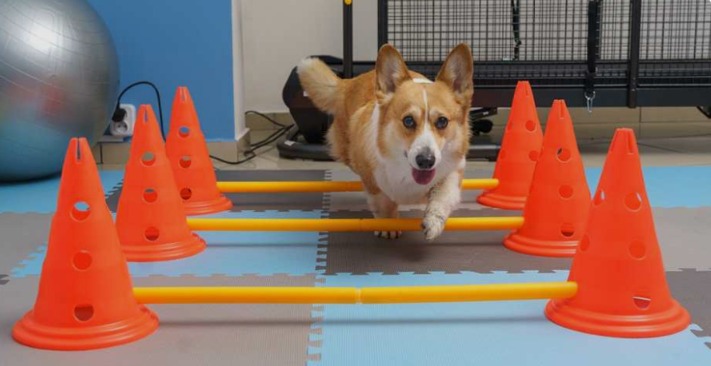
Physical exercise doesn’t always require a backyard. You can burn calories and build muscle right in the hallway.
“Play is the highest form of research for dogs. It builds trust, decreases anxiety, and solidifies the bond between human and hound.”
- Indoor Agility: You don’t need fancy equipment. A broomstick balanced between two chairs becomes a jump. A pop-up tunnel or even a large cardboard box with the ends cut off becomes an obstacle.
- Stairway to Health: If you have stairs, use them! Tossing a toy to the top of the stairs (safety permitting) for your dog to retrieve is a fantastic way to build hind-leg strength and cardiovascular endurance. Just be mindful of your dog’s age and joint health.
3. The Ultimate Game: Hide and Seek
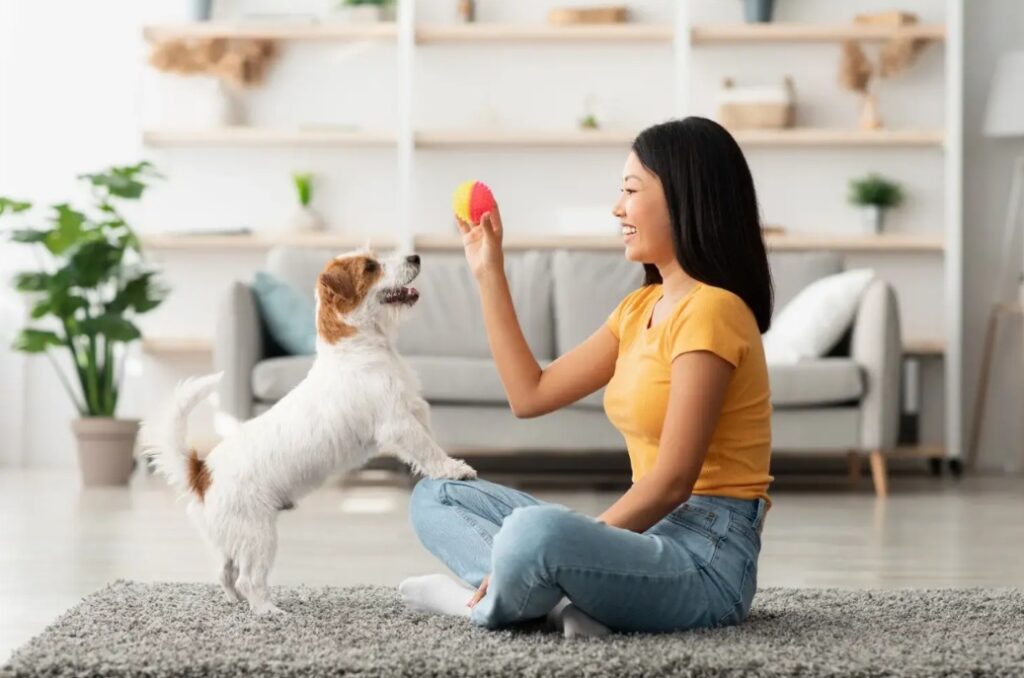
This is perhaps the most emotional game you can play. It reinforces the “Recall” command while satisfying their natural hunting drive.
- Have your dog “Stay” in one room (or have a family member hold them).
- Go hide in a closet, behind a curtain, or under a blanket.
- Call their name once.
- The pure, unadulterated joy they show when they find you is a bonding experience that no fancy toy can replicate.
4. New Year, New Tricks
Use the time indoors to work on “useless” but fun tricks. Does your dog know how to “Spin”? Can they “Take a Bow”? Learning new movements increases their body awareness and keeps their mind sharp. It’s a conversation between you and your dog, a way of saying, “I see you, I’m here with you, and we’re in this together.”
Why It Matters
When we choose to engage with our dogs indoors, we are doing more than just “burning energy.” We are mitigating the destructive behaviors that stem from boredom. A dog that is mentally stimulated is a dog that feels secure and understood.
These moments of play are the building blocks of a lifetime of loyalty.
So, the next time the sky turns gray, don’t look at it as a missed walk. Look at it as an opportunity to see just how smart your dog really is. Your living room might be small, but the world of play you can create inside it is infinite.
Related posts:
 Stop Letting Your Dog Go Stale—Hit the Trails and Transform Your Lives
 Four Feet, Warm Hearts & Health Perks: Why Volunteering with Animals Is So Good for You
 Don’t Just Trick or Treat — Throw a Halloween Bash for Your Dog (and Survive It)
 Creative, Affordable Ways to Snap Adorable Valentine’s Pics With Your Dog