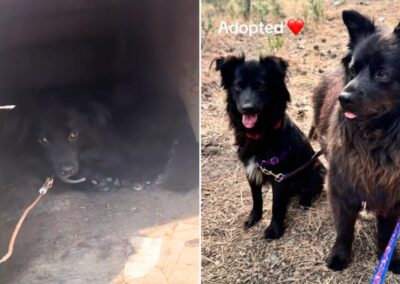
In shelters across the country, many dogs arrive with fear written on their faces — skittish, uncertain, and unsure that the humans approaching them can be trusted. But sometimes, all it takes is a little patience, compassion and a safe place for a terrified dog to start believing in love again.
A recent video capturing several shelter dogs’ emotional transformations has resonated deeply with animal lovers online because it shows just how powerful kindness and time can be in helping these animals open up.
When some dogs first come into a shelter, their body language tells the whole story: tucked tails, flattened ears, shaking, avoidance and frozen postures.
Many have never experienced gentle human interaction, and shelter environments — although well‑intentioned — are often loud, stressful spaces that can make fearful dogs even more anxious. These dogs aren’t aloof or “bad”; they’re terrified, and their fear often masks the loving personality underneath.

The video in question shows a progression that’s both heartbreaking and heartwarming. Early clips feature dogs that flinch at movement, shrink back from hands reaching toward them, or retreat into corners of their kennels. Some only watch humans from a distance, not daring to step closer.
But with shelter staff and volunteers offering calm reassurance, treats, and repeated positive interactions, something remarkable happens: these dogs begin to approach, tail wags become visible, and they tentatively ask for pets instead of avoiding touch.
What makes these transformations so compelling isn’t just the change in behavior — it’s the emotional shift it represents. A dog who started off terrified of human touch ends up leaning into gentle scratches, nudging for affection, or even seeking out eye contact with a soft expression.
For people watching the video, those moments often elicit tears because they are the first signs of trust from an animal who may never have known safety before.
Behavior specialists say that this kind of change doesn’t happen overnight. Dogs who have experienced fear or trauma need a decompression period once they leave a stressful environment like a shelter.
During this time — which can last weeks or months — they learn that their new world doesn’t hold danger around every corner. Providing a consistent routine, quiet spaces, and interactions that honor the dog’s pace are key components of helping them feel secure.
In many cases, other animals can play a huge role in a fearful dog’s recovery as well. Just as seen in one emotional transformation video of a shelter dog named Tiki, having a gentle, confident companion nearby helps the frightened dog relax and even learn that closeness to others can be safe and comforting.
The broader impact of videos like this extends far beyond individual dogs. They help educate the public about why so many dogs end up in shelters afraid of people, and why rescuers work so hard not just to save these animals, but to rehabilitate them.
Seeing a dog slowly begin to trust again — to wag a tail, accept a treat, or lean into a human’s touch — is a reminder that many dogs are simply waiting for someone to believe in them.
For those considering adoption, these transformations are a powerful message: a scared dog isn’t unlovable — they’re misunderstood and just needs time, patience and love.
Adopted dogs will often show the biggest emotional shifts once they are in a stable home environment, where they can decompress at their own pace and build trust with compassionate humans.
At the end of the day, these shelter transformations aren’t just about a dog learning to sit or walk on a leash — they’re about a dog learning to feel safe and loved, sometimes for the first time in their lives.
And that change, small and gradual as it may be, is nothing short of extraordinary