Not all dog stories are about heroic rescues or miraculous transformations. Some are about surprise — like the case of Chief, the shaggy rescue dog whose appearance and personality made people do a double take when his DNA results finally arrived.
When Chief first came into his forever home in O‘ahu, Hawaii, his adoption paperwork listed him as a terrier mix. His owner wasn’t too concerned about exact breeds at first — after all, rescue dogs are often a blend of ancestry that shelters can only guess at.
But once Chief settled in, those guesses didn’t quite add up anymore. His thick, wild fur and distinctive shape made his humans wonder if there was something more to his story.
Chief’s coat was especially unusual. While many terriers have wiry hair, Chief’s shaggy fur — especially the thick ruff around his neck — reminded people more of a character from a storybook than a classic terrier.
In fact, viewers on social media began comparing him to The Grinch, the fuzzy, quirky creature created by Dr. Seuss. The resemblance became such a running joke that Chief was soon dubbed “the Grinch dog” by fans online.
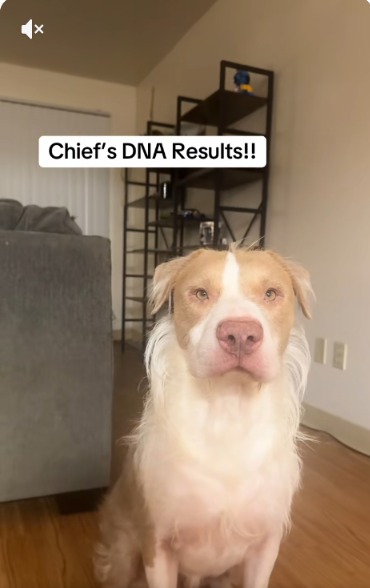
To finally uncover the truth, his owner did what many pet parents do these days: she ordered a dog DNA test kit and swabbed Chief’s cheek to send in for analysis.
When the results came back, they were surprising — and not at all what anyone had expected. According to the test, Chief wasn’t a terrier mix after all. Instead, he was 100 percent pit bull.
The revelation sparked plenty of conversation online, partly because his appearance didn’t match many people’s stereotypes of what a pit bull “should” look like. With his fluffy, unruly coat and distinctive fur around his neck, Chief didn’t exactly resemble the short-haired, sleek look many associate with pit bulls.
But breed appearances can vary, and his DNA result highlighted something important: looks can be deceiving when it comes to canine heritage.
That discrepancy also raised a broader question that’s been popping up among pet owners: how accurate are dog DNA tests?
Some critics note that many consumer kits only trace ancestry back a few generations — usually about three — so deeper lineage might not show up in the results, even if it still influences appearance. In Chief’s case, there could be ancestors just beyond that window of analysis with traits that shaped his fluffy coat.
Despite the technical debate, Chief’s fans online couldn’t resist having some fun with the situation. One viewer joked, “He’s 1/4 Grinch — science just hasn’t proven it yet,” while another simply declared, “All I see is 100 percent good boy.”
The lighthearted responses highlighted something heartening: people loved Chief not because of his breed, but because of his unique look and endearing personality.
The popularity of breed tests speaks to how eager owners are to better understand their pets. Many DNA kits on the market today claim high levels of accuracy, with companies asserting their results are up to 99 percent reliable in identifying ancestral roots.
But scientists and seasoned breeders remind pet parents that such results should be taken with a grain of caution — especially when dogs look very different from their genetic labels.
Ultimately, Chief’s story isn’t just about genetics. It’s about joy, curiosity, and the fun of learning a little more about a beloved family member.
Whether he’s truly “Grinch-like” in spirit or simply enjoys spreading smiles with his quirky fur, Chief has captured the hearts of thousands online — a reminder that the best part of any dog’s story isn’t in the breed percentages, but in the moments they share with the humans who love them.