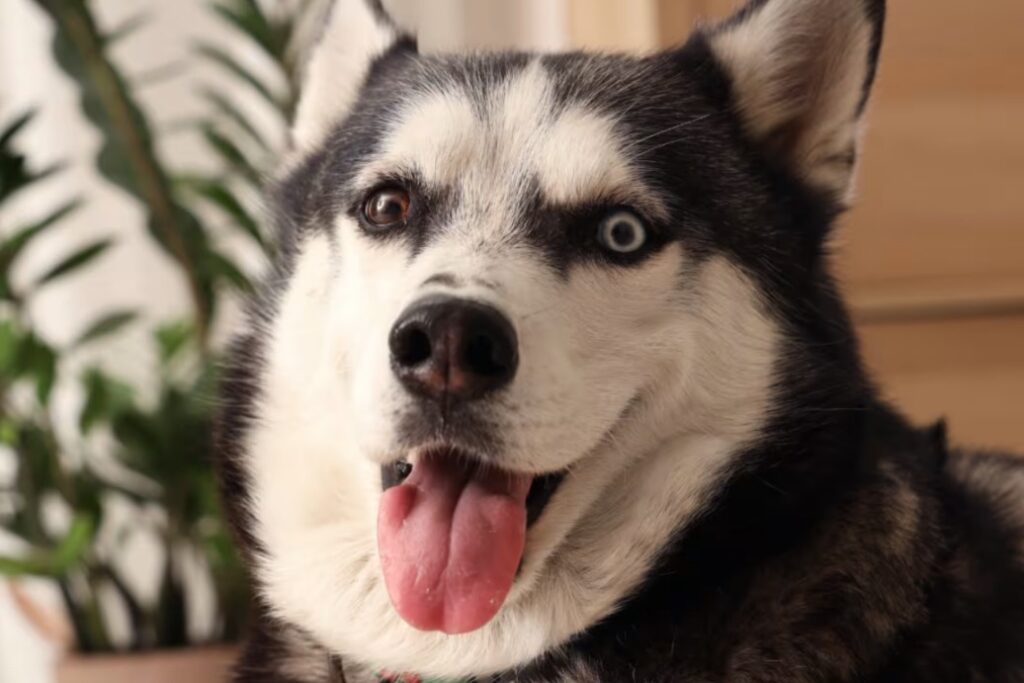
Have you ever woken up from anesthesia and felt like your brain hadn’t quite re‑joined your body yet? That groggy, hazy, “lights are on but nobody’s home” feeling is familiar to many people — and in a wildly relatable viral video, a Siberian Husky named Titan gave the world a hilarious reminder that dogs go through the same post‑vet fog as we do.
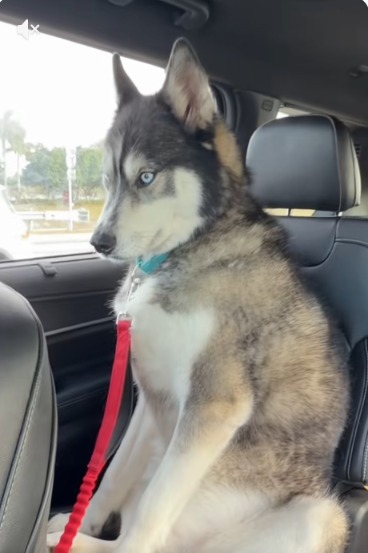
The clip — shared by Titan’s owner on TikTok — shows him in the car on the ride home after a routine veterinary visit where he was given anesthesia for a procedure. Instead of the usual tail wag or goofy puppy grin, everyone saw something else entirely: a blank, far‑off stare that looked like he had checked out mentally but was still sitting upright physically.
In the video, Titan is seated in the back seat, his blue eyes wide and unfocused as he gazes straight ahead. At one point, his tongue even hangs out of his mouth — not in a playful way, but in that adorable “I am totally aware of nothing right now” kind of way.
His expression quickly had viewers laughing and dropping comments that range from playful inventiveness to pure amusement.
Veterinary professionals actually explain exactly why dogs look this way after anesthesia: even short‑acting sedatives can leave a dog’s brain and nervous system taking time to fully shake off the effects.
Even as their bodies are awake — sitting upright and following simple cues — their mental clarity may lag behind for several hours. It’s similar to the way humans often feel post‑anesthesia: awake, but not quite all there yet.
That combination of upright posture and blank expression is part of what made Titan’s moment so funny. One viewer joked that Titan looked like he was “in another dimension” or that he was “seeing sounds and hearing colors.”
Another said it seemed like there was “not a single thought behind those steel eyes.” The dialogue in the comments turned his big, blue‑eyed stare into a kind of running meme about huskies and anesthesia.
This isn’t just Titan’s groove either — lots of dogs exhibit similar behavior after sedation. According to veterinarians, dogs often appear disconnected or less responsive for a little while after anesthesia, even if they’re physically able to stand, walk, or ride in the car.
Their bodies wake up first, while their brains take the scenic route back to full awareness.
Huskies in particular seem to make especially expressive faces in situations like this, but that’s largely because of how striking their features already are — the bright blue eyes, erect ears, and intense gaze are naturally dramatic even at the best of times. When a Husky’s expression is altered by anesthesia, it just adds another layer of comedic effect.
For Titan, the moment captured in that car wasn’t uncomfortable or concerning — just weirdly funny. He was perfectly safe with his leash clipped and his humans right there with him, guiding him home through the languid afterglow of his vet visit.
The stare didn’t last long, and by the time he was back inside and resting comfortably, he was already waking up more fully and shaking off the anesthesia’s fog.
What makes Titan’s story so delightful isn’t just the blank look itself, but how universally relatable it feels. Anyone who’s ever been groggy after surgery can instantly recognize that “empty stare” moment — and seeing it in a Husky just adds a layer of comic relief to something we’ve all experienced.
In the end, Titan’s post‑vet stare wasn’t a sign of anything wrong — just a goofy, lovable, fuzzy reminder that even our four‑legged friends have to come back to themselves after a medical procedure. And on the internet? That’s pure comedic gold.