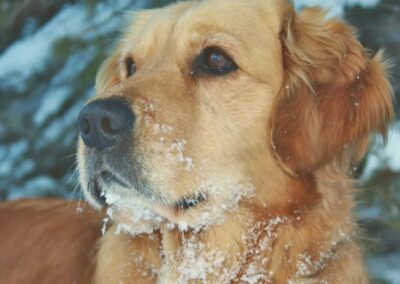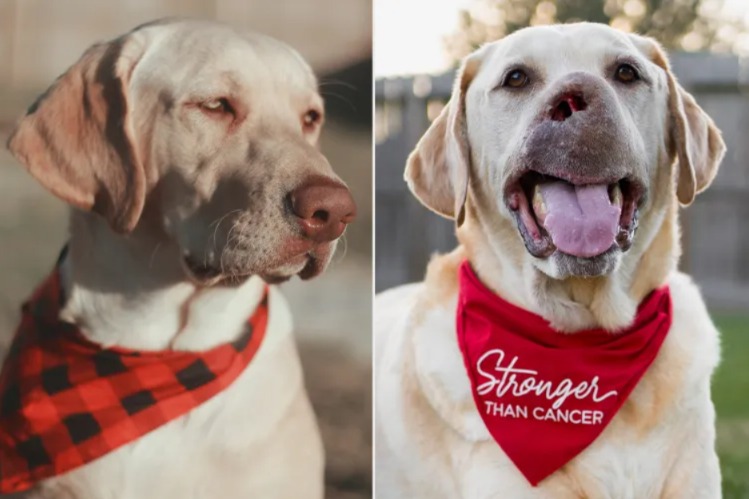
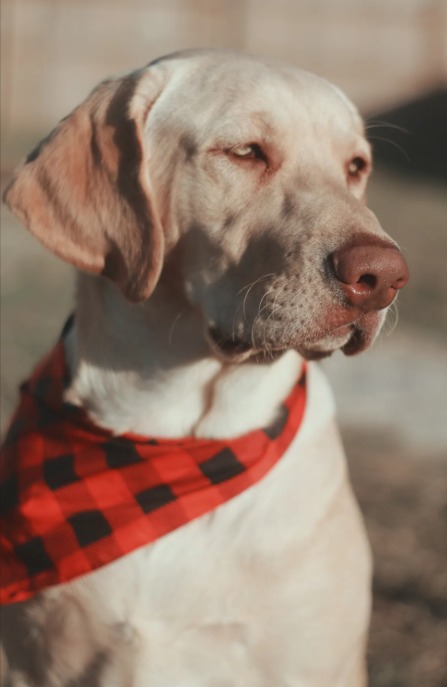
They call him Gideon — six years old, a yellow Labrador, once just another happy family dog. Then came a moment that flipped everything upside down.
It started small. A bad breath nobody thought much of. At first his family assumed maybe he just got into food he shouldn’t have.
But when they looked closer… they saw a tumor.
That tumor turned out to be squamous cell carcinoma — a nasty oral cancer that can grow fast, infect bone, and spread death quietly.
Their vet tried antibiotics. Nothing changed. Then came the first surgery — to remove as much of the tumor as possible. But even after that, it wasn’t enough.
The cool, comfortable world Gideon knew looked like it was ending. That same vet told his owner: “Maybe just enjoy what time you have left.”
Most people in that moment would’ve nodded. But Gideon’s family didn’t. They got a second opinion — they refused to give up.
A veterinary oncologist gave them a chance: a second surgery, aggressive and scary, but might save his life.
A nonprofit stepped in, covered the cost. The decision was made.
The next surgery took both part of Gideon’s upper jaw and a chunk of his nose. It was major. It was a gamble. It might have been too late.
But when the dust settled, Gideon still had two things: will to live — and a family that believed in him.
Recovery wasn’t easy. He needed care. Antibiotics. Pain meds. Time. But the most powerful medicine of all was love, patience, and refusal to give up.
He healed. Slowly, but surely. Whenever a dog survives a surgery like this, there’s always a question: can they still enjoy life?
For Gideon — yes. Absolutely.
Today? Gideon is said to be “back to his normal self.” He runs. He plays. He shakes off the past.
His family hopes he’ll return to swimming soon — his favorite activity — once the surgeon clears him.
Think about that: this dog lost part of his face. His jaw. His nose. The tools dogs use to eat, sniff, express joy. Yet he came back.
His spirit didn’t break. His tail still wags.
Medical science says that for dogs, oral cancers often require radical treatment.
Sometimes that means removing tumors — but to truly eradicate the cancer, vets may have to remove bone, maxilla, or mandibular structures.
After such surgery, dogs often need special care: soft food or even hand-fed diets, monitoring, careful post-operative care.
It’s not pretty. It’s not easy.
But dogs don’t measure love in symmetry, or noses, or perfect jaws. They measure love in trust. In food bowls filled. In back-rub sessions.
In leash-walks. In belly rubs. In being seen.
Gideon’s story? It’s a reminder. Cancer is brutal. It doesn’t pick who deserves pain. It doesn’t care who loves who. But love — real love — fights.
It scrapes. It pushes. It refuses to accept “just enjoy what you have left.”
Because for some, “what you have left” can still be a full life.
If you ever see a dog with scars, missing teeth or bones — don’t look away. Remember Gideon. Look with compassion. With hope.
With willingness to help. Because sometimes the cure isn’t just in the surgery. It’s in the home, the hands, the commitment.
Gideon isn’t perfect. His face isn’t symmetrical. But his heart is. And that counts for a lot.