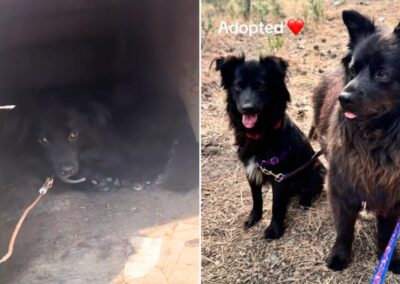
In the busy, echoing halls of a local animal shelter in Fayetteville, Arkansas, a tiny two-month-old husky mix named Tiffany sat waiting for a chance that seemed to be slipping away.
By almost any metric, Tiffany was a “difficult” case. In just two short weeks, she had already been adopted and returned to the shelter twice.
When Bradi Jones, a 24-year-old college student, walked into the facility in 2023, she found a puppy that a third potential adopter had just rejected moments before.
The shelter staff were honest: Tiffany was being returned for her “extreme energy,” a label that often serves as a death knell for young rescues.
But as Bradi looked at the chaotic bundle of fur, she didn’t see a problem dog—she saw a soul that was being misunderstood.
Bradi’s decision to adopt Tiffany was met with immediate skepticism.
As a student athlete involved in competitive swimming and a demanding academic schedule, her life was already a whirlwind of training and meets.
Friends and family members were quick to voice their concerns, warning her that a high-energy rescue would be more than she could handle.
Despite the warnings, Bradi followed her gut.
She knew that returning a dog for the third time would likely break the animal’s spirit forever.
So, she brought Tiffany home, and the real work began.

The first few months were nothing short of an endurance test.
Tiffany wasn’t just energetic; she had what Bradi described as an “endless battery.”
Even after hours at the dog park, long hikes, and intense play sessions, the puppy would still find ways to get into mischief around the house.
Her vocal nature—a hallmark of her 48 percent Siberian Husky heritage—and her stubborn Great Pyrenees and Australian Cattle Dog genes meant she was as loud as she was strong-willed.
There were days when the barking was incessant and the lack of obedience was overwhelming.
On those hardest days, when Bradi found herself in tears, the voices of critics would ring in her ears, telling her to “take her back” and insisting that Tiffany was simply a “bad dog.”
But Bradi refused to falter. To her, Tiffany wasn’t “broken”; she was a dog who had never known consistency or structure.
Bradi committed herself to a rigorous training schedule, focusing on boundaries, socialization, and crate training to keep Tiffany safe and centered.
She understood that Tiffany didn’t need to be disposed of—she needed to be understood.
Bradi’s commitment was a silent protest against a culture that often treats pets as “returnable” if they don’t immediately fit into a lifestyle.
She poured her love into the work, meeting Tiffany where she was and guiding her toward the dog she could become.
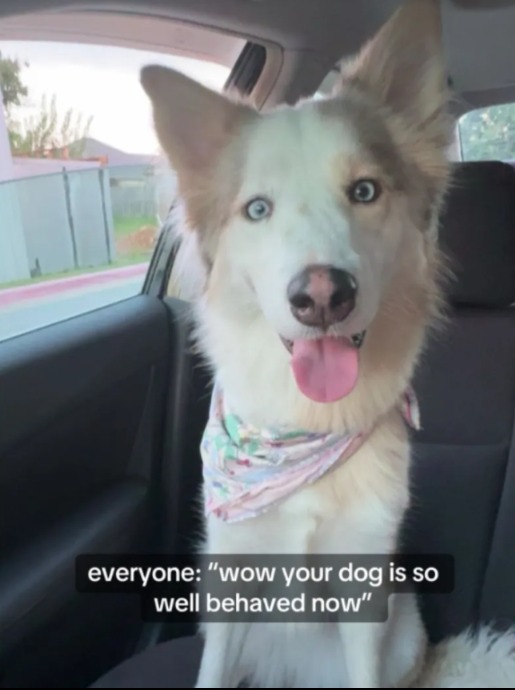
Two years later, the transformation is breathtaking.
Tiffany has grown from a scared, overstimulated puppy into a confident, cuddly, and remarkably balanced companion.
She is still energetic, but she has learned the value of a quiet moment, often found lounging calmly on the couch when Bradi is away.
The dog that everyone else gave up on has become Bradi’s most loyal friend and her greatest source of joy.
Tiffany’s story, which recently went viral on TikTok, serves as a powerful reminder that rescue dogs aren’t always easy, but they are always worth the effort.
Bradi hopes her journey inspires others to look past the “labels” and give a rejected dog the time and patience they need to finally thrive.