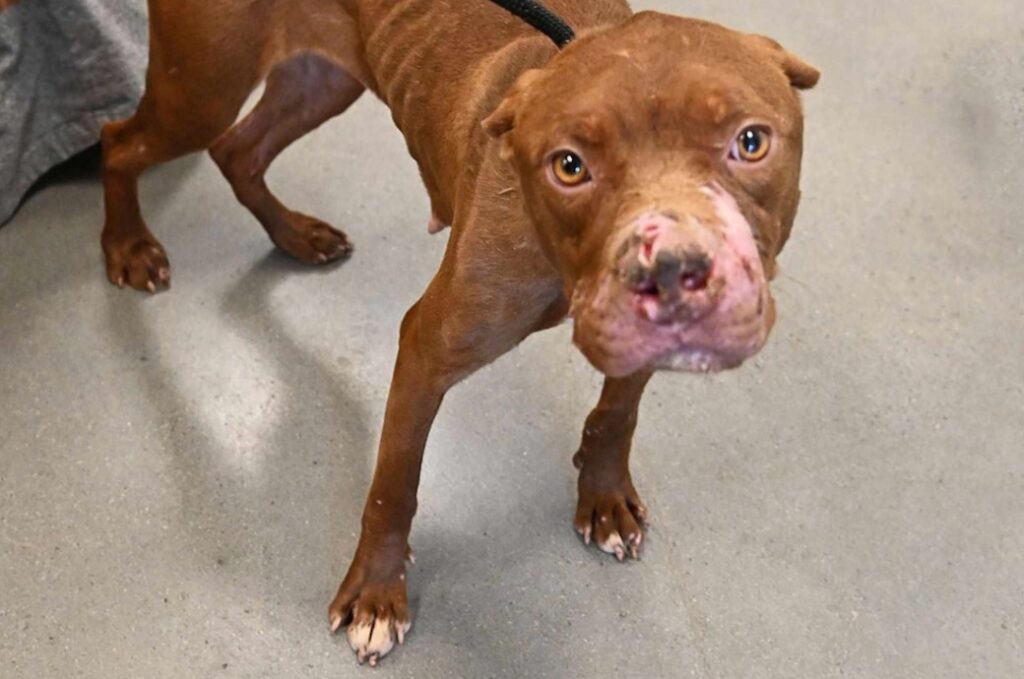
A heartbreaking scene unfolded recently on the side of a road in Tulare, California, when a severely injured dog — believed to have been used as bait in illegal dog‑fighting operations — was discovered abandoned and barely alive.
Her case has since become a stark reminder of how underground cruelty still affects animals, even though such practices are illegal in all 50 U.S. states.
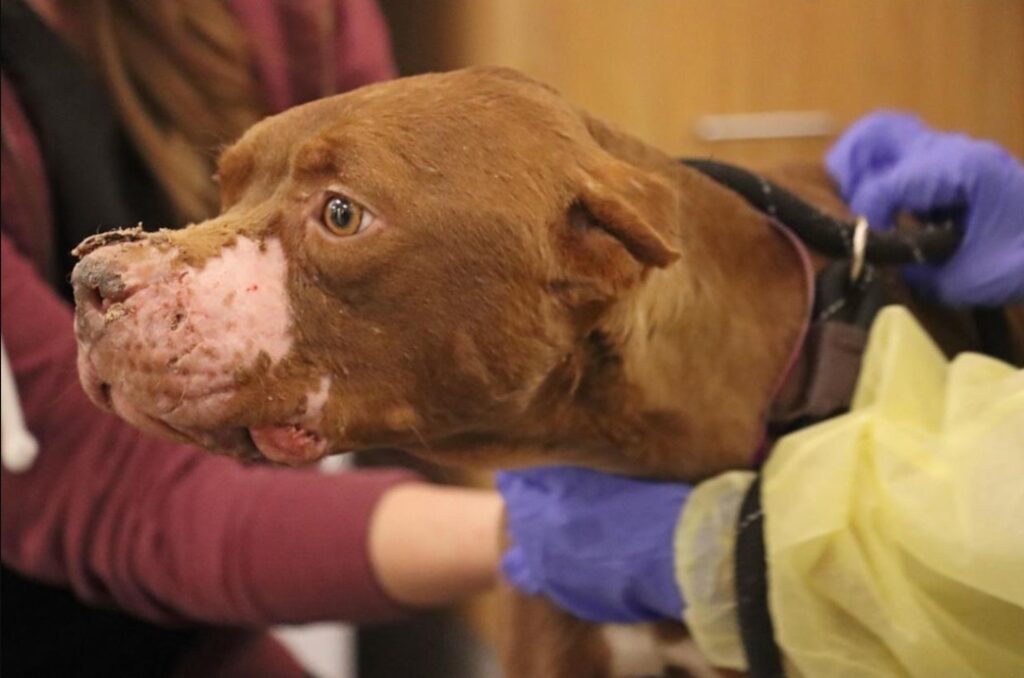
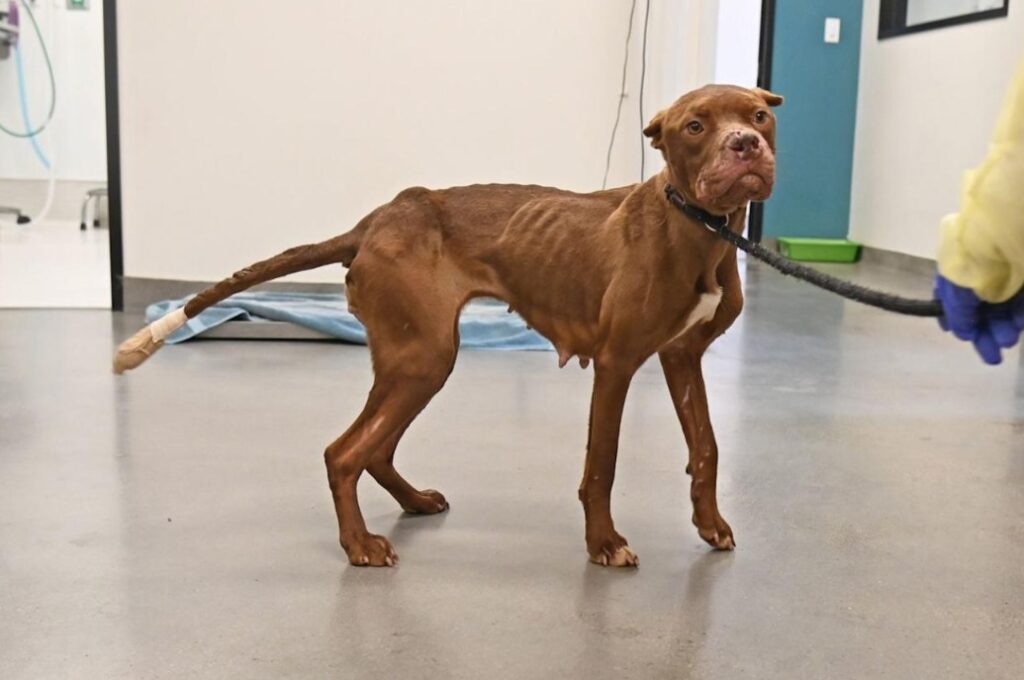
The dog, a one‑year‑old boxer mix named Gertie, was found in dire condition. She was emaciated, covered with scars, and had torn ears and a mutilated muzzle, all of which aligned with the kind of wounds animals often sustain when used as bait for training fighting dogs.
Tests by veterinarians showed her muzzle had been bound so tightly that it cracked her teeth and prevented her from eating or barking — a sign of brutal treatment.
Though she had clearly suffered tremendously, Gertie’s spirit wasn’t completely broken.
When rescuers from the Helen Woodward Animal Center in Rancho Santa Fe approached her, she responded with a gentle tail wag, often called a “happy tail,” even under distressing circumstances.
Dog‑fighting and the use of bait dogs are felony offenses under U.S. law, and any use of animals in this way is illegal and considered animal cruelty.
After her rescue, Gertie was transported to a partnered animal facility in central California, where veterinarians began treating her wounds, offering supportive care and helping her recover physically and emotionally.
The road ahead will be long — severe injuries and trauma take time to heal — but rescuers report that Gertie remains gentle and affectionate, even as she receives treatment.
The Helen Woodward Animal Center has emphasized that cases like Gertie’s underscore how underground dog‑fighting operations continue to harm animals, despite the fact that every state outlaws such bloodsports.
They’ve also urged the public to report any suspicions of animal abuse to local law enforcement or animal welfare agencies, so dogs in similar situations can be found and helped sooner.
Gertie’s story has deeply moved people online, eliciting both outrage and compassion from animal lovers. Many have responded to her images and recovery updates with messages of support — celebrating her resilience and hoping for a future where she can live free of fear and pain.
While Gertie’s injuries are a chilling example of the cruelty inherent in dog‑fighting culture, her ongoing recovery also highlights something powerful: even the most abused animals can respond to kindness and care.
Every wag of her tail now carries a message — that compassion from humans, once extended, can help heal wounds that cruelty once inflicted.
If you’re interested in helping animals like Gertie, local shelters and rescue organizations often accept donations or volunteers, and law enforcement encourages anyone witnessing suspected abuse to call their non‑emergency line so the situation can be investigated promptly.